RedKalion
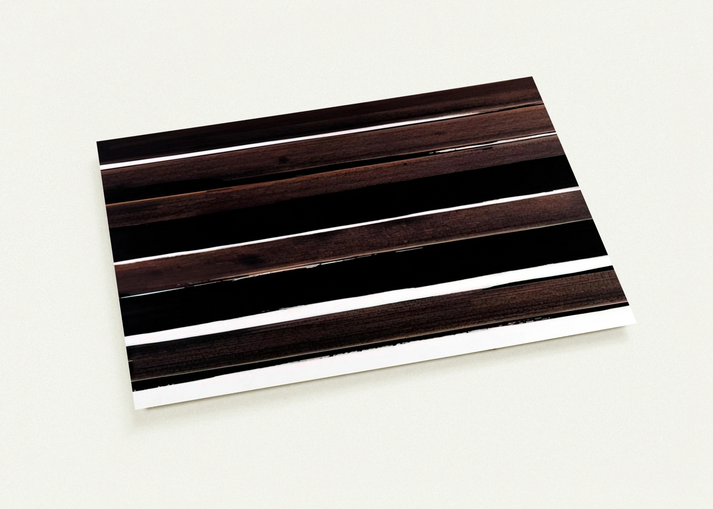
A-Walnut Stain - 2004 By Pierre Soulages Pack of 10 Post Cards | Pierre Soulages Post Cards | A6 (10.5 x 14.8 cm) - 4.1 x 5.8 inches
A-Walnut Stain - 2004 By Pierre Soulages Pack of 10 Post Cards | Pierre Soulages Post Cards | A6 (10.5 x 14.8 cm) - 4.1 x 5.8 inches
Couldn't load pickup availability
An Intimate Encounter with Pierre Soulages’ Masterpiece
Experience the profound depth of Pierre Soulages with this exclusive pack of 10 museum-quality postcards featuring A-Walnut Stain - 2004. Known globally as the 'painter of black,' Soulages’ work transcends mere abstraction, utilizing light as a material element. In this 2004 composition, the use of brou de noix (walnut stain) creates a visceral, earthy texture that challenges the boundaries between shadow and illumination.
Exceptional Craftsmanship for the Discerning Collector
At RedKalion, we bridge the gap between historical art and modern precision. Unlike standard reproductions, our postcards utilize 12-color fine art printing technology. This advanced process captures the intricate tonal shifts of Soulages’ pigments—ranging from deep, opaque browns to translucent amber hues—with a fidelity that 4-color inkjet systems simply cannot replicate.
- Archival Quality: Printed on 200 gsm (80 lb) paper with a thickness of 0.26 mm for a premium, substantial feel.
- Sophisticated Finish: A smooth matte coating ensures a glare-free viewing experience, preserving the somber elegance of the original work.
- Sustainable Elegance: Each card is crafted on FSC-certified paper, reflecting our commitment to environmental responsibility.
- Versatile Design: Sized at A6 (10.5 x 14.8 cm), these cards are perfect for personal correspondence or as a curated wall display in your home or studio.
Whether you are a scholar of contemporary abstraction or looking to elevate your stationery, these Pierre Soulages postcards serve as an enduring tribute to one of the 20th century’s most influential artists. RedKalion ensures each piece is printed on demand, guaranteeing a unique, archival-grade product that honors the legacy of French abstraction.

Discover Unlimited Art Possibilities
At RedKalion, you can find virtually any artwork from any artist, available in a wide range of sizes to perfectly match your space.
If you didn’t find what you’re looking for, contact us at support@redkalion.com . We will source any artwork and produce it in any size and format you need, including art prints, posters, canvas, framed pieces, framed canvas, and more.
For dedicated art enthusiasts, we also offer handcrafted replicas of any artwork, carefully painted by highly skilled artists using traditional techniques.
For custom requests, contact us at support@redkalion.com .
What is the paper quality and weight of these Pierre Soulages postcards?
Each postcard is printed on premium 200 gsm (80 lb) FSC-certified paper. With a thickness of 0.26 mm (10.3 mils), they offer a robust, gallery-standard feel that resists bending and ensures longevity.
How does the 12-color printing process benefit the artwork?
Our 12-color technology provides superior color vibrancy and depth. It accurately captures the subtle transitions and earthy nuances of Soulages' walnut stain pigments, which are often lost in standard 4-color printing.
What are the exact dimensions of the A-Walnut Stain - 2004 art cards?
These postcards are A6 size, measuring 10.5 x 14.8 cm (4.1 x 5.8 inches). They are ideal for standard international postage or for being framed as a miniature art series.
Are the materials used in these postcards environmentally friendly?
Yes. RedKalion uses environmentally conscious, FSC-certified paper and print-on-demand practices to minimize waste, ensuring your art collection supports sustainable forestry and production.
Will the colors of the Soulages print fade over time?
No. We use archival-grade inks and a matte finish that protects the print from glare and UV degradation. These postcards are designed to maintain their visual integrity for decades.
What is the significance of 'Brou de noix' in Soulages’ work?
'Brou de noix' refers to walnut stain, a medium Soulages embraced for its unique transparency and organic texture. It allowed him to explore gestural abstraction through rich, natural tones rather than synthetic pigments.
Why is this 2004 piece considered a key part of Soulages’ later period?
In his later years, Soulages revisited walnut stain to further explore 'Outrenoir'—the light reflected from the surface of black. This 2004 work exemplifies his mastery in manipulating light through material density and stroke.