RedKalion
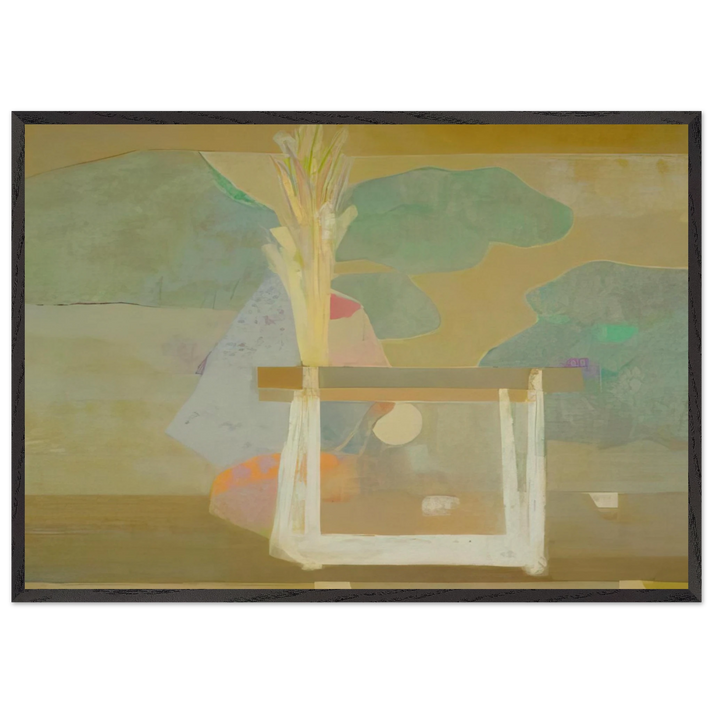
A Well - 1966 - Kenzo Okada 70x100 cm / 28x40 inches Framed Art Print – Black Wooden Frame
A Well - 1966 - Kenzo Okada 70x100 cm / 28x40 inches Framed Art Print – Black Wooden Frame
Couldn't load pickup availability
Elevate Your Space with Kenzo Okada’s Meditative Masterpiece: "A Well" (1966)
Experience the profound tranquility of Kenzo Okada, the visionary artist who masterfully bridged the gap between Japanese aesthetic traditions and American Abstract Expressionism. His 1966 work, "A Well," is a quintessential example of "Yugenism"—a style characterized by subtle grace and a deep, mysterious beauty. This museum-quality reproduction captures the ethereal layers and soft, organic forms that define Okada’s mid-century brilliance, inviting a sense of calm and intellectual curiosity into any interior.
Artistic Significance and Historical Context
By 1966, Kenzo Okada had firmly established his place in the New York School, yet his work remained distinct for its rejection of aggressive brushwork in favor of contemplative spatial relationships. "A Well" utilizes a muted, sophisticated palette that evokes the natural world without literal representation. At RedKalion, we curate these pieces to ensure that the delicate nuances of Okada’s technique—the weightless floating planes and the harmony of form—are preserved for the discerning collector.
Exquisite Craftsmanship and Material Excellence
This premium 70x100 cm (28x40 inches) framed art print is more than a decorative piece; it is an archival investment. Printed on 250 gsm (110 lb) natural white museum-quality paper, the matte, uncoated finish ensures that the subtle color shifts of the original work are rendered with stunning accuracy without distracting glare. The print is protected by shatterproof plexiglass and housed in a robust, 20mm thick black frame crafted from responsibly sourced oak and ash wood.
- Museum-Grade Paper: Archival-quality, FSC-certified paper for long-lasting vibrancy.
- Premium Framing: Solid wood frame with a 20mm profile, providing a more substantial presence than standard frames.
- Ready to Hang: Arrives with a professional hanging kit included, allowing for immediate installation.
- Sustainable Luxury: Our commitment to excellence includes the use of sustainable materials and ethical production processes.
Transform your environment with a piece that embodies the fusion of East and West. This Kenzo Okada reproduction offers a timeless aesthetic that endures, making it the definitive choice for those who value both art history and superior print quality.

Discover Unlimited Art Possibilities
At RedKalion, you can find virtually any artwork from any artist, available in a wide range of sizes to perfectly match your space.
If you didn’t find what you’re looking for, contact us at support@redkalion.com . We will source any artwork and produce it in any size and format you need, including art prints, posters, canvas, framed pieces, framed canvas, and more.
For dedicated art enthusiasts, we also offer handcrafted replicas of any artwork, carefully painted by highly skilled artists using traditional techniques.
For custom requests, contact us at support@redkalion.com .
What makes the paper quality suitable for fine art?
We use 250 gsm (110 lb) natural white, matte, uncoated paper. This archival museum-quality paper provides a heavy-duty feel and prevents the colors from fading over time, ensuring your Kenzo Okada print remains vibrant for decades.
How is the print protected and framed?
The print is mounted in a 20mm thick, black frame made from responsibly sourced oak or ash. It is protected by shatterproof, transparent plexiglass, which offers clarity and safety for high-traffic environments.
Is the artwork ready to hang upon arrival?
Yes. Every framed print includes a professional hanging kit. The 70x100 cm frame is designed for easy installation, allowing you to elevate your wall decor the moment it arrives at your doorstep.
What is RedKalion’s commitment to sustainability?
We prioritize the environment by using FSC-certified wood and paper or equivalent sustainable materials. Our production processes are designed to minimize waste while maintaining the highest archival standards for fine art reproductions.
What is the archival longevity of this print?
Thanks to the 250 gsm archival paper and UV-resistant materials, our prints are designed to last a lifetime. The natural white paper is acid-free, preventing yellowing and ensuring the artistic integrity of "A Well" is preserved.
What is "Yugenism" in the context of Kenzo Okada’s work?
"Yugenism" refers to a Japanese aesthetic of dark, mysterious grace. Okada applied this to abstract art, using subtle color transitions and flat planes to create a sense of depth and tranquility that avoided the chaos of traditional Abstract Expressionism.
Why is the year 1966 significant for this piece?
1966 represents a mature period in Okada’s career where he moved toward greater simplification and harmony. "A Well" showcases his mastery of balancing negative space and organic shapes, a hallmark of his late-career success in the American art scene.