

RedKalion
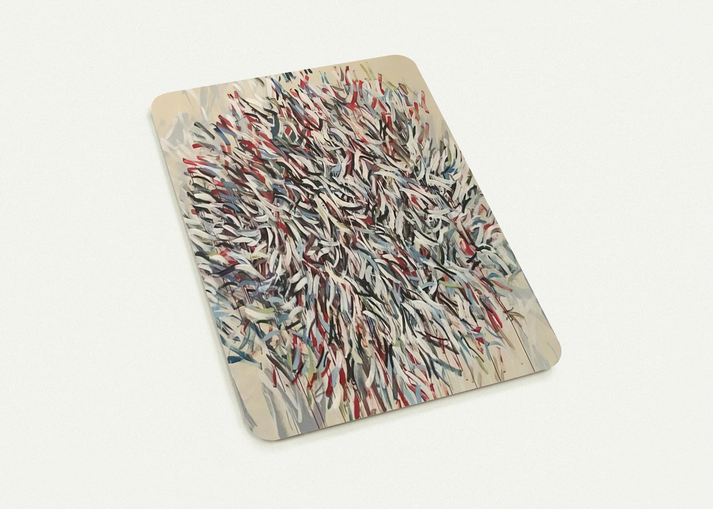
Abstract 2 - 1982 By Robert Goodnough Pack of 10 Post Cards | Robert Goodnough Post Cards | A6 (10.5 x 14.8 cm) - 4.1 x 5.8 inches
Abstract 2 - 1982 By Robert Goodnough Pack of 10 Post Cards | Robert Goodnough Post Cards | A6 (10.5 x 14.8 cm) - 4.1 x 5.8 inches
Couldn't load pickup availability
The Rhythmic Geometry of Robert Goodnough: Abstract 2 (1982)
Robert Goodnough, a central figure of the second-generation New York School, masterfully bridged the gap between the raw energy of Abstract Expressionism and the cool precision of Color Field painting. This 1982 masterpiece, Abstract 2, represents a sophisticated evolution of his signature style. By the early 1980s, Goodnough had perfected his 'clusters'—meticulously arranged shards of color that seem to float weightlessly across the canvas, creating a sense of dynamic suspension and lyrical movement.
Museum-Quality Post Cards for the Discerning Collector
At RedKalion, we believe that fine art should be accessible without compromising on technical excellence. This set of 10 flat postcards allows you to share or display Goodnough’s vision with unmatched fidelity. Utilizing 12-color fine art printing technology, we capture the subtle tonal variations and precise edges of the original work, providing a depth and vibrancy that standard 4-color printing simply cannot replicate.
Technical Specifications & Archival Standards
Each card is a testament to our commitment to quality and sustainability. We use 200 gsm (80 lb) FSC-certified paper, ensuring a substantial feel and a responsible footprint. The smooth matte finish eliminates glare, allowing the complex interaction of shapes to remain the focal point under any lighting condition. Whether used for correspondence or as a curated mini-gallery, these archival-grade reproductions are designed to endure.
- Artist: Robert Goodnough (1917–2010)
- Format: Pack of 10 Flat Post Cards (A6 Size)
- Print Technology: 12-color Giclée printing for superior color accuracy.
- Substrate: 200 gsm FSC-certified archival paper with a 0.26 mm thickness.
- Sustainability: Printed on demand to minimize waste, supporting eco-conscious art consumption.


Discover Unlimited Art Possibilities
At RedKalion, you can find virtually any artwork from any artist, available in a wide range of sizes to perfectly match your space.
If you didn’t find what you’re looking for, contact us at support@redkalion.com . We will source any artwork and produce it in any size and format you need, including art prints, posters, canvas, framed pieces, framed canvas, and more.
For dedicated art enthusiasts, we also offer handcrafted replicas of any artwork, carefully painted by highly skilled artists using traditional techniques.
For custom requests, contact us at support@redkalion.com .
What makes the printing quality of these Robert Goodnough postcards unique?
We use advanced 12-color fine art printing technology, which provides significantly more color depth and accuracy than standard 4-color inkjet processes, ensuring a museum-quality reproduction of Abstract 2 (1982).
What are the specific dimensions and paper weight of the cards?
Each card is A6 size (10.5 x 14.8 cm or 4.1 x 5.8 inches). They are printed on 200 gsm (80 lb) paper with a thickness of 0.26 mm for a premium, sturdy feel.
Is the paper used for these prints environmentally friendly?
Yes, RedKalion uses FSC-certified paper, ensuring that your fine art postcards are sourced from responsibly managed forests and produced with ecological integrity.
How does the smooth matte finish affect the artwork's appearance?
The smooth matte finish provides a clean, glare-free surface, allowing for optimal viewing of Robert Goodnough’s intricate geometric clusters without distracting reflections from indoor lighting.
Are these cards suitable for long-term display or framing?
Absolutely. Our archival-grade materials and 12-color pigment-based inks are designed for longevity, making these cards perfect for small frames or as part of a curated wall display.
Who was Robert Goodnough and what is his artistic significance?
Robert Goodnough was a prominent New York School artist known for blending gestural abstraction with structured, geometric clusters, playing a vital role in the transition from Abstract Expressionism to Color Field painting.
What defines the 'cluster' technique seen in Abstract 2 (1982)?
The 'cluster' technique involves grouping small, triangular, or shard-like shapes together to create a sense of unified motion and weightlessness against a neutral background, a hallmark of Goodnough's late-career mastery.