RedKalion
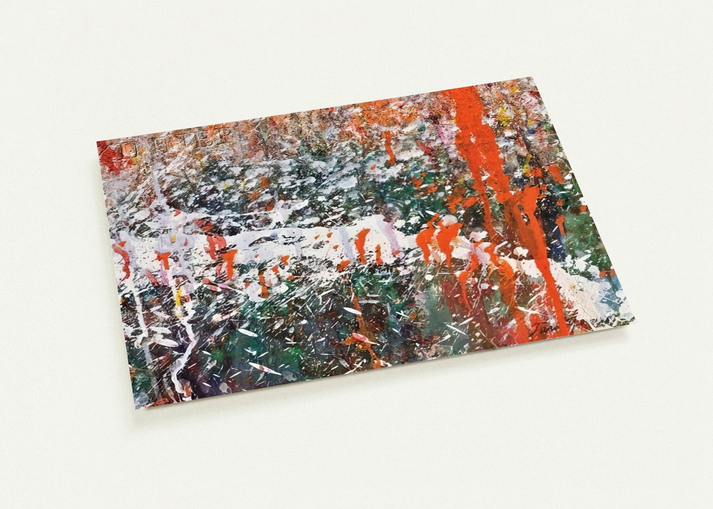
ABSTRACT COMPOSITION By Taro Yamamoto Pack of 10 Post Cards | Taro Yamamoto Post Cards | A6 (10.5 x 14.8 cm) - 4.1 x 5.8 inches
ABSTRACT COMPOSITION By Taro Yamamoto Pack of 10 Post Cards | Taro Yamamoto Post Cards | A6 (10.5 x 14.8 cm) - 4.1 x 5.8 inches
Couldn't load pickup availability
Elevate Your Correspondence with Taro Yamamoto’s Mid-Century Brilliance
Experience the kinetic energy of the New York School with this exclusive pack of 10 fine art postcards featuring Taro Yamamoto’s 'Abstract Composition'. A protégé of the legendary Hans Hofmann and a seminal figure in the Abstract Expressionist movement, Yamamoto’s work is a masterclass in spatial depth and spontaneous gesture. These postcards allow you to share a piece of museum-grade art history with friends, family, or fellow collectors.
Museum-Quality Precision in Every Detail
At RedKalion, we bridge the gap between historic masterpieces and contemporary curation. Unlike standard inkjet printing, these postcards are produced using 12-color fine art printing technology. This advanced process captures the intricate tonal shifts and bold brushstrokes of Yamamoto’s original palette with breathtaking accuracy and vivid depth. Each card is printed on 200 gsm (80 lb) FSC-certified paper, offering a substantial feel and a smooth matte finish that eliminates glare, ensuring the focus remains on the artwork.
Sustainable Artistry for the Modern Collector
Our commitment to excellence extends to the environment. These archival-grade reproductions are printed on demand, reducing waste and ensuring each card meets our rigorous quality standards. Whether used for personal correspondence or displayed as a cohesive wall collage, these A6 (10.5 x 14.8 cm) prints bring the sophisticated spirit of mid-century modernism into any setting.
- Artist: Taro Yamamoto (1919–1994)
- Style: Abstract Expressionism / Gestural Abstraction
- Paper: 200 gsm matte, FSC-certified, 0.26 mm thickness
- Print Tech: 12-color archival giclée process
- Quantity: Pack of 10 flat postcards

Discover Unlimited Art Possibilities
At RedKalion, you can find virtually any artwork from any artist, available in a wide range of sizes to perfectly match your space.
If you didn’t find what you’re looking for, contact us at support@redkalion.com . We will source any artwork and produce it in any size and format you need, including art prints, posters, canvas, framed pieces, framed canvas, and more.
For dedicated art enthusiasts, we also offer handcrafted replicas of any artwork, carefully painted by highly skilled artists using traditional techniques.
For custom requests, contact us at support@redkalion.com .
What printing technology is used for these Taro Yamamoto postcards?
We utilize sophisticated 12-color fine art printing technology. This process provides superior color vibrancy and tonal depth compared to standard 4-color inkjet methods, ensuring each Taro Yamamoto reproduction remains true to the original masterpiece.
What is the weight and finish of the postcard paper?
Each postcard is printed on premium 200 gsm (80 lb) paper with a thickness of 0.26 mm. The smooth matte finish provides a clean, professional appearance and a glare-free surface, perfect for both writing and display.
Are these postcards environmentally friendly?
Yes. RedKalion is committed to sustainability; these postcards are printed on FSC-certified paper from responsibly managed forests. Additionally, our print-on-demand model minimizes unnecessary waste and overproduction.
What are the shipping logistics and minimum order requirements?
There are no minimum order requirements for our Taro Yamamoto postcard packs. Each set is printed on demand and shipped with care to ensure they arrive in pristine, museum-quality condition.
How long will the colors on these postcards last?
Thanks to our archival-grade 12-color inks and high-quality 200 gsm paper, these prints are designed for longevity. They resist fading far better than mass-produced postcards, preserving the artistic integrity of the Abstract Composition.
Who was Taro Yamamoto in the context of American art?
Taro Yamamoto was a prominent Japanese-American Abstract Expressionist and a dedicated student of Hans Hofmann. His work is celebrated for its intuitive movement and significant contribution to the mid-century New York art scene.
What defines the 'Abstract Composition' style seen here?
This piece exemplifies gestural abstraction, focusing on the emotional resonance of color and form. Yamamoto’s style blends Eastern sensibilities with Western avant-garde techniques, creating a dynamic sense of rhythmic balance.