RedKalion
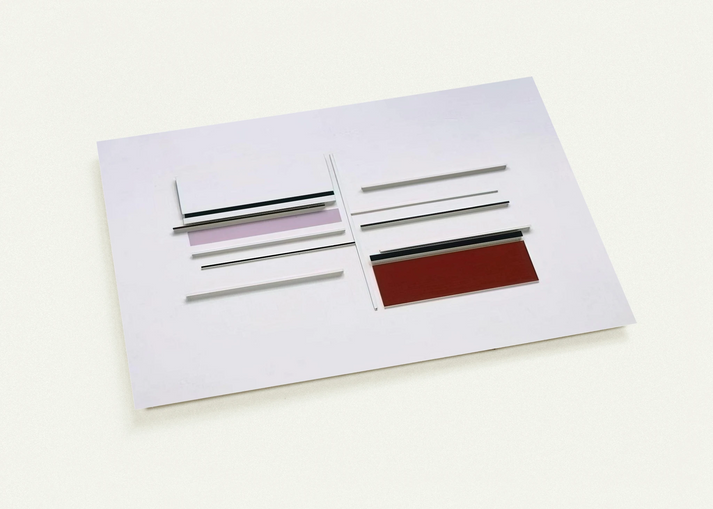
ABSTRACT IN WHITE BLACK INDIAN AND LILAC 1957 By Victor Pasmore Pack of 10 Post Cards | Victor Pasmore Post Cards | A6 (10.5 x 14.8 cm) - 4.1 x 5.8 inches
ABSTRACT IN WHITE BLACK INDIAN AND LILAC 1957 By Victor Pasmore Pack of 10 Post Cards | Victor Pasmore Post Cards | A6 (10.5 x 14.8 cm) - 4.1 x 5.8 inches
Couldn't load pickup availability
Elevate Your Correspondence with Victor Pasmore’s Abstract Vision
Experience the sophisticated geometry of mid-century British modernism with this exclusive set of ten post cards featuring Victor Pasmore’s Abstract in White, Black, Indian and Lilac (1957). As a pioneer of the British Constructivist movement, Pasmore transitioned from representational landscapes to the pure, rhythmic exploration of form and space seen in this 1957 masterpiece. This work represents a pivotal moment in art history where balance and spatial tension define the viewer's experience.
Museum-Quality Reproductions for the Modern Collector
At RedKalion, we believe fine art should be accessible without compromising on integrity. These flat post cards are produced using 12-color fine art printing technology, ensuring that the subtle lilac hues and the deep, earthy Indian red are captured with a vibrancy that standard 4-color printing simply cannot replicate. Every card serves as a miniature gallery-grade reproduction, perfect for personal notes or as a curated set for wall display.
Premium Specifications and Sustainable Craftsmanship
- Exceptional Color Depth: Our advanced 12-color inkjet process delivers stunning accuracy and professional-grade color transitions.
- Archival Paper: Printed on 200 gsm (80 lb) paper with a thickness of 0.26 mm, providing a sturdy, luxurious feel.
- Sophisticated Finish: A smooth matte paper finishing ensures a clean, glare-free aesthetic, allowing the geometric lines of Pasmore’s work to remain the focus.
- Eco-Conscious Quality: Each card is printed on FSC-certified paper, reflecting RedKalion’s commitment to sustainable art curation.
- Dimensions: Standard A6 size (10.5 x 14.8 cm | 4.1 x 5.8 inches), ideal for framing or mailing.
Whether you are a student of art history or an interior enthusiast, these Victor Pasmore post cards offer an enduring connection to the avant-garde spirit of the 1950s. RedKalion ensures each set is printed on demand with meticulous attention to detail, bringing a piece of museum-quality art into your daily life.

Discover Unlimited Art Possibilities
At RedKalion, you can find virtually any artwork from any artist, available in a wide range of sizes to perfectly match your space.
If you didn’t find what you’re looking for, contact us at support@redkalion.com . We will source any artwork and produce it in any size and format you need, including art prints, posters, canvas, framed pieces, framed canvas, and more.
For dedicated art enthusiasts, we also offer handcrafted replicas of any artwork, carefully painted by highly skilled artists using traditional techniques.
For custom requests, contact us at support@redkalion.com .
What are the exact dimensions of these Victor Pasmore post cards?
Each post card in this pack of 10 follows the standard A6 format, measuring 10.5 x 14.8 cm (4.1 x 5.8 inches). This size is perfect for standard mailing or as a small-scale framed fine art print.
How does 12-color printing differ from standard post cards?
Unlike standard 4-color printing, our 12-color fine art technology uses a wider gamut of inks. This results in superior color vibrancy and accuracy, capturing the specific lilac and Indian red tones of Pasmore’s 1957 work perfectly.
What is the weight and texture of the paper used?
We use premium 200 gsm (80 lb) paper with a thickness of 0.26 mm. The paper features a smooth matte finish, which eliminates glare and provides a sophisticated, modern texture for the abstract artwork.
Are these post cards environmentally friendly?
Yes. RedKalion prioritizes sustainability by using FSC-certified paper, ensuring that the materials for your fine art reproductions are sourced from responsibly managed forests. Our print-on-demand model also reduces unnecessary waste.
How long will these archival-grade prints last?
By utilizing 12-color fine art printing on 200 gsm archival-quality paper, these cards are designed to resist fading. When kept away from direct sunlight, they will maintain their color vibrancy for decades.
What was the significance of 1957 in Victor Pasmore’s career?
1957 was a definitive year for Pasmore as he fully embraced the Constructivist movement. This piece showcases his departure from naturalism toward a language of pure form, utilizing geometric arrangements to explore three-dimensional space on a two-dimensional surface.
Why did Pasmore use specific colors like Indian Red and Lilac?
Pasmore chose these colors to create spatial rhythm. The heavy black and white provide structure, while the Indian red and lilac act as points of tension and balance, guiding the eye through the abstract composition.