

RedKalion
ABSTRACT IN WHITE BLACK INDIAN AND LILAC 1957 - Victor Pasmore Brushed Aluminum Print - 70x100 cm / 28x40 inches | Victor Pasmore Aluminum Print | Victor Pasmore Prints
ABSTRACT IN WHITE BLACK INDIAN AND LILAC 1957 - Victor Pasmore Brushed Aluminum Print - 70x100 cm / 28x40 inches | Victor Pasmore Aluminum Print | Victor Pasmore Prints
Couldn't load pickup availability
A Masterpiece of British Modernism: Victor Pasmore's 1957 Abstract
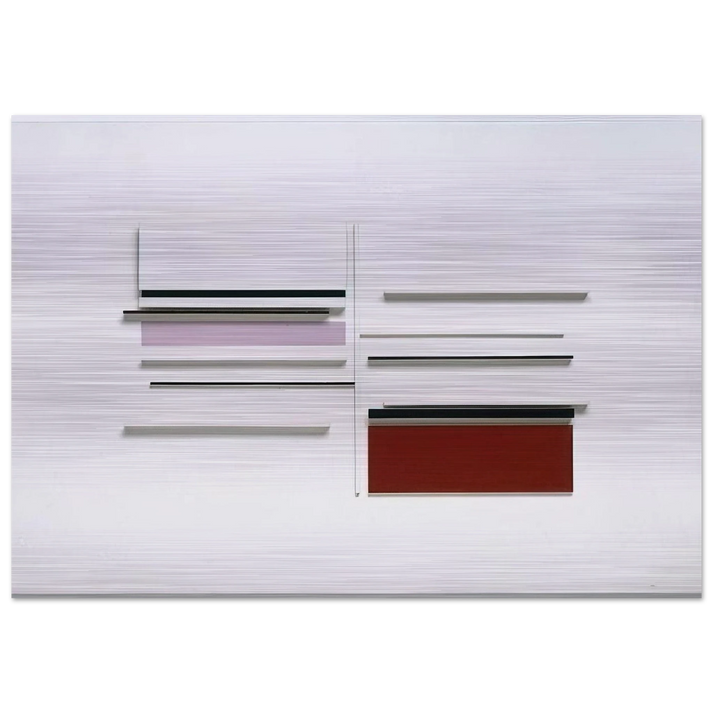
Experience the architectural precision and lyrical abstraction of Victor Pasmore's ABSTRACT IN WHITE BLACK INDIAN AND LILAC 1957. This seminal work represents a pivotal moment in the British artist's career as he transitioned from figurative landscapes to the pure, structural language of Constructivism. At RedKalion, we have curated this museum-quality reproduction to capture the spatial rhythm and delicate color balance that defined Pasmore’s mid-century aesthetic.
Contemporary Materiality: The Brushed Aluminum Dibond® Finish
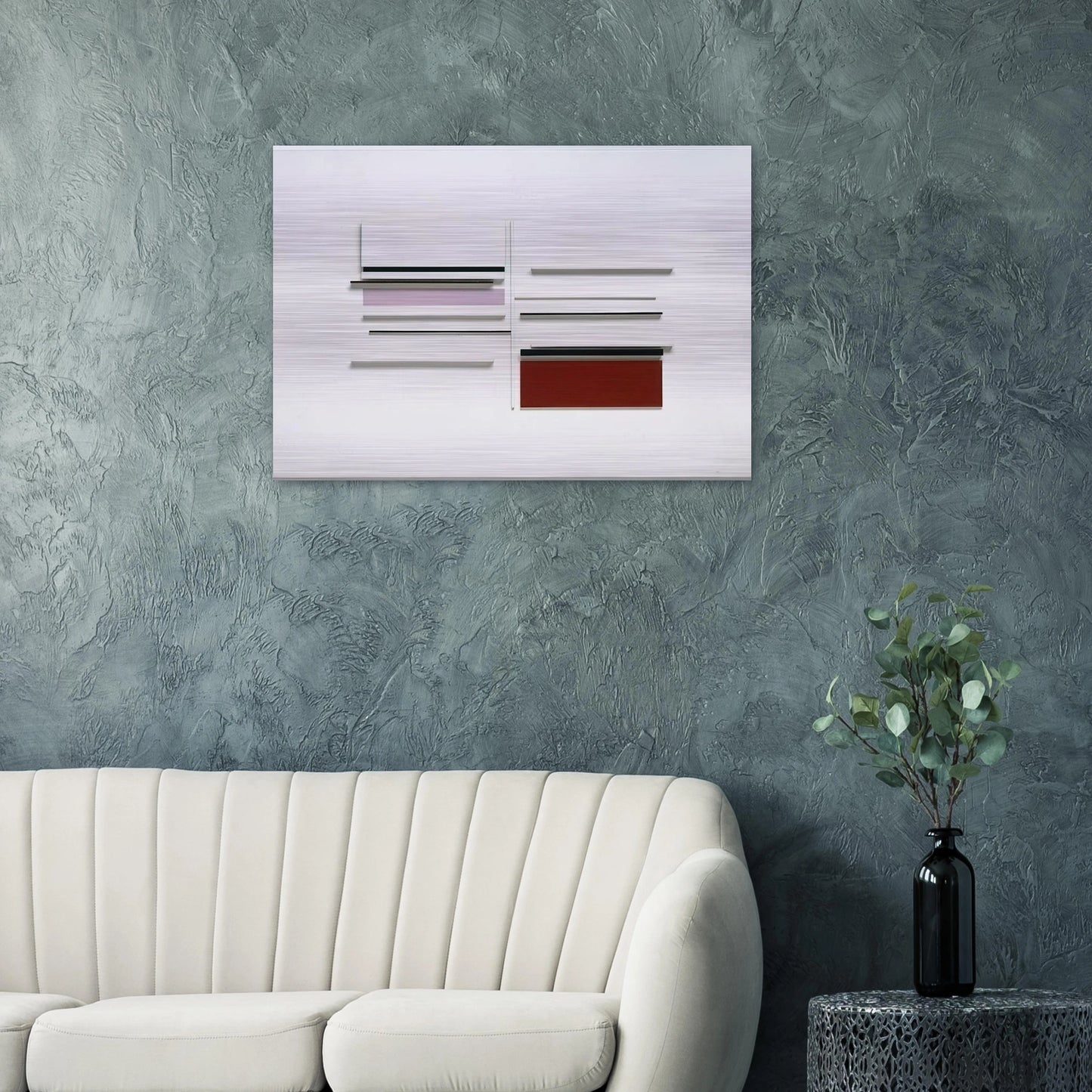
This fine art print is reimagined on a 3mm (0.12") brushed silver Aluminum DIBOND® panel, a medium that perfectly complements the industrial and geometric leanings of the original artwork. The unique horizontal grain of the aluminum provides a dynamic, living texture that responds to the light in your environment.
- Sophisticated Texture: Unprinted white areas in the composition reveal the raw metallic silver effect, adding a luminous dimension to the black and lilac tones.
- Museum-Grade Printing: Direct-to-substrate printing ensures vivid colors and a refined matte finish that eliminates distracting glares.
- Archival Durability: The 3mm DIBOND® core is rigid and lightweight, designed to remain perfectly flat and beautiful for generations.
- Ready to Exhibit: Each print arrives with a specialized hanging kit tailored to your location, facilitating a seamless installation.
The Legacy of Victor Pasmore
By the late 1950s, Victor Pasmore was at the forefront of the abstract movement in Britain. His use of "Indian" red-browns and delicate "Lilac" hues in this 1957 composition demonstrates his sophisticated understanding of color theory and spatial tension. This Victor Pasmore aluminum print is not merely a reproduction; it is a statement piece that bridges the gap between historical significance and contemporary interior design. Elevate your collection with an archival masterpiece that celebrates the enduring power of British abstraction.


Discover Unlimited Art Possibilities
At RedKalion, you can find virtually any artwork from any artist, available in a wide range of sizes to perfectly match your space.
If you didn’t find what you’re looking for, contact us at support@redkalion.com . We will source any artwork and produce it in any size and format you need, including art prints, posters, canvas, framed pieces, framed canvas, and more.
For dedicated art enthusiasts, we also offer handcrafted replicas of any artwork, carefully painted by highly skilled artists using traditional techniques.
For custom requests, contact us at support@redkalion.com .
What material is used for this Victor Pasmore reproduction?
This print is crafted on 3mm brushed silver Aluminum DIBOND®. This premium material features a rigid polyethylene core between two aluminum sheets, providing exceptional durability and a sophisticated, metallic finish for this Victor Pasmore reproduction.
How does the brushed silver finish affect the visual appearance?
The horizontal grain of the brushed aluminum creates a dynamic metallic effect. In Pasmore's abstract, any white areas are left unprinted, allowing the natural silver sheen to shine through, creating a striking contrast with the matte lilac and black inks.
Is the hanging hardware included with the print?
Yes, every RedKalion aluminum print includes a high-quality hanging kit. The specific type of hardware provided is optimized based on the fulfillment country to ensure a secure and elegant display in your space.
How long will this archival-grade aluminum print last?
Aluminum DIBOND® is renowned for its archival properties. The direct-print technology uses UV-resistant inks that prevent fading, ensuring your museum-quality reproduction remains vibrant and structurally sound for decades without the need for glass protection.
Can this print be hung in areas with high ambient light?
Absolutely. The print features a glare-free matte finish. Unlike traditional glass-framed art, the aluminum surface does not reflect bright lights, making it the ideal choice for well-lit modern interiors and galleries.
What is the significance of the year 1957 in Victor Pasmore’s career?
1957 marks the height of Pasmore's transition into pure Constructivism. During this period, he abandoned representational art entirely to explore how geometric forms and specific color palettes like lilac and Indian red could interact with three-dimensional space.
What does the "Indian" in the title refer to?
In the context of 1950s art, "Indian" typically refers to Indian Red, a pigment derived from ferric oxide. Pasmore used these earthy tones to provide a grounded, organic counterpoint to the more ethereal lilac and stark black elements.