RedKalion
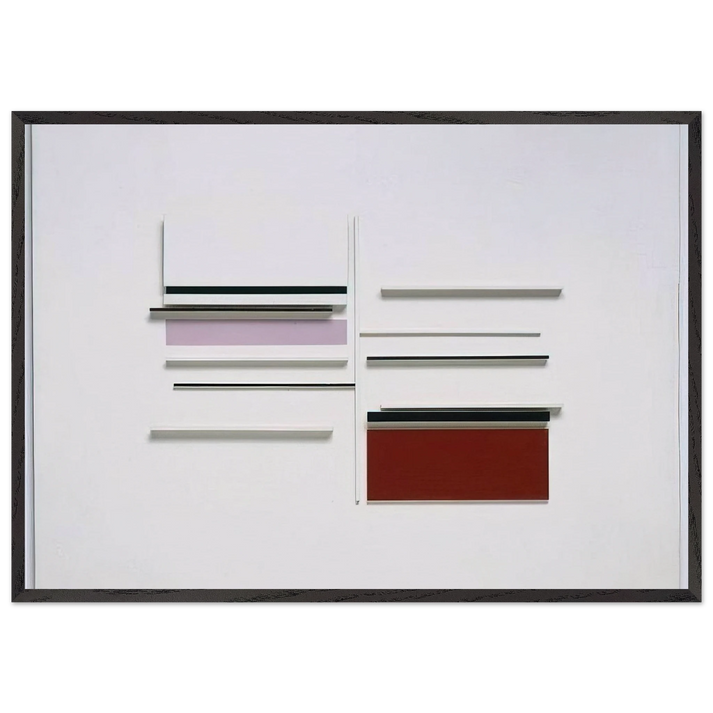
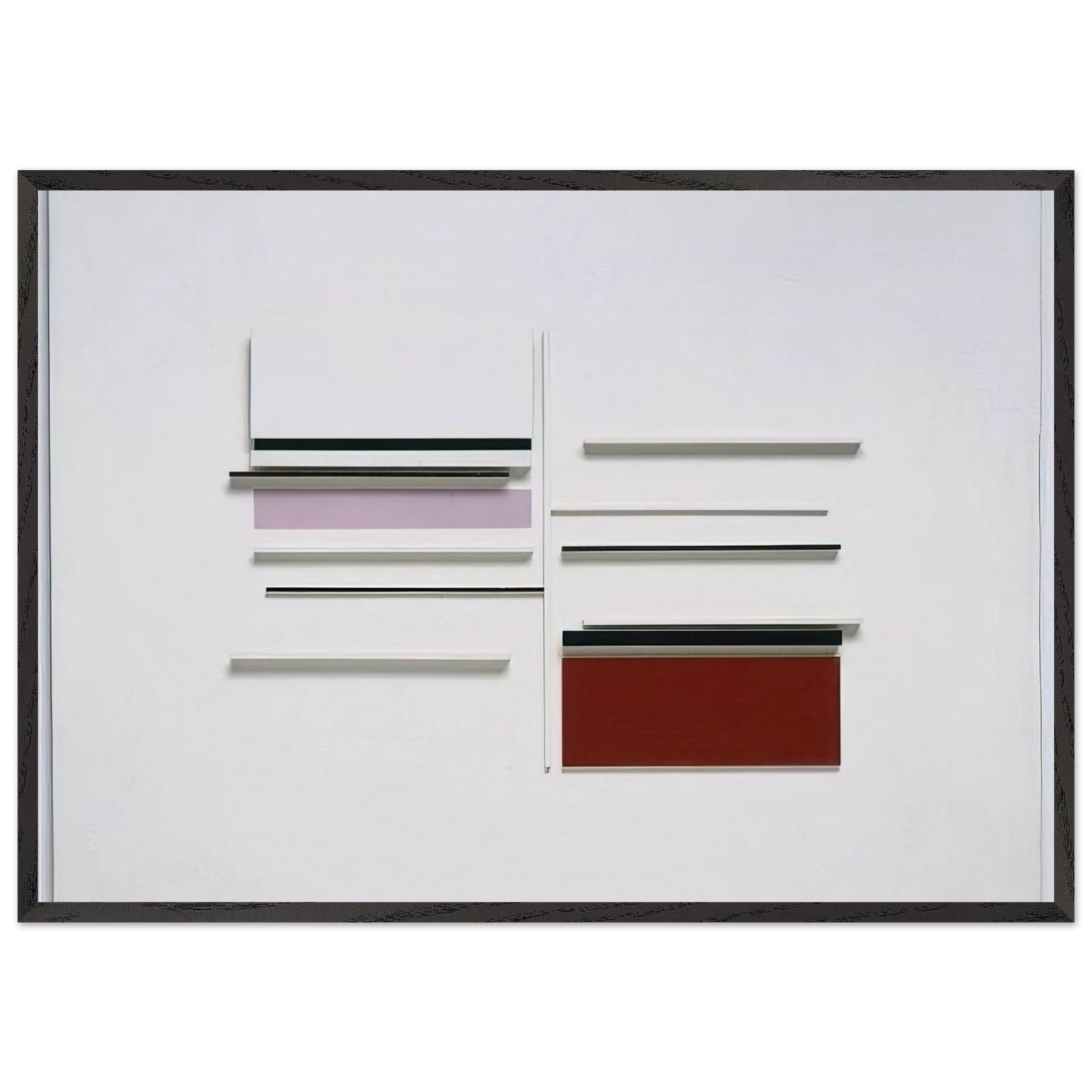
ABSTRACT IN WHITE BLACK INDIAN AND LILAC 1957 - Victor Pasmore 70x100 cm / 28x40 inches Framed Art Print – Black Wooden Frame
ABSTRACT IN WHITE BLACK INDIAN AND LILAC 1957 - Victor Pasmore 70x100 cm / 28x40 inches Framed Art Print – Black Wooden Frame
Couldn't load pickup availability
Elevate Your Space with Victor Pasmore's 'Abstract in White Black Indian and Lilac 1957'
Experience a definitive moment in British Modernism with this museum-quality reproduction of Victor Pasmore's 1957 masterpiece, 'Abstract in White Black Indian and Lilac'. Representing the height of Pasmore's transition from figurative painting to pure abstraction, this piece explores the delicate balance of geometric precision and organic spatial rhythm. RedKalion is proud to offer this archival-grade fine art print, meticulously curated to preserve the tectonic integrity and tonal nuances of the original work.
Artistic Significance and Historical Context
In the mid-20th century, Victor Pasmore revolutionized the British art scene by embracing a constructivist approach. This specific 1957 composition is celebrated for its sophisticated use of 'Indian Red' and 'Lilac' accents, which provide warmth and depth to a monochrome structural foundation. Pasmore’s technique involved creating a sense of three-dimensional space on a two-dimensional surface, a hallmark of his late-50s spatial experiments.
Premium Archival Quality and Materials
At RedKalion, we believe that world-class art deserves world-class materials. This framed art print is crafted using only the finest components to ensure longevity and aesthetic brilliance:
- Museum-Quality Paper: Printed on 250 gsm (110 lb) archival paper, featuring a natural white, matte, and uncoated finish that eliminates glare while highlighting every subtle detail.
- Sustainable Framing: The artwork is encased in a premium 20mm (0.79") black wooden frame, crafted from responsibly sourced oak and ash. This frame is wider and sturdier than standard retail alternatives.
- Lasting Protection: Each print is protected by shatterproof, transparent plexiglass, ensuring your investment remains pristine for decades.
- Ready to Hang: Your archival masterpiece arrives with a professional hanging kit included, allowing for immediate installation upon delivery.
Transform your interior with a piece that defines an era. This Pasmore reproduction is more than a print; it is a testament to the enduring power of abstract form, curated by RedKalion for the discerning collector.
Discover Unlimited Art Possibilities
At RedKalion, you can find virtually any artwork from any artist, available in a wide range of sizes to perfectly match your space.
If you didn’t find what you’re looking for, contact us at support@redkalion.com . We will source any artwork and produce it in any size and format you need, including art prints, posters, canvas, framed pieces, framed canvas, and more.
For dedicated art enthusiasts, we also offer handcrafted replicas of any artwork, carefully painted by highly skilled artists using traditional techniques.
For custom requests, contact us at support@redkalion.com .
What are the print's paper specifications?
We use 250 gsm (110 lb) archival museum-quality paper. It features a natural white, matte, and uncoated finish, providing a premium thickness of 0.29 mm for a luxurious fine art feel.
Is the artwork ready to hang?
Yes, your Victor Pasmore print arrives ready-to-hang. Every order includes a high-quality hanging kit, allowing you to elevate your wall decor immediately upon unboxing.
How is the print protected from damage?
Each framed print is protected by shatterproof plexiglass. This ensures the artwork remains safe during shipping and is shielded from environmental dust and potential impact in your home.
What type of wood is used for the frame?
RedKalion uses responsibly sourced, FSC-certified oak and ash wood. Our black frames are 20mm wide and thick, offering a more robust and sophisticated profile than typical frames.
How is this print archival and sustainable?
We prioritize longevity and the planet. We use archival-grade, acid-free paper and FSC-certified wood, ensuring your museum-quality reproduction remains vibrant while supporting sustainable forestry practices.
What is the significance of the year 1957 in Pasmore’s career?
1957 marks a pivotal era where Pasmore fully integrated spatial constructivism into his work, moving away from flat painting toward compositions that imply architectural depth and three-dimensional form.
Why did Pasmore use 'Indian Red' and 'Lilac' in this abstract composition?
These colors were chosen to create a rhythmic tension against the stark black and white. The 'Indian' red provides a grounded, earthy warmth, while the lilac introduces a subtle, ethereal light.