RedKalion
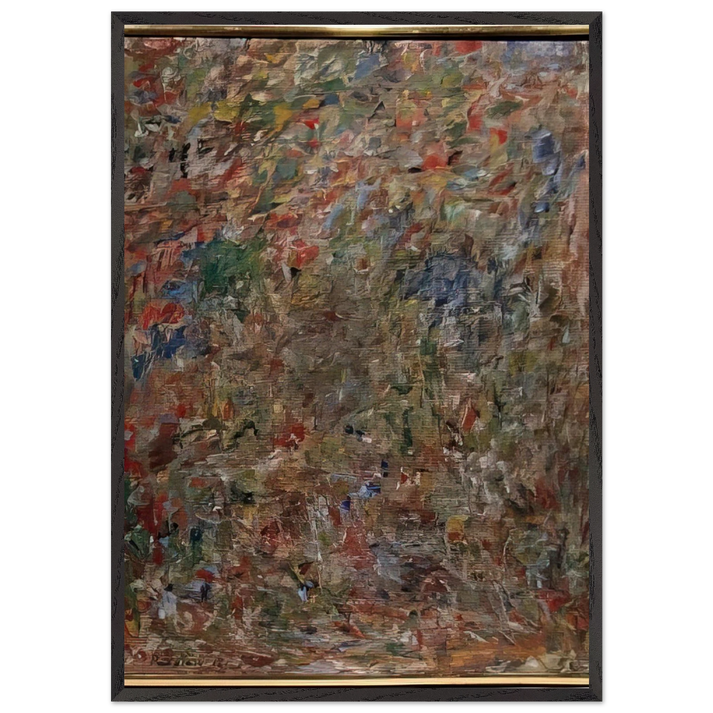
ABSTRACTION 1963 - Milton Resnick 70x100 cm / 28x40 inches Framed Art Print – Black Wooden Frame
ABSTRACTION 1963 - Milton Resnick 70x100 cm / 28x40 inches Framed Art Print – Black Wooden Frame
Couldn't load pickup availability
Milton Resnick's 'Abstraction 1963': A Masterpiece of Texture and Light
Immerse yourself in the profound depth of Milton Resnick’s Abstraction 1963, a seminal work that captures the artist's transition into the 'all-over' painting style that defined his legacy. As a leading figure of the Second Generation of the New York School, Resnick moved beyond the violent gestures of early Abstract Expressionism to create dense, monochromatic fields of color that pulsate with internal light. This 70x100 cm museum-quality reproduction allows you to appreciate the intricate layers and meditative quality that Resnick famously achieved through his labor-intensive technique.
Authentic Preservation of Abstract Expressionism
At RedKalion, we curate our prints to ensure every nuance of the original canvas is preserved. This fine art print is produced on 250 gsm (110 lb) archival-grade paper, featuring a natural white, uncoated matte finish. This specific paper weight and texture are essential for capturing the impasto-like visual density of Resnick's work without the distraction of glare, ensuring the piece remains a timeless addition to your collection.
Premium Framing and Sustainable Craftsmanship
To complement the gravity of this 1963 abstraction, the print is housed in a sophisticated black wooden frame crafted from responsibly sourced oak and ash. Measuring 20mm (0.79") in both thickness and width, this frame provides a more substantial and premium presence than standard 14mm gallery frames. Every element is designed for longevity and aesthetic excellence:
- Museum-Quality Paper: 250 gsm archival, natural white paper for enduring vibrance.
- Sustainably Sourced: FSC-certified wood frames and materials.
- Protective Glazing: Shatterproof plexiglass ensures the artwork remains shielded for decades.
- Ready-to-Hang: Delivered with a professional hanging kit for immediate installation.
Elevate your space with an archival masterpiece that endures. RedKalion is dedicated to providing discerning collectors with reproductions that honor the historical significance of the original artist while meeting the highest standards of modern interior design.

Discover Unlimited Art Possibilities
At RedKalion, you can find virtually any artwork from any artist, available in a wide range of sizes to perfectly match your space.
If you didn’t find what you’re looking for, contact us at support@redkalion.com . We will source any artwork and produce it in any size and format you need, including art prints, posters, canvas, framed pieces, framed canvas, and more.
For dedicated art enthusiasts, we also offer handcrafted replicas of any artwork, carefully painted by highly skilled artists using traditional techniques.
For custom requests, contact us at support@redkalion.com .
What materials are used for this Milton Resnick fine art print?
We use 250 gsm (110 lb) archival, museum-quality, natural white paper with a matte finishing. This ensures a glare-free viewing experience while preserving the intricate textures and tonal shifts of Resnick's 1963 abstraction.
How is the artwork framed and protected?
The print is mounted in a 20mm thick frame made of responsibly sourced oak or ash wood. It is protected by shatterproof, transparent plexiglass, ensuring the artwork remains safe during shipping and throughout its life on your wall.
Is the Milton Resnick print ready to hang upon arrival?
Yes, every framed print from RedKalion includes a professional hanging kit. The 70x100 cm frame is designed for easy installation, allowing you to display this masterpiece immediately upon unboxing.
What makes the RedKalion paper quality superior?
Our 250 gsm paper is significantly heavier and more durable than standard posters. With a thickness of 0.29 mm (11.4 mils), it is specifically engineered to hold archival inks for decades without yellowing or degradation.
Does RedKalion use sustainable materials?
Absolutely. We prioritize the environment by using FSC-certified wood and paper or local equivalent certifications. Our commitment to sustainability ensures that your investment in art supports responsible forestry practices.
Who was Milton Resnick and why is 1963 significant?
Milton Resnick was a central figure in Abstract Expressionism. 1963 represents his mature period where he moved toward 'monochromatic' density, creating works that seem to shimmer with hidden color and depth beneath a unified surface.
Will the colors of the print fade over time?
No. By utilizing archival-grade, acid-free paper and high-quality inks, this reproduction is designed to resist fading and maintain its original color integrity for generations when kept out of direct, prolonged sunlight.