RedKalion
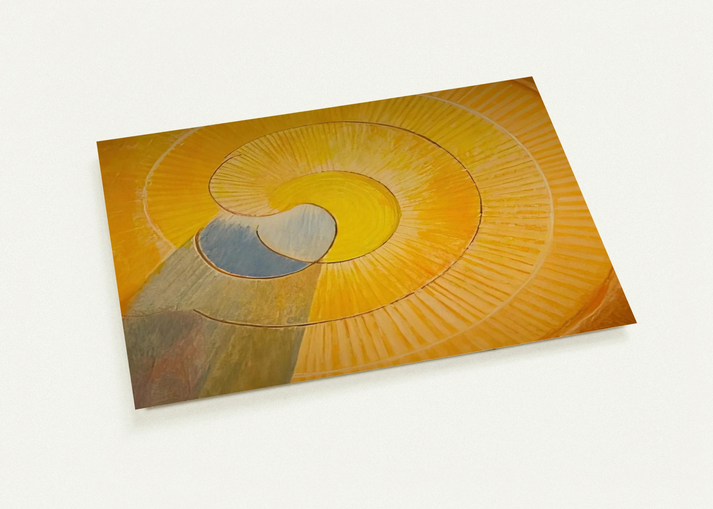
Abstraction - 1964 By Lawren Harris Pack of 10 Post Cards | Lawren Harris Post Cards | A6 (10.5 x 14.8 cm) - 4.1 x 5.8 inches
Abstraction - 1964 By Lawren Harris Pack of 10 Post Cards | Lawren Harris Post Cards | A6 (10.5 x 14.8 cm) - 4.1 x 5.8 inches
Couldn't load pickup availability
A Legacy of Canadian Abstraction: Lawren Harris’s "Abstraction - 1964"
Experience the profound spiritual and geometric exploration of Lawren Harris with this exclusive pack of 10 museum-quality postcards. Best known as a founding member of the Group of Seven, Harris transitioned in his later years toward pure abstraction, seeking to represent universal laws and higher states of consciousness. "Abstraction - 1964" stands as a testament to his mastery of balance, rhythm, and ethereal color, captured just years before his passing.
Museum-Quality Printing for the Discerning Collector
At RedKalion, we believe that even a postcard should be an archival masterpiece. Utilizing 12-color fine art printing technology, these reproductions offer a depth of color and precision that far exceeds standard inkjet methods. Every subtle gradient and geometric edge is rendered with stunning accuracy, ensuring the soulful energy of Harris's original vision is preserved.
Product Specifications
- Color Accuracy: Professional 12-color giclée printing for vibrant, gallery-standard depth.
- Paper Quality: Printed on 200 gsm (80 lb) paper with a thickness of 0.26 mm (10.3 mils).
- Finish: A smooth matte finish that eliminates glare, perfect for display or writing.
- Eco-Conscious: Produced on FSC-certified paper, aligning with sustainable art practices.
- Dimensions: Standard A6 size (10.5 x 14.8 cm / 4.1 x 5.8 inches).
Whether you are sending a note to a fellow art enthusiast or curating a small-scale gallery wall, these postcards offer a sophisticated touch of Canadian modernism. Elevate your correspondence with an archival-grade reproduction that honors the enduring legacy of Lawren Harris.

Discover Unlimited Art Possibilities
At RedKalion, you can find virtually any artwork from any artist, available in a wide range of sizes to perfectly match your space.
If you didn’t find what you’re looking for, contact us at support@redkalion.com . We will source any artwork and produce it in any size and format you need, including art prints, posters, canvas, framed pieces, framed canvas, and more.
For dedicated art enthusiasts, we also offer handcrafted replicas of any artwork, carefully painted by highly skilled artists using traditional techniques.
For custom requests, contact us at support@redkalion.com .
What printing technology is used for these postcards?
We use advanced 12-color fine art printing technology. Unlike standard 4-color processes, this museum-grade method ensures exceptional color vibrancy and depth for every Lawren Harris reproduction.
What is the weight and finish of the paper?
Each postcard is printed on 200 gsm (80 lb) FSC-certified paper with a smooth matte finish. This provides a premium, glare-free surface that is durable and elegant.
How are these postcards packaged for shipping?
Your pack of 10 Lawren Harris postcards is carefully packaged in protective materials to ensure they arrive in pristine condition, ready for mailing or framing.
Can these postcards be framed as mini art prints?
Absolutely. Given the high-quality 200 gsm paper and 12-color archival printing, these A6 postcards are ideal for creating a sophisticated small-scale gallery display.
What are the exact dimensions of the postcards?
Each postcard in this set is A6 size, measuring exactly 10.5 x 14.8 cm or 4.1 x 5.8 inches, making them compatible with standard A6 envelopes.
What influenced Lawren Harris’s transition to abstraction in 1964?
Harris was deeply influenced by Theosophy and the search for spiritual truth. By 1964, his work moved away from landscapes toward geometric forms to express universal harmony.
Is "Abstraction - 1964" considered part of the Group of Seven movement?
No, this piece belongs to Harris's later period. While he founded the Group of Seven, his work after the 1930s focused on purely abstract and transcendental themes.