

RedKalion
Abstraction in White - Hans Hofmann Brushed Aluminum Print - 70x100 cm / 28x40 inches | Hans Hofmann Aluminum Print | Hans Hofmann Prints
Abstraction in White - Hans Hofmann Brushed Aluminum Print - 70x100 cm / 28x40 inches | Hans Hofmann Aluminum Print | Hans Hofmann Prints
Couldn't load pickup availability
Hans Hofmann: Mastering Spatial Depth through Abstraction in White
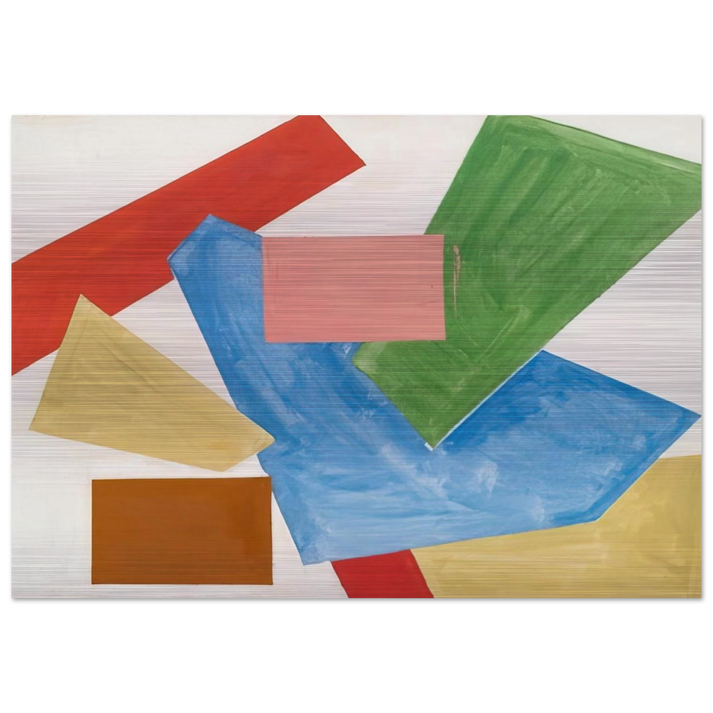
Hans Hofmann, a central figure in 20th-century Abstract Expressionism, redefined the canvas as a field of dynamic tension. In Abstraction in White, Hofmann’s legendary 'push and pull' theory is brought to life, where form and color interact to create a sense of movement and depth without relying on traditional perspective. RedKalion is proud to present this archival reproduction, rendered on a sophisticated metallic medium that complements the artist's visionary approach.
The Intersection of Modernist Legacy and Industrial Innovation
This fine art print is meticulously crafted on brushed silver Aluminum DIBOND®. The choice of material is deliberate: the horizontal grain of the 3mm (0.12") aluminum base provides a unique texture that dances with the light, echoing the energetic brushstrokes and architectural clarity of Hofmann's original composition. The matte, glare-free finish ensures that the subtle shifts in tone and structure remain the focal point, regardless of your room's lighting conditions.
Product Specifications for the Discerning Collector
- Dynamic Metallic Finish: Unprinted areas of the design reveal the brushed silver surface, creating a striking metallic effect particularly effective in the 'white' voids of Hofmann's work.
- Museum-Quality Durability: The 3mm DIBOND® panel offers a rigid, durable base that resists warping and aging.
- Advanced Direct Printing: Colors are printed directly onto the aluminum, resulting in vivid saturation and a contemporary aesthetic.
- Ready to Exhibit: Each print includes a hanging kit tailored to your location, ensuring a seamless installation.
Elevate your interior with a Hans Hofmann aluminum print that bridges the gap between mid-century modernism and contemporary industrial design. This museum-quality reproduction from RedKalion is more than a decorative piece; it is an enduring investment in art history.


Discover Unlimited Art Possibilities
At RedKalion, you can find virtually any artwork from any artist, available in a wide range of sizes to perfectly match your space.
If you didn’t find what you’re looking for, contact us at support@redkalion.com . We will source any artwork and produce it in any size and format you need, including art prints, posters, canvas, framed pieces, framed canvas, and more.
For dedicated art enthusiasts, we also offer handcrafted replicas of any artwork, carefully painted by highly skilled artists using traditional techniques.
For custom requests, contact us at support@redkalion.com .
What makes the brushed aluminum finish unique for this Hans Hofmann print?
The brushed silver Aluminum DIBOND® features a horizontal grain. In Abstraction in White, any unprinted white areas allow the metallic silver to shine through, creating a dynamic, light-reflecting surface that enhances the artwork's spatial depth.
Is the print protected against glare and reflections?
Yes, the direct print on AluDibond produces a matte, glare-free finish. This makes it ideal for bright spaces or rooms with heavy artificial lighting, ensuring the Hans Hofmann reproduction remains visible from every angle.
How do I install my Hans Hofmann aluminum print?
Every RedKalion print includes a hanging kit specifically chosen based on the fulfillment country. This ensures your 70x100 cm masterpiece is securely and easily mounted upon arrival.
What is the archival longevity of an Aluminum DIBOND® print?
Aluminum DIBOND® is highly durable and rigid, protecting against warping. Combined with high-quality direct printing, these archival-grade reproductions are designed to maintain their color integrity and structural form for decades.
How is the artwork shipped to ensure its safety?
We use premium, protective packaging designed for large-format fine art. Your 28x40 inch print is secured in specialized crating to prevent any bending or surface scratches during transit.
What was Hans Hofmann's 'Push and Pull' theory?
It was Hofmann’s signature concept where contrasting colors and forms create a sense of depth and movement. This movement 'pushes' and 'pulls' the viewer's eye across the canvas without using traditional 3D perspective.
Why is 'Abstraction in White' considered a significant piece?
This work exemplifies Hofmann’s transition toward structural abstraction, using white space not as a void, but as an active compositional element that balances the surrounding colors and shapes.