

RedKalion
Acrilico K - 1979 - Bice Lazzari Brushed Aluminum Print - 70x100 cm / 28x40 inches | Bice Lazzari Aluminum Print | Bice Lazzari Prints
Acrilico K - 1979 - Bice Lazzari Brushed Aluminum Print - 70x100 cm / 28x40 inches | Bice Lazzari Aluminum Print | Bice Lazzari Prints
Couldn't load pickup availability
Elevate Your Space with Bice Lazzari’s Modernist Vision
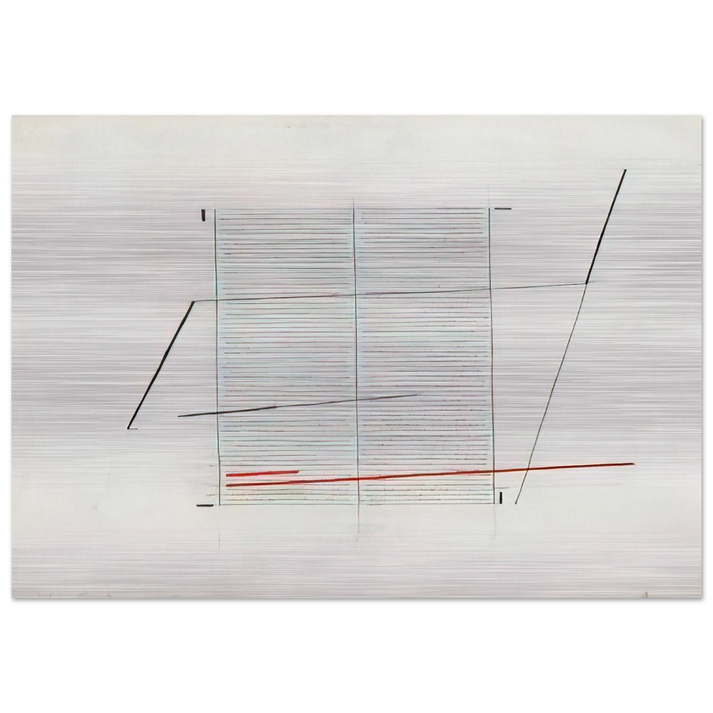
Experience the profound elegance of Acrilico K (1979), a definitive masterpiece by the renowned Italian artist Bice Lazzari. As a pioneer of abstraction, Lazzari’s late-career works are celebrated for their rhythmic simplicity and poetic geometry. This fine art print captures the essence of her 1970s transition to acrylics, where minimalist lines meet a sophisticated structural harmony.
Museum-Quality Reproduction on Brushed Aluminum
RedKalion brings this iconic work to life through a premium brushed silver Aluminum DIBOND® medium. This choice of material is not merely a substrate; it is an extension of the art itself. The 3mm (0.12") thick panel features a unique horizontal grain that interacts dynamically with ambient light, adding a contemporary depth to Lazzari's monochromatic and linear explorations.
- Signature Metallic Finish: Unprinted white areas in the composition reveal the raw silver aluminum, creating a stunning metallic effect that contrasts beautifully with the matte, glare-free ink.
- Archival Durability: Our museum-quality reproduction utilizes direct printing on a rigid, durable base, ensuring the piece remains a centerpiece of your collection for decades.
- Sophisticated Aesthetic: The matte finish is specifically curated to prevent glare, making it the ideal choice for high-light environments and professional gallery settings.
The Significance of Acrilico K
By 1979, Bice Lazzari had distilled her visual language into its most potent form. Acrilico K represents her mastery over space and silence. In this 70x100 cm (28x40 inches) format, the delicate interplay of line and void becomes a focal point of contemplative modernism. RedKalion is proud to offer this archival-grade print, meticulously crafted to satisfy the most discerning art historians and interior curators alike.


Discover Unlimited Art Possibilities
At RedKalion, you can find virtually any artwork from any artist, available in a wide range of sizes to perfectly match your space.
If you didn’t find what you’re looking for, contact us at support@redkalion.com . We will source any artwork and produce it in any size and format you need, including art prints, posters, canvas, framed pieces, framed canvas, and more.
For dedicated art enthusiasts, we also offer handcrafted replicas of any artwork, carefully painted by highly skilled artists using traditional techniques.
For custom requests, contact us at support@redkalion.com .
What makes the brushed aluminum finish unique for this Bice Lazzari print?
Our Aluminum DIBOND® features a brushed silver finish with a horizontal grain. This creates a dynamic metallic effect in white areas and a sophisticated matte texture elsewhere, enhancing the minimalist lines of Lazzari's work.
Is the hanging hardware included with the 70x100 cm print?
Yes, every RedKalion aluminum print arrives with a specialized hanging kit included. The specific hardware varies slightly based on the fulfillment country to ensure the most secure and aesthetic mounting for your space.
How does the archival quality of this print compare to traditional paper?
This 3mm Aluminum DIBOND® print is exceptionally durable and rigid. Unlike paper, it is resistant to warping and UV-induced fading, ensuring your Bice Lazzari reproduction maintains its museum-quality appearance for a lifetime.
What is the shipping protocol for such a large-format artwork?
We use premium protective packaging tailored for 70x100 cm dimensions. Each piece is securely crated to prevent any bending or surface scratches during transit, arriving ready for immediate display.
Can this aluminum print be cleaned easily?
Yes, the matte finish on the AluDibond is highly resilient. You can gently wipe the surface with a soft, dry microfiber cloth to remove dust without risking damage to the ink or the metallic substrate.
What was Bice Lazzari's artistic focus during the creation of Acrilico K in 1979?
In 1979, Lazzari focused on "painting as sign." Moving away from oil, she used acrylics to create rhythmic, minimalist compositions that explored the purity of line and the architectural potential of the canvas.
Is this specific work representative of the Italian 'Informel' movement?
While Lazzari was influenced by the Informel movement earlier in her career, Acrilico K represents her move toward a more lyrical, rational abstraction, focusing on structural harmony rather than raw gestural emotion.