

RedKalion
Adobes and Shed, New Mexico - Edward Hopper Brushed Aluminum Print - 70x100 cm / 28x40 inches | Edward Hopper Aluminum Print | Edward Hopper Prints
Adobes and Shed, New Mexico - Edward Hopper Brushed Aluminum Print - 70x100 cm / 28x40 inches | Edward Hopper Aluminum Print | Edward Hopper Prints
Couldn't load pickup availability
Elevate Your Space with Edward Hopper’s Architectural Solitude
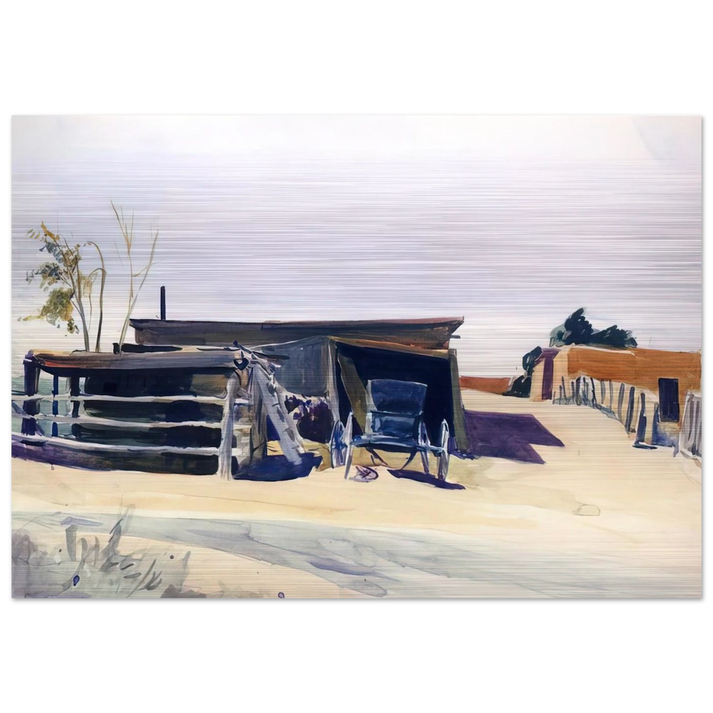
Experience the stark, luminous beauty of the American Southwest through the lens of one of the 20th century’s most revered realists. Adobes and Shed, New Mexico captures a pivotal moment in Edward Hopper’s career when he moved away from the bustling streets of New York to explore the geometric simplicity and harsh, direct light of the desert. This museum-quality reproduction, curated by RedKalion, brings a sophisticated modern edge to a classic masterpiece.
The Artistry of Light and Structure
Hopper’s visit to New Mexico in 1925 profoundly influenced his mastery of shadow. In this piece, the adobe structures are more than just buildings; they are studies in form and isolation. Our Edward Hopper brushed aluminum print enhances this effect by utilizing the natural horizontal grain of the metal to interact with light, mimicking the texture of sun-bleached clay and the vast New Mexican horizon.
Archival Craftsmanship on Premium Aluminum DIBOND®
At RedKalion, we believe fine art prints should be as enduring as the works they represent. This piece is rendered on a 3mm (0.12") brushed silver Aluminum DIBOND® base, providing a rigid and durable foundation. The direct print process ensures vivid color saturation with a sophisticated matte finish, eliminating glare and making it ideal for bright, modern interiors.
- Metallic Depth: Unprinted white areas reveal the brushed silver grain, creating a dynamic, shimmering effect that shifts with your perspective.
- Museum Quality: Direct-to-substrate printing ensures archival longevity and water resistance.
- Elegant Profile: A slim, 3mm thickness provides a gallery-standard aesthetic without excessive bulk.
- Ready to Display: Each print includes a high-quality hanging kit tailored to your location for effortless installation.
By choosing this archival-grade reproduction, you are not simply buying a poster; you are investing in a piece of art history that transforms your environment through the quiet power of Hopper’s vision.


Discover Unlimited Art Possibilities
At RedKalion, you can find virtually any artwork from any artist, available in a wide range of sizes to perfectly match your space.
If you didn’t find what you’re looking for, contact us at support@redkalion.com . We will source any artwork and produce it in any size and format you need, including art prints, posters, canvas, framed pieces, framed canvas, and more.
For dedicated art enthusiasts, we also offer handcrafted replicas of any artwork, carefully painted by highly skilled artists using traditional techniques.
For custom requests, contact us at support@redkalion.com .
What makes the Aluminum DIBOND® print unique?
Our Aluminum DIBOND® prints use a 3mm rigid base with a brushed silver finish. This material offers a unique metallic texture and horizontal grain that adds depth and a contemporary feel to fine art reproductions, making colors pop without unwanted glare.
How does the brushed silver finish affect the artwork?
The brushed silver effect is visible in any unprinted or white areas of the design. This creates a dynamic, metallic shimmer that changes based on the light in the room, particularly enhancing the geometric shadows in Hopper’s work.
Is the hanging hardware included with the print?
Yes, every RedKalion aluminum print comes with a specialized hanging kit. The specific hardware provided is optimized based on the fulfillment country to ensure a secure and aesthetically pleasing installation on your wall.
How should I clean my aluminum art print?
To maintain the archival quality of your print, simply wipe it gently with a soft, lint-free cloth. Because the Aluminum DIBOND® is water-resistant and durable, it is much easier to maintain than traditional paper prints behind glass.
Is this print archival quality?
Absolutely. We use professional-grade inks and direct-to-metal printing techniques to ensure your Edward Hopper print remains vibrant and resistant to fading for decades, fulfilling the highest standards of museum-quality reproductions.
Why did Edward Hopper paint in New Mexico?
Hopper visited New Mexico in the mid-1920s seeking a change from urban themes. He was fascinated by the unique quality of desert light and the simplified, cubic forms of adobe architecture, which influenced his later style.
What is the significance of Adobes and Shed, New Mexico?
This work represents Hopper’s transition toward focusing on architectural form and the interplay of light and shadow. It captures a sense of stillness and permanence that would become a hallmark of his most famous American realist paintings.