RedKalion
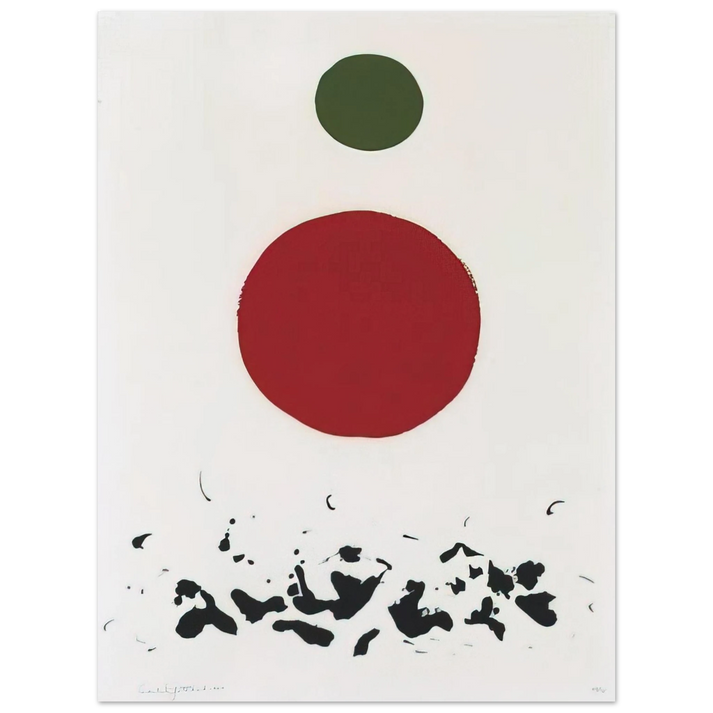
Adolph Gottlieb - Flotsam - 1967 75x100 cm / 30x40inches Fine Art Poster
Adolph Gottlieb - Flotsam - 1967 75x100 cm / 30x40inches Fine Art Poster
Couldn't load pickup availability
Adolph Gottlieb: Flotsam (1967) – A Masterpiece of Abstract Equilibrium
In the pantheon of mid-century modernism, few artists balanced the primal with the sophisticated as masterfully as Adolph Gottlieb. His 1967 work, Flotsam, is a definitive example of his mature period, where the frantic energy of his earlier Pictographs gave way to the serene, spatial tensions of his 'Burst' and 'Imaginary Landscape' sequences. This museum-quality reproduction captures the delicate interplay of suspended forms and the expansive void that defines Gottlieb's later career.
At RedKalion, we believe such a profound work of Abstract Expressionism deserves a medium that respects its historical gravity. Our fine art print is meticulously produced on Master's Edition archival paper. This 250 gsm (110 lb) natural white, uncoated stock provides a luxurious, matte texture that ensures the deep pigments and subtle tonal shifts of Flotsam are rendered with absolute fidelity. Free from optical brighteners, the off-white paper offers a sophisticated warmth that mimics the original canvas experience.
The RedKalion Archival Standard
- Archival Longevity: Acid-free (pH above 7) chemistry prevents yellowing and degradation, ensuring your investment remains a centerpiece for generations.
- Sustainable Excellence: We utilize FSC-certified paper, aligning artistic beauty with environmental responsibility.
- Sophisticated Finish: The uncoated matte surface eliminates glare, allowing the viewer to appreciate the intricate brushwork and spatial depth without distraction.
Elevate your curated space with a work that bridges the gap between the terrestrial and the cosmic. This Adolph Gottlieb Flotsam 1967 print is more than a poster; it is a durable, archival-grade artifact curated for the discerning collector.
Discover Unlimited Art Possibilities
At RedKalion, you can find virtually any artwork from any artist, available in a wide range of sizes to perfectly match your space.
If you didn’t find what you’re looking for, contact us at support@redkalion.com . We will source any artwork and produce it in any size and format you need, including art prints, posters, canvas, framed pieces, framed canvas, and more.
For dedicated art enthusiasts, we also offer handcrafted replicas of any artwork, carefully painted by highly skilled artists using traditional techniques.
For custom requests, contact us at support@redkalion.com .
What kind of paper is used for this Adolph Gottlieb print?
We use Master's Edition archival paper. It is a premium 250 gsm (110 lb) museum-quality paper with a natural white, uncoated finish for a luxurious, glare-free texture.
Will the colors of 'Flotsam' fade over time?
No. Our prints are acid-free with a pH above 7, which prevents yellowing and ensures the archival integrity of the pigments for decades.
Is the paper used for this reproduction environmentally friendly?
Yes, we use FSC-certified paper (or equivalent certifications), ensuring that your fine art print meets the highest standards of environmental and social responsibility.
How is my fine art poster delivered?
Each print is produced on-demand with no minimum order requirements and is shipped in protective, robust packaging to ensure it arrives in pristine condition.
What is the surface finish of the 'Flotsam' (1967) print?
The print features a matte, uncoated finish. This natural white (off-white) surface provides a sophisticated, non-reflective appearance that highlights the artwork’s detail.
What artistic movement does Adolph Gottlieb’s 'Flotsam' represent?
Gottlieb was a founding member of the New York School. 'Flotsam' represents the mature phase of Abstract Expressionism, focusing on spatial tension and symbolic abstraction.
What is the significance of the title 'Flotsam' in this 1967 composition?
The title refers to floating wreckage. Gottlieb uses this concept to explore the relationship between weightless forms and an expansive field, creating a sense of balanced suspension.