
RedKalion
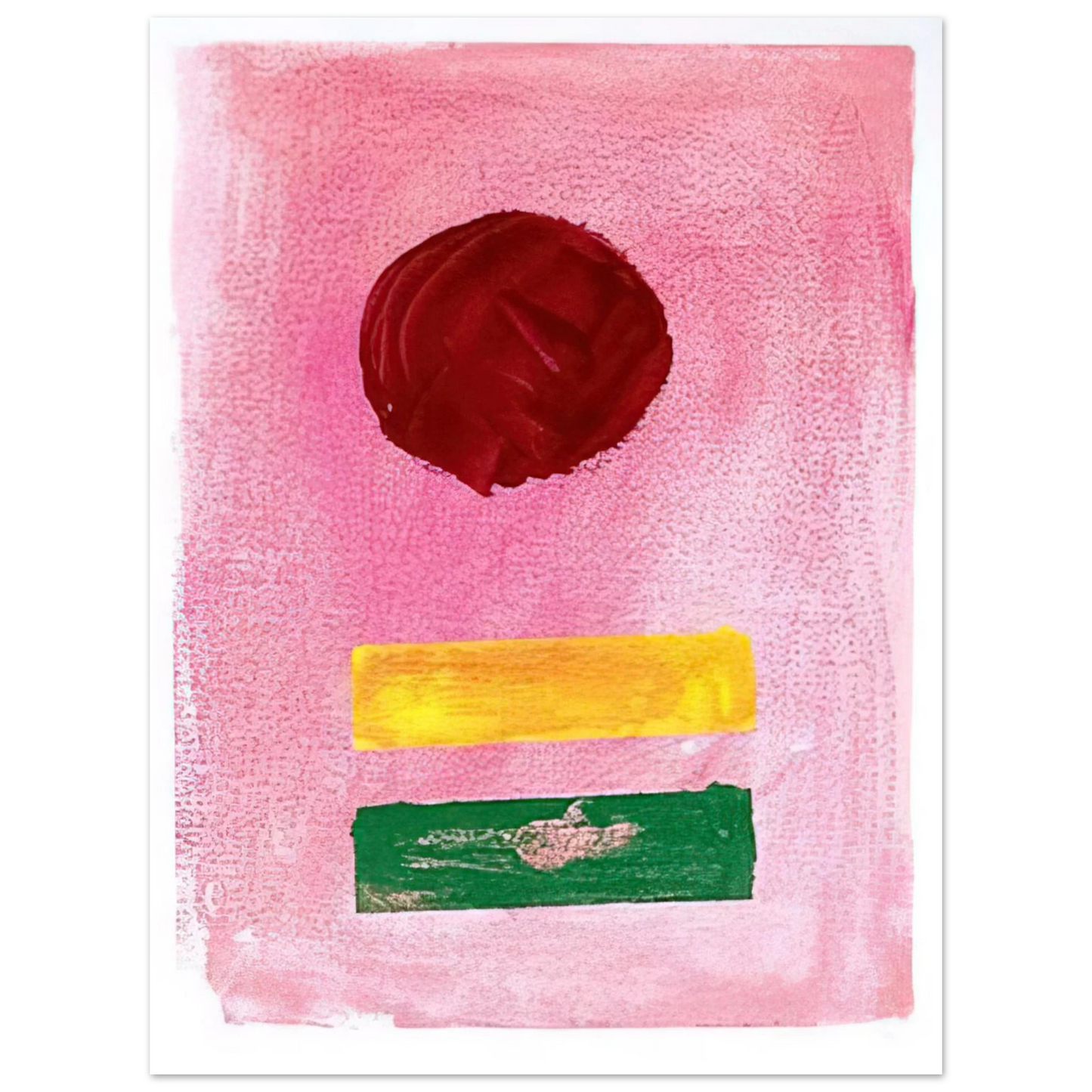
Adolph Gottlieb - Pink Ground - 1972 75x100 cm / 30x40inches Fine Art Poster
Adolph Gottlieb - Pink Ground - 1972 75x100 cm / 30x40inches Fine Art Poster
Couldn't load pickup availability
Elevate Your Space with Adolph Gottlieb’s Pink Ground (1972)
Experience the profound serenity and gestural power of late-era Abstract Expressionism with this museum-quality reproduction of Adolph Gottlieb’s Pink Ground (1972). As a founding member of 'The Irascibles,' Gottlieb spent his career exploring the duality between chaos and order. In this 1972 masterpiece, he achieves a sublime balance, utilizing a vast, luminous color field that invites contemplation and adds a sophisticated focal point to any modern interior.
A Masterpiece of Abstract Expressionism
By 1972, Gottlieb had refined his visual vocabulary to its most essential elements. Pink Ground represents the culmination of his 'Imaginary Landscapes' and 'Bursts' series, where the relationship between the background and the floating forms creates a sense of infinite space. The soft, resonant pink hue serves as more than just a backdrop; it is an active participant in the composition, highlighting Gottlieb’s mastery of the Color Field movement.
RedKalion’s Commitment to Museum-Grade Quality
At RedKalion, we believe that fine art deserves to be preserved with the same care as the originals. This fine art print is meticulously produced on our Master's Edition archival paper. With a weight of 250 gsm (110 lb) and a thickness of 0.29 mm, the paper provides a luxurious, heavy feel that reflects the gravity of the artwork. The matte, uncoated finish ensures a natural white (off-white) texture that eliminates glare and enhances the depth of Gottlieb's palette.
Archival Integrity and Sustainability
- Archival Longevity: Our acid-free paper (pH above 7) prevents yellowing or degradation, ensuring your investment remains vibrant for generations.
- FSC-Certified: We utilize responsibly sourced materials, aligning premium art curation with environmental stewardship.
- Authentic Texture: The 30x40 inch (75x100 cm) format allows the subtle nuances of Gottlieb's technique to shine through with breathtaking clarity.
Adorn your walls with a piece of art history. This archival-grade reproduction offers an enduring connection to the legacy of one of the 20th century's most influential artists.
Discover Unlimited Art Possibilities
At RedKalion, you can find virtually any artwork from any artist, available in a wide range of sizes to perfectly match your space.
If you didn’t find what you’re looking for, contact us at support@redkalion.com . We will source any artwork and produce it in any size and format you need, including art prints, posters, canvas, framed pieces, framed canvas, and more.
For dedicated art enthusiasts, we also offer handcrafted replicas of any artwork, carefully painted by highly skilled artists using traditional techniques.
For custom requests, contact us at support@redkalion.com .
What defines the quality of this Adolph Gottlieb print?
We use Master's Edition archival paper (250 gsm), providing a museum-quality feel. The matte, natural white finish ensures high contrast and deep color saturation without distracting reflections.
How is the Pink Ground reproduction shipped?
Each print is produced on demand and shipped in protective, robust packaging to ensure it arrives in gallery condition. There are no minimum orders for our premium fulfillment service.
Will the colors of this fine art poster fade over time?
No. Our prints use acid-free paper with a pH above 7, which prevents yellowing and preserves the archival integrity of the pigments for decades.
Is the paper used for this print sustainable?
Yes, we use FSC-certified paper, ensuring that your fine art reproduction meets the highest environmental and social standards for responsible forestry.
Does this print include a frame?
This product is a premium fine art print only. Its standard 75x100 cm (30x40 inch) dimensions make it easy to find a custom or ready-made frame to suit your decor.
What is the significance of Pink Ground (1972) in Gottlieb's career?
Created near the end of his life, this piece reflects Gottlieb's shift toward more minimalist, serene compositions while retaining the gestural energy of his earlier Abstract Expressionist works.
How does the 75x100 cm scale impact the viewing experience?
The large 30x40 inch format allows the viewer to fully immerse themselves in the color field, capturing the intentional spatial relationships and textures of the original 1972 canvas.