
RedKalion
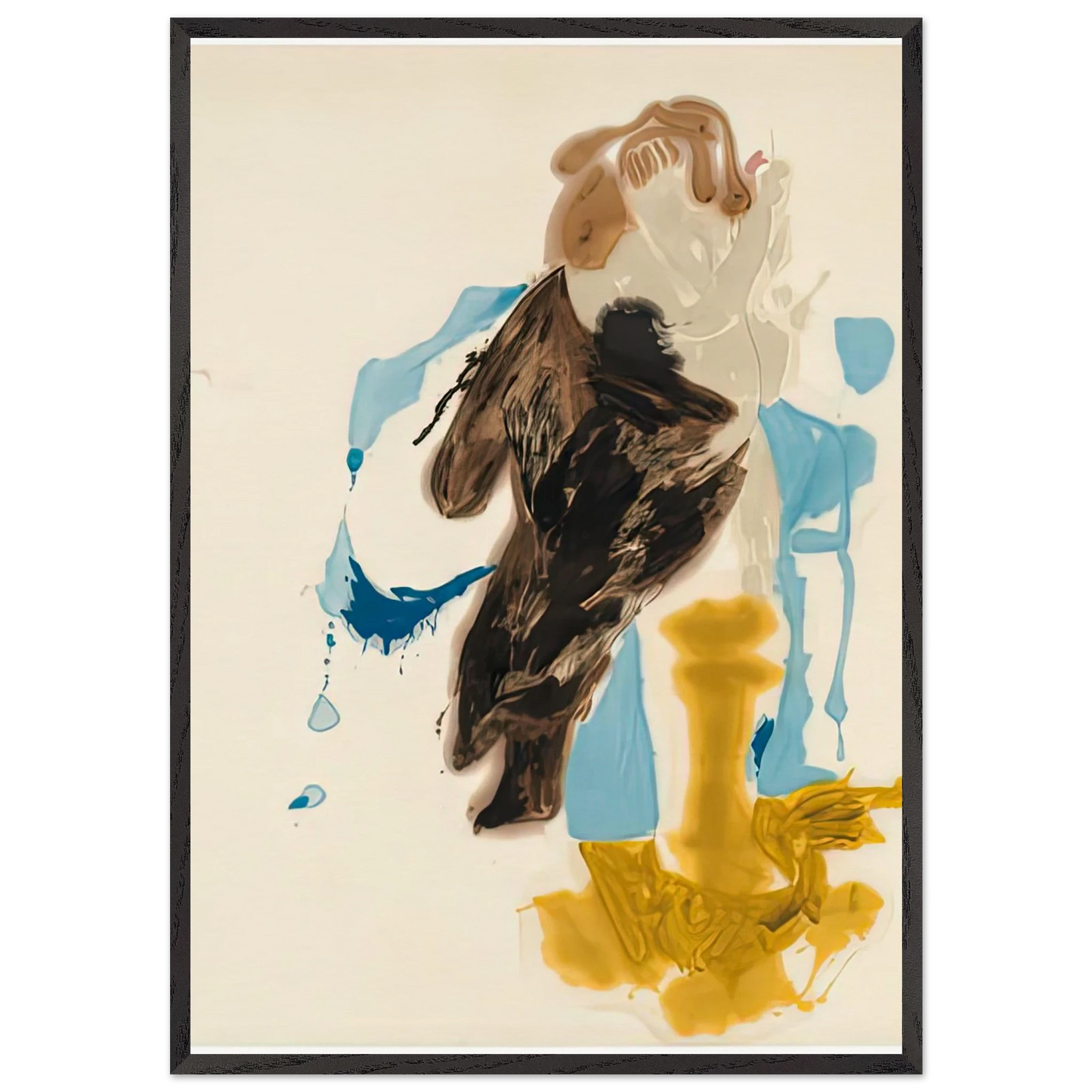
After Rubens 1961- - Helen Frankenthaler 70x100 cm / 28x40 inches Framed Art Print – Black Wooden Frame
After Rubens 1961- - Helen Frankenthaler 70x100 cm / 28x40 inches Framed Art Print – Black Wooden Frame
Couldn't load pickup availability
The Convergence of Baroque Energy and Abstract Expressionism
Helen Frankenthaler’s 1961 masterpiece, After Rubens, represents a pivotal dialogue between the Old Masters and the mid-century avant-garde. While Frankenthaler is celebrated for her revolutionary 'soak-stain' technique, this work showcases her profound ability to translate the dynamic, swirling compositions of Peter Paul Rubens into a language of fluid abstraction and gestural brilliance. By reimagining the Baroque master's kinetic energy through her signature Color Field lens, Frankenthaler captures the essence of movement without the constraint of figurative form.
Museum-Grade Reproduction for the Discerning Curator
At RedKalion, we honor Frankenthaler’s legacy by utilizing archival museum-quality paper to ensure every hue and gestural mark is preserved with absolute fidelity. This fine art print is rendered on heavy 250 gsm (110 lb) natural white, matte-finished paper, providing a sophisticated, glare-free surface that invites deep contemplation of the work’s tonal nuances. The 0.29 mm thickness offers a tactile weight that distinguishes this piece from standard commercial posters, elevating it to a true investment in home curation.
Sustainable Elegance and Professional Framing
This 70x100 cm (28x40 inch) statement piece is encased in a premium, responsibly sourced black wooden frame crafted from high-quality oak or ash. With a profile of 20mm (0.79") in both width and thickness, the frame offers a substantial, contemporary presence that anchors the artwork. Protected by shatterproof plexiglass and arriving ready-to-hang with an included mounting kit, this archival masterpiece is designed to endure for generations while respecting the environment through FSC-certified materials.
- Technique: Archival Giclée reproduction on 250 gsm natural white paper.
- Frame: Hand-finished 20mm black oak/ash wood with a matte texture.
- Longevity: Acid-free materials prevent yellowing, ensuring museum-standard lifespan.
- Installation: Pre-installed hanging hardware for effortless wall mounting.
Discover Unlimited Art Possibilities
At RedKalion, you can find virtually any artwork from any artist, available in a wide range of sizes to perfectly match your space.
If you didn’t find what you’re looking for, contact us at support@redkalion.com . We will source any artwork and produce it in any size and format you need, including art prints, posters, canvas, framed pieces, framed canvas, and more.
For dedicated art enthusiasts, we also offer handcrafted replicas of any artwork, carefully painted by highly skilled artists using traditional techniques.
For custom requests, contact us at support@redkalion.com .
What makes the paper quality superior for this Frankenthaler print?
We use 250 gsm (110 lb) museum-quality paper with a matte, uncoated finish. This archival-grade, natural white paper ensures rich color depth and prevents yellowing, maintaining the integrity of the abstract expressionist palette over time.
Is the framing material sustainable and durable?
Yes, our frames are crafted from FSC-certified oak and ash wood. The 20mm profile is wider than standard frames, providing structural stability, while the shatterproof plexiglass offers superior protection without the risk of breakage during shipping.
How does the 'ready-to-hang' feature work?
Your After Rubens print arrives fully assembled in its black wooden frame. A complete hanging kit is included, allowing you to mount the artwork directly onto your wall immediately upon delivery with no additional framing required.
What shipping precautions are taken for large-scale prints?
Each 70x100 cm framed print is secured in specialized protective packaging. We use reinforced edges and cushioning to ensure the shatterproof plexiglass and solid wood frame arrive in pristine condition anywhere in the world.
Will the colors fade under indoor lighting?
No, we utilize archival inks and acid-free, 250 gsm paper. This combination is specifically engineered to resist fading from indoor light exposure, ensuring your fine art reproduction remains vibrant for decades.
What was Helen Frankenthaler's 'soak-stain' technique?
Frankenthaler pioneered the soak-stain technique by thinning oil or acrylic paint with turpentine, allowing it to soak directly into raw canvas. This created a watercolor-like effect on a grand scale, a hallmark of the Color Field movement.
How does 'After Rubens' relate to the original Baroque master?
In this 1961 work, Frankenthaler studied the compositional rhythm and 'vibrations' of Peter Paul Rubens. Rather than copying his figures, she translated the energy and flow of his Baroque masterpieces into abstract, gestural shapes.