RedKalion
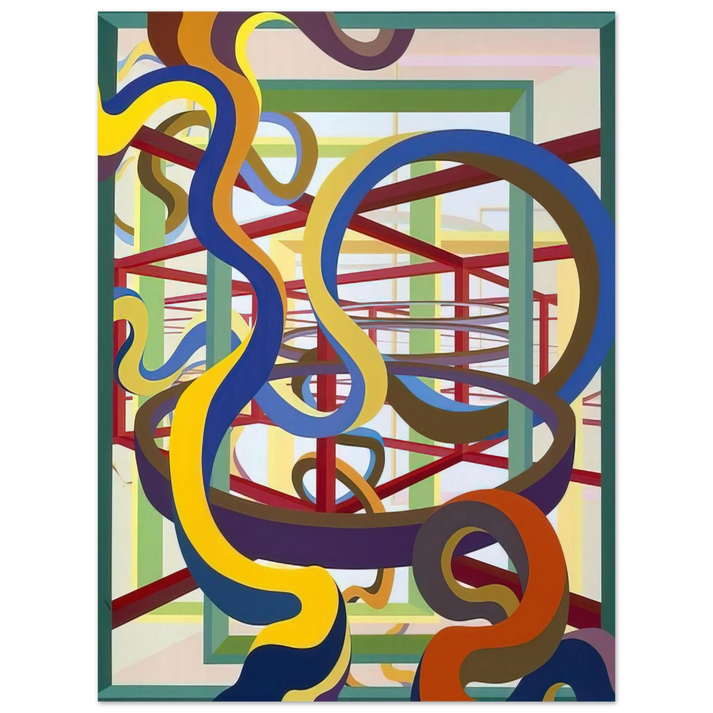
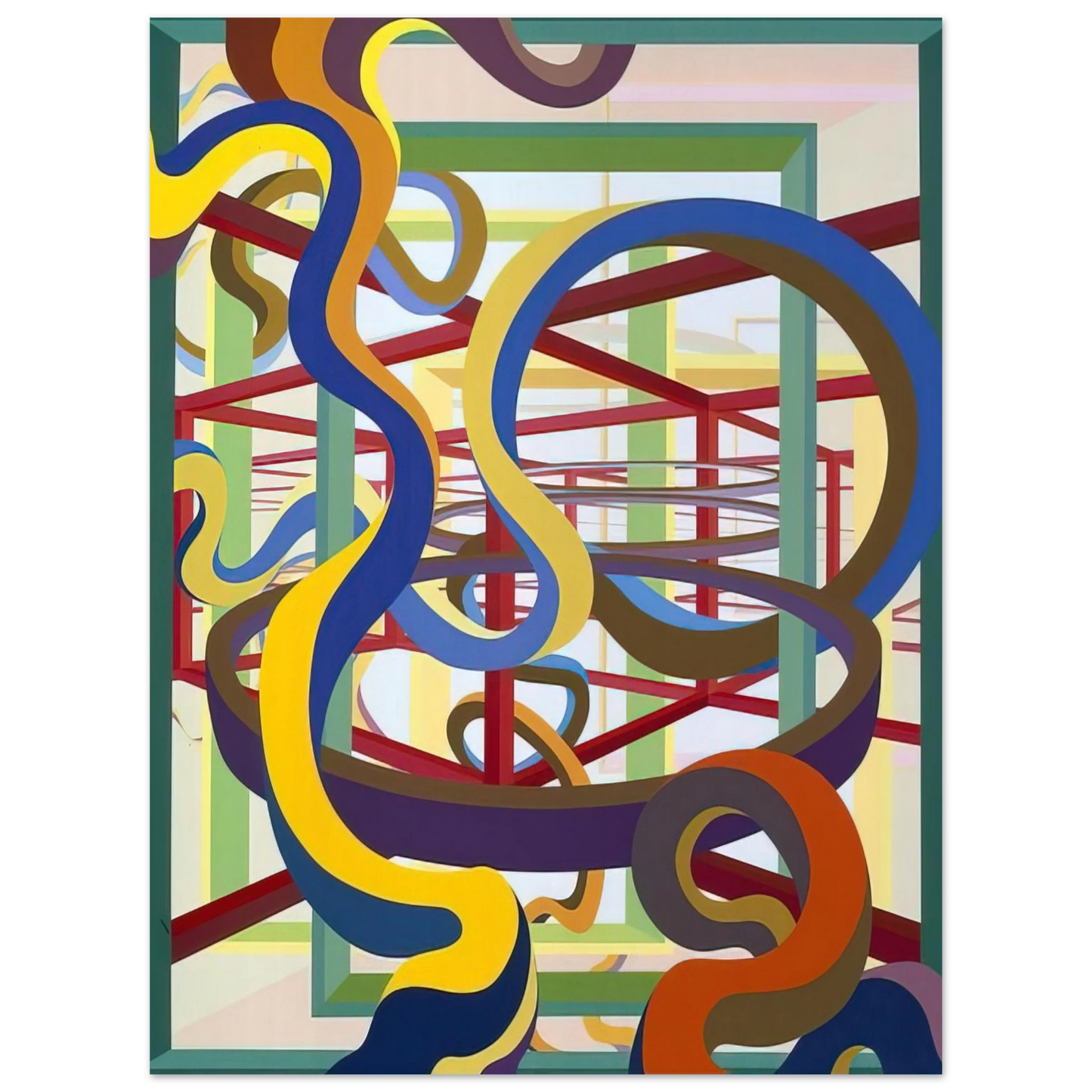
Al Held - Vorcex IV 75x100 cm / 30x40inches Fine Art Poster
Al Held - Vorcex IV 75x100 cm / 30x40inches Fine Art Poster
Couldn't load pickup availability
The Architectural Infinity of Al Held: Vorcex IV
Step into the labyrinthine world of Al Held, a titan of American abstract art whose later career was defined by a shift from Abstract Expressionism to a profound exploration of complex, geometric space. Vorcex IV is a definitive example of Held’s mastery, featuring a sophisticated interplay of overlapping shapes, architectural grids, and shifting perspectives that challenge the viewer’s perception of depth and reality.
As a premium fine art print, this reproduction captures the crystalline clarity and intellectual rigor of Held’s original composition. The piece functions as more than a decoration; it is a window into a multidimensional universe, making it an ideal focal point for contemporary interiors seeking an air of intellectual sophistication and visual energy.
Museum-Grade Execution at RedKalion
At RedKalion, we believe that the medium is as vital as the message. To honor Al Held’s precision, each Vorcex IV reproduction is crafted using our Master's Edition archival paper. This premium substrate ensures that the sharp edges and intricate layering of the artwork are rendered with absolute fidelity.
- Archival Longevity: Our museum-quality paper is acid-free (pH above 7), preventing the yellowing or degradation often seen in standard prints.
- Luxurious Texture: The 250 gsm (110 lb) natural white, matte finish offers a tactile richness that eliminates glare, allowing the complex geometries to shine under any lighting condition.
- Exceptional Weight: With a thickness of 0.29 mm (11.4 mils), this print provides the substantial feel of a gallery-original piece.
- Ethical Craftsmanship: We exclusively use FSC-certified paper, ensuring your collection supports sustainable forestry practices.
By choosing this Al Held museum-quality reproduction, you are not just acquiring a poster; you are investing in a piece of art history designed to endure for generations. Elevate your space with a masterpiece that bridges the gap between mid-century modernism and the digital-age aesthetic.
Discover Unlimited Art Possibilities
At RedKalion, you can find virtually any artwork from any artist, available in a wide range of sizes to perfectly match your space.
If you didn’t find what you’re looking for, contact us at support@redkalion.com . We will source any artwork and produce it in any size and format you need, including art prints, posters, canvas, framed pieces, framed canvas, and more.
For dedicated art enthusiasts, we also offer handcrafted replicas of any artwork, carefully painted by highly skilled artists using traditional techniques.
For custom requests, contact us at support@redkalion.com .
What are the specific qualities of the Master's Edition paper?
We use 250 gsm (110 lb) museum-quality archival paper. It features a natural white, uncoated matte finish that provides a luxurious feel and eliminates light reflections for optimal viewing.
Will the colors of my Al Held print fade over time?
No. Our paper is acid-free with a pH above 7, specifically designed to prevent yellowing and ensure the archival longevity of the vibrant pigments for decades.
Is the paper used for this fine art print sustainable?
Yes, all prints are produced on FSC-certified paper, guaranteeing that the materials are sourced from responsibly managed forests that provide environmental and social benefits.
How is my Vorcex IV print fulfilled and shipped?
RedKalion prints and ships on demand with no minimum order requirements. Your fine art poster is carefully packaged to ensure it arrives in pristine condition at your doorstep.
What is the physical thickness of the print?
This premium reproduction has a thickness of 0.29 mm (11.4 mils), offering the structural integrity and weight expected of professional gallery prints.
What artistic style does Al Held’s Vorcex IV represent?
Vorcex IV belongs to Held's Geometric Abstraction period. It explores 'Concrete Art' influences and illusionistic space, moving beyond flat canvas surfaces to create complex, three-dimensional architectural landscapes.
Why is the Vorcex series significant in modern art history?
The series represents Held's rejection of the 'flatness' of Modernism. It introduced a post-Einsteinian sense of space, where multiple perspectives coexist simultaneously, challenging the limits of human visual perception.