RedKalion
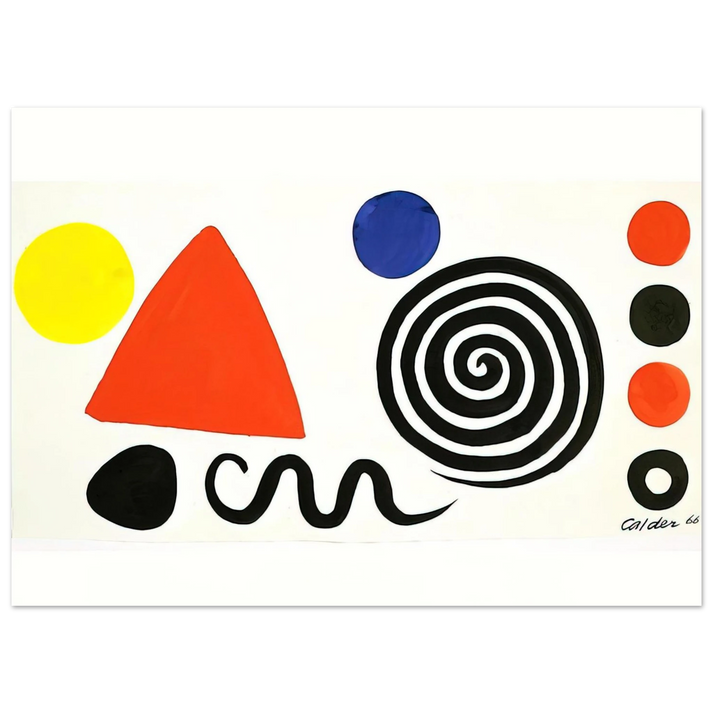
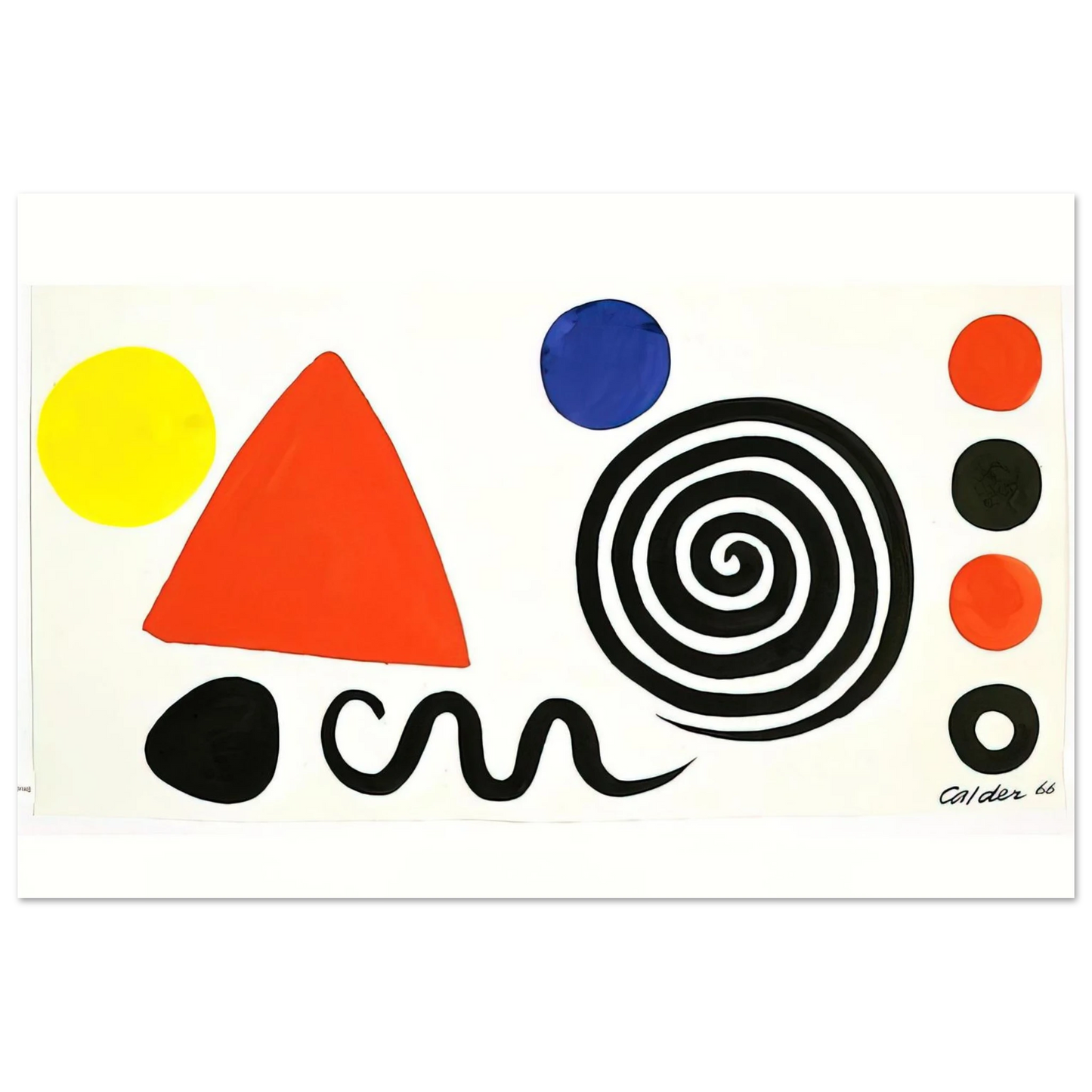
Alexander Calder - ABSTRACTION 1966 Fine Art Poster
Alexander Calder - ABSTRACTION 1966 Fine Art Poster
Couldn't load pickup availability
Experience the Kinetic Energy of Alexander Calder’s ABSTRACTION 1966
Step into the vibrant world of Alexander Calder with this exquisite fine art print of ABSTRACTION 1966. Renowned primarily for his revolutionary kinetic mobiles, Calder’s two-dimensional works from the mid-1960s capture the same sense of equilibrium and playful geometry. This museum-quality reproduction brings the artist’s signature primary palette and bold, sweeping forms into your personal collection, serving as a definitive testament to the mid-century modern aesthetic.
In 1966, Calder’s mastery of abstract expression reached a pinnacle of clarity. Unlike his intricate wire sculptures, his graphic works emphasize flat planes of color that seem to vibrate with internal life. By choosing this Alexander Calder fine art poster, you are not merely decorating a wall; you are curating a piece of art history that reflects the joy and mathematical precision of one of the 20th century’s most influential creators. This piece serves as a bridge between the physical world of sculpture and the cerebral world of pure color.
Premium Craftsmanship for the Discerning Collector
At RedKalion, we believe that world-class art deserves world-class materials. This reproduction is crafted to the highest standards of the archival industry, ensuring that the integrity of Calder's vision is preserved for generations:
- Master's Edition Archival Paper: A heavyweight 250 gsm (110 lb) foundation with a thickness of 0.29 mm (11.4 mils) for a premium, substantial feel.
- Luxurious Matte Finish: An uncoated, natural white (off-white) texture that eliminates glare and enhances the depth of the iconic primary tones.
- Archival Longevity: Our acid-free paper (pH above 7) prevents yellowing and degradation, ensuring your investment remains as vivid as the day it was printed.
- Sustainably Produced: Every print utilizes FSC-certified paper, reflecting a commitment to both artistic excellence and environmental responsibility.
Elevate your interior with an archival masterpiece that endures. This print is produced on demand with no minimum orders, ensuring a bespoke quality that fits perfectly within a modern, minimalist, or eclectic space. Trust RedKalion to deliver a piece that transcends simple decoration, offering instead an enduring encounter with modernism.


Discover Unlimited Art Possibilities
At RedKalion, you can find virtually any artwork from any artist, available in a wide range of sizes to perfectly match your space.
If you didn’t find what you’re looking for, contact us at support@redkalion.com . We will source any artwork and produce it in any size and format you need, including art prints, posters, canvas, framed pieces, framed canvas, and more.
For dedicated art enthusiasts, we also offer handcrafted replicas of any artwork, carefully painted by highly skilled artists using traditional techniques.
For custom requests, contact us at support@redkalion.com .
What paper quality is used for this Alexander Calder print?
We use Master's Edition archival paper, a museum-quality 250 gsm (110 lb) media. It features a matte, uncoated finish and a natural white tone, ensuring the artwork's colors are represented with sophisticated depth and no distracting glare.
How does RedKalion ensure the longevity of the artwork?
Our prints are produced on acid-free paper with a pH above 7. This archival standard prevents the paper from yellowing or becoming brittle over time, ensuring your museum-quality reproduction maintains its integrity for decades.
Is the paper used for the ABSTRACTION 1966 poster sustainable?
Yes, RedKalion is committed to environmental standards. This Alexander Calder fine art poster is printed on FSC-certified paper, ensuring that the materials are sourced from responsibly managed forests.
What are the shipping and fulfillment details?
We operate on a print-on-demand model with no minimum order requirements. Each piece is carefully printed specifically for you and shipped in protective packaging to ensure it arrives in gallery-ready condition.
Does the print include a frame or a border?
This listing is for the unframed archival print. The natural white paper provides a luxurious border-like feel, but the physical dimensions refer to the paper size. This allows you to choose a frame that best matches your decor.
What is the historical significance of Calder's 1966 work?
In 1966, Alexander Calder was at the height of his international fame. His work during this period transitioned his 'mobile' concepts into 2D forms, using bold primary colors to suggest movement and balance on a flat plane.
Is this a real lithograph or a digital reproduction?
This is a museum-quality digital reproduction of the 1966 artwork. Using state-of-the-art archival ink systems on 250 gsm Master's Edition paper, it captures the nuance and vibrancy of the original composition with modern precision.