RedKalion
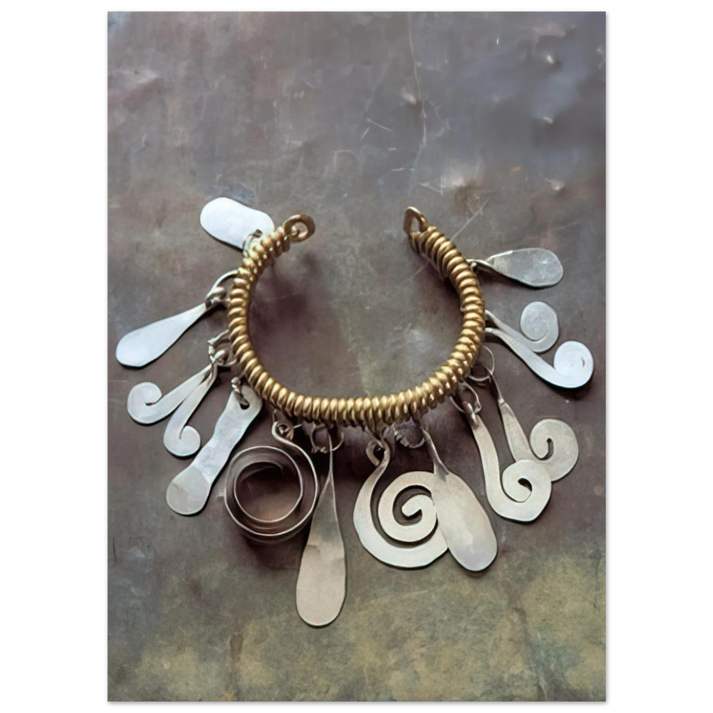
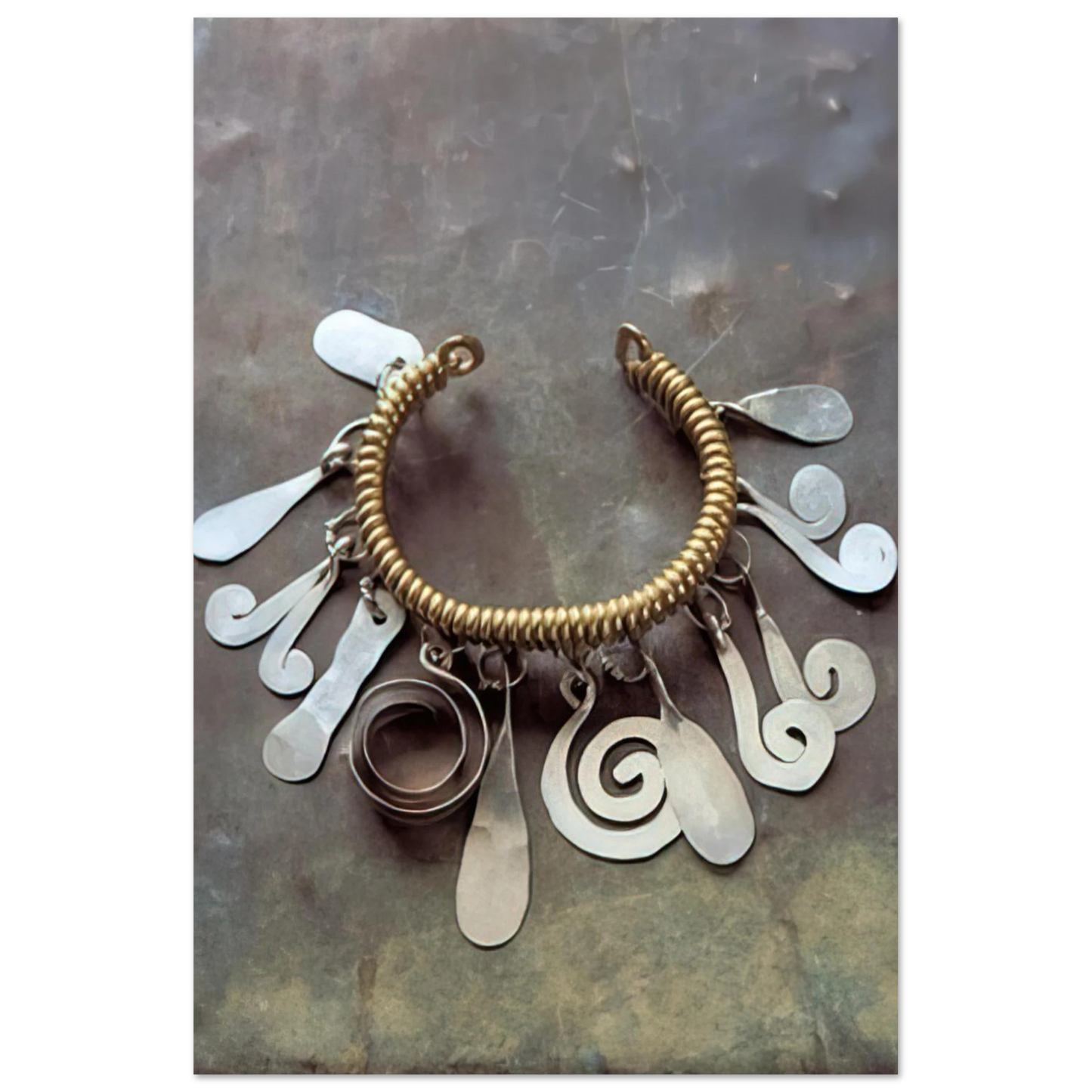
Alexander Calder - BRACELET 1930 Fine Art Poster
Alexander Calder - BRACELET 1930 Fine Art Poster
Couldn't load pickup availability
Alexander Calder - BRACELET 1930: The Elegance of Kinetic Modernism
This striking Alexander Calder - BRACELET 1930 fine art poster captures a pivotal moment in the career of the twentieth century's most innovative sculptor. Before his world-renowned mobiles took flight, Calder revolutionized the world of wearable art, treating jewelry not as mere ornament, but as intimate, portable sculpture. This piece reflects the minimalist linear rhythm and avant-garde spirit of 1930s Parisian modernism.
As a museum-quality reproduction curated by RedKalion, this print serves as a bridge between industrial precision and organic form. Every curve and line is rendered with absolute clarity, honoring Calder’s hand-wrought aesthetic. To ensure the longevity of this masterpiece, we utilize our Master's Edition archival paper, a choice preferred by galleries worldwide for its luxurious texture and enduring stability.
Premium Craftsmanship for the Discerning Collector
When you acquire a RedKalion print, you are investing in an archival object designed to last for generations. We utilize 250 gsm (110 lb) natural white paper, which provides a sophisticated, off-white matte finish that eliminates glare while enhancing the depth of the ink. Our commitment to excellence includes the following specifications:
- Archival Longevity: Acid-free (pH above 7) composition prevents yellowing and degradation over time.
- Substantial Texture: A thickness of 0.29 mm (11.4 mils) ensures a premium, tactile presence.
- Sustainability: Printed on FSC-certified paper, supporting responsible forest management.
- Uncoated Finish: A natural matte texture that emphasizes the artistic integrity of Calder's lines.
Elevate your interior space with an archival masterpiece that endures. This Alexander Calder fine art print is not merely a poster; it is a curated window into the evolution of modern art, printed on demand with the meticulous care that only RedKalion provides.


Discover Unlimited Art Possibilities
At RedKalion, you can find virtually any artwork from any artist, available in a wide range of sizes to perfectly match your space.
If you didn’t find what you’re looking for, contact us at support@redkalion.com . We will source any artwork and produce it in any size and format you need, including art prints, posters, canvas, framed pieces, framed canvas, and more.
For dedicated art enthusiasts, we also offer handcrafted replicas of any artwork, carefully painted by highly skilled artists using traditional techniques.
For custom requests, contact us at support@redkalion.com .
What are the paper specifications for this Alexander Calder print?
We use Master's Edition archival paper. It is a 250 gsm (110 lb) natural white, matte, and uncoated paper with a thickness of 0.29 mm (11.4 mils) for a premium feel.
Will this fine art poster yellow over time?
No. Our prints are made on acid-free paper with a pH above 7, ensuring the museum-quality reproduction remains vibrant and prevents yellowing for decades.
How is the print shipped and fulfilled?
Each order is printed on demand with no minimum requirements and shipped in protective packaging to ensure your artwork arrives in gallery condition.
Is the paper used for this poster sustainable?
Yes, RedKalion uses FSC-certified paper (or equivalent certifications), guaranteeing that the materials are sourced from responsibly managed forests.
Does the print include a frame?
This product is a standalone fine art print. Its standard sizing and substantial 250 gsm weight make it ideal for professional framing or contemporary minimalist hangers.
What is the significance of Calder's 1930 'BRACELET' work?
In 1930, Alexander Calder began translating his wire sculpture techniques into jewelry, creating unique, wearable art that foreshadowed his later kinetic mobiles and abstract aesthetic.
Is this an authentic representation of Calder's style?
Yes. This print captures the essential linear movement and spatial economy that defined Calder’s work during his residency in Paris and his interactions with the Abstraction-Création group.