
RedKalion
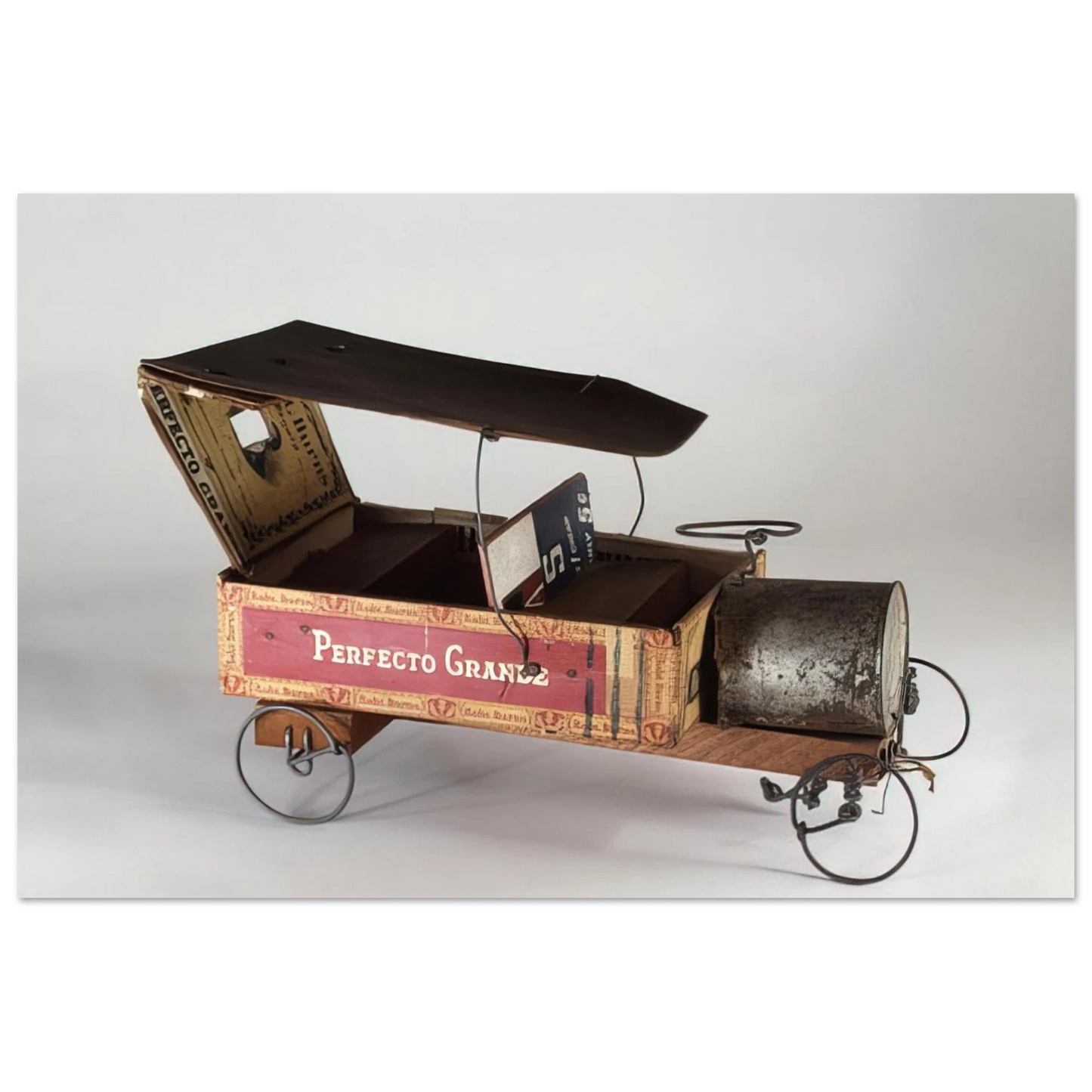
Alexander Calder - CAR 1943 Fine Art Poster
Alexander Calder - CAR 1943 Fine Art Poster
Couldn't load pickup availability
Elevate Your Space with Alexander Calder’s CAR 1943
Experience the rhythmic elegance of Alexander Calder’s CAR 1943, a definitive masterwork from one of the 20th century’s most influential artists. Known primarily for his revolutionary invention of the mobile, Calder’s 1943 period reflects a sophisticated mastery of biomorphic abstraction and spatial tension. This fine art poster captures the playful yet intellectual balance of form and color that defined the American sculptor’s transition into mid-century modernism.
Museum-Quality Craftsmanship by RedKalion
At RedKalion, we believe that world-class art deserves a medium of equal excellence. This museum-quality reproduction is printed on our prestigious Master's Edition archival paper. With a robust weight of 250 gsm (110 lb) and a thickness of 0.29 mm, this print offers a substantial, premium feel that distinguishes it from standard posters. The matte, uncoated finish provides a luxurious, natural white (off-white) texture that eliminates glare, allowing Calder’s primary palette to resonate with depth and clarity.
A Legacy of Longevity and Sustainability
This fine art print is engineered to endure as long as the artist’s legacy. Utilizing acid-free paper (pH above 7), our prints are protected against the yellowing and degradation that typically affect lower-quality reproductions. Furthermore, our commitment to the environment is reflected in our use of FSC-certified paper. Each piece is printed and shipped on demand with no minimum order requirements, ensuring a sustainable approach to fine art curation.
Historical Context: Calder in 1943
1943 was a pivotal year for Alexander Calder, marked by his major retrospective at the Museum of Modern Art (MoMA). During this era, hindered by wartime metal shortages, Calder turned his focus toward gouaches and smaller-scale compositions, refining the organic shapes and primary colors seen in CAR 1943. This piece serves as a sophisticated focal point for collectors who appreciate the intersection of mathematical precision and whimsical abstraction.


Discover Unlimited Art Possibilities
At RedKalion, you can find virtually any artwork from any artist, available in a wide range of sizes to perfectly match your space.
If you didn’t find what you’re looking for, contact us at support@redkalion.com . We will source any artwork and produce it in any size and format you need, including art prints, posters, canvas, framed pieces, framed canvas, and more.
For dedicated art enthusiasts, we also offer handcrafted replicas of any artwork, carefully painted by highly skilled artists using traditional techniques.
For custom requests, contact us at support@redkalion.com .
What are the technical specifications of the paper?
This print uses Master's Edition archival paper, weighing 250 gsm (110 lb) with a thickness of 0.29 mm. It features a matte, natural white finish for a glare-free, premium tactile experience.
Is this Alexander Calder print archival-grade?
Yes. The paper is acid-free with a pH above 7, ensuring the artwork remains vibrant and resists yellowing or degradation over many decades, meeting museum-level longevity standards.
What is the historical significance of Calder's CAR 1943?
Created during a pivotal year of Calder’s career, CAR 1943 demonstrates his mastery of biomorphic forms and primary colors, reflecting the artist's shift toward the iconic abstract style that defined mid-century modernism.
How is the print fulfilled and shipped?
Each RedKalion print is produced on demand to ensure the highest quality control. We have no minimum order requirements, and prints are shipped in protective packaging to ensure pristine arrival.
Is the paper used for this poster sustainable?
Absolutely. We utilize FSC-certified paper, ensuring that your fine art reproduction supports responsible forest management and environmental sustainability.
Does this print include a frame?
This product is sold as a museum-quality unframed print, allowing you the flexibility to choose a custom frame that perfectly matches your interior design aesthetic.
What does the term 'biomorphic abstraction' mean in relation to this piece?
Biomorphic abstraction refers to the use of rounded, organic shapes modeled on living organisms. Calder used these forms to create a sense of movement and life within static compositions.