RedKalion
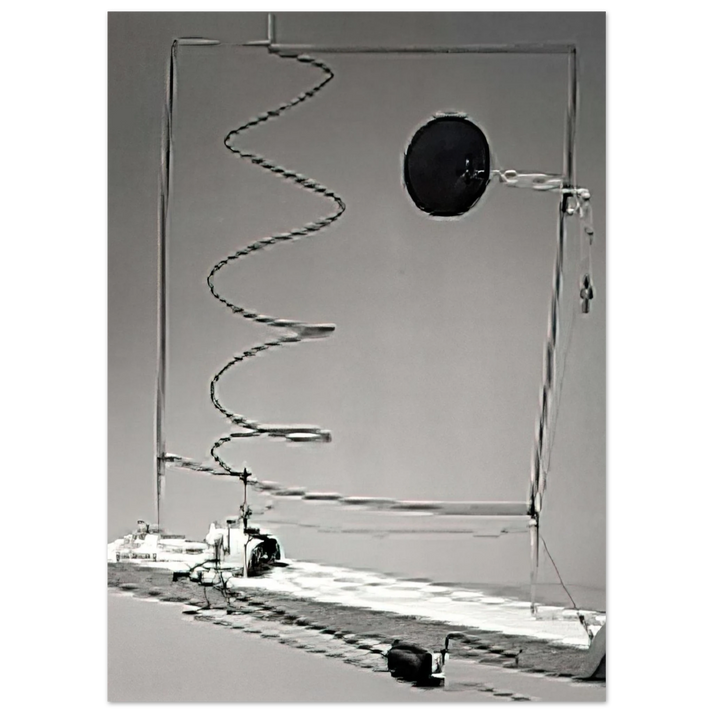
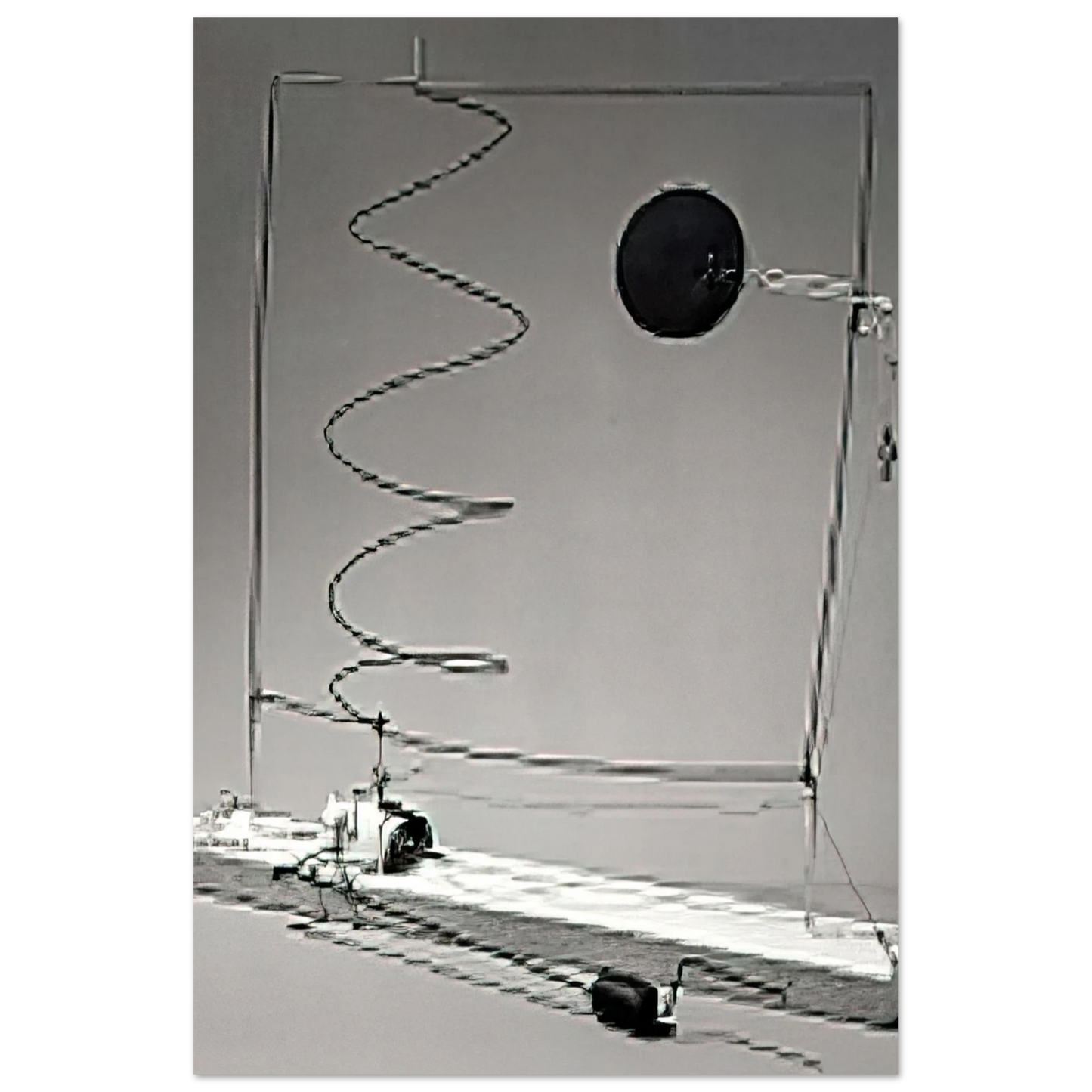
Alexander Calder - CRANK DRIVEN MOBILE 1932 Fine Art Poster
Alexander Calder - CRANK DRIVEN MOBILE 1932 Fine Art Poster
Couldn't load pickup availability
Alexander Calder: Crank Driven Mobile (1932) – A Kinetic Modernist Landmark
Experience the dawn of kinetic sculpture with this exquisite fine art print of Alexander Calder's Crank Driven Mobile (1932). This period marks a transformative era in 20th-century art, where Calder transitioned from the static world of traditional sculpture into the dynamic realm of movement. Before his world-renowned wind-driven mobiles, Calder experimented with hand-cranked mechanisms, creating a dialogue between mechanical precision and organic abstraction.
This museum-quality reproduction captures the playful yet sophisticated essence of Calder's early modernist experiments. The minimalist palette and geometric forms are rendered with stunning clarity, reflecting the artist’s background in mechanical engineering and his deep connection to the Parisian avant-garde. It is an essential piece for collectors who appreciate the historical gravity of the Surrealist and Abstraction-Création movements.
At RedKalion, we honor the legacy of this masterpiece by utilizing our Master's Edition archival paper. This premium, natural white (off-white) paper features a luxurious matte finish that eliminates glare, allowing the viewer to appreciate every subtle detail of the original composition. With a weight of 250 gsm (110 lb) and a thickness of 0.29 mm, this print offers a tactile, high-end feel that is built to last for generations.
- Archival Integrity: Acid-free paper with a pH above 7 to prevent yellowing and ensure longevity.
- Museum Standards: Uncoated, textured surface for an authentic, fine art aesthetic.
- Ethical Craftsmanship: Printed on FSC-certified paper, supporting responsible forest management.
- Curated Quality: Printed and shipped on demand by RedKalion, ensuring every print meets our rigorous standards.
Elevate your interior with a piece that is not merely a poster, but a testament to the evolution of modern art. This Alexander Calder fine art poster brings the spirit of motion and the rigor of 1930s abstraction into the contemporary home.


Discover Unlimited Art Possibilities
At RedKalion, you can find virtually any artwork from any artist, available in a wide range of sizes to perfectly match your space.
If you didn’t find what you’re looking for, contact us at support@redkalion.com . We will source any artwork and produce it in any size and format you need, including art prints, posters, canvas, framed pieces, framed canvas, and more.
For dedicated art enthusiasts, we also offer handcrafted replicas of any artwork, carefully painted by highly skilled artists using traditional techniques.
For custom requests, contact us at support@redkalion.com .
What makes this Alexander Calder print museum-quality?
Our Alexander Calder prints use Master's Edition archival paper. At 250 gsm and 0.29 mm thickness, this acid-free, natural white paper provides the weight and texture expected in professional gallery environments, ensuring a premium aesthetic and feel.
What is the significance of the Crank Driven aspect in this 1932 work?
In 1932, Alexander Calder was pioneering kinetic art. Unlike his later wind-powered mobiles, 'Crank Driven' pieces used manual mechanisms to dictate movement, marking a critical evolutionary step from static sculpture to art that interacts with time and space.
What are the specific paper specifications for this reproduction?
This print is produced on 250 gsm (110 lb) FSC-certified paper. It features a matte, uncoated, off-white finish that provides a luxurious texture and eliminates reflections, making it ideal for high-end interior display.
How does RedKalion handle shipping and fulfillment?
RedKalion prints and ships each order on demand with no minimum requirements. This ensures your Alexander Calder fine art poster is freshly produced and handled with care to maintain its archival integrity during transit.
Will the print yellow or fade over time?
No. We use acid-free paper with a pH value above 7. This archival standard prevents the paper from yellowing or becoming brittle, ensuring your investment remains in pristine condition for decades.
Who coined the term 'mobile' for Calder's kinetic sculptures?
The term 'mobile' was famously coined by Marcel Duchamp in 1931 during a visit to Calder’s studio. It served as a double entendre in French, referring to both 'motion' and a 'motive' or 'subject'.
Why is this 1932 piece considered historically important?
The 1932 Crank Driven Mobile represents the bridge between industrial engineering and fine art. It showcases Calder's departure from the figurative 'Circus' works into the pure abstraction that would define 20th-century modernism.