RedKalion
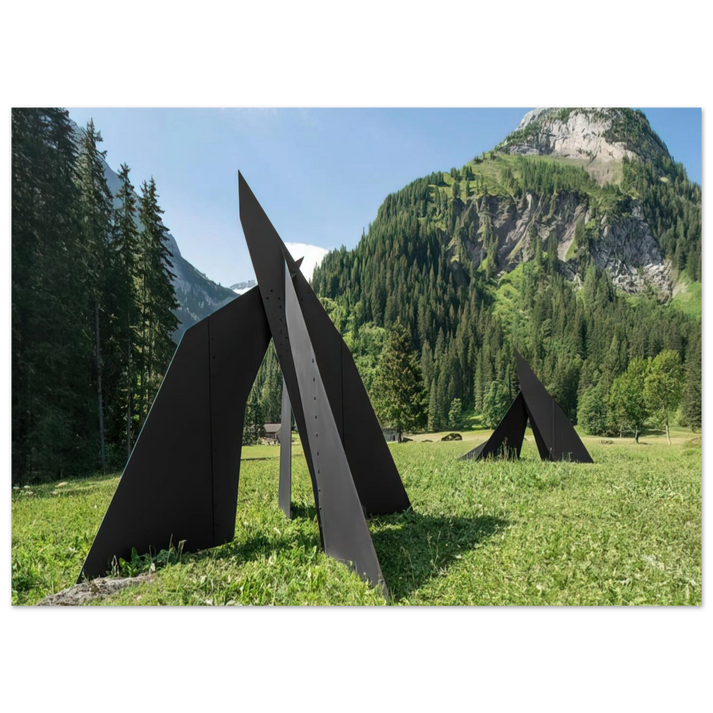
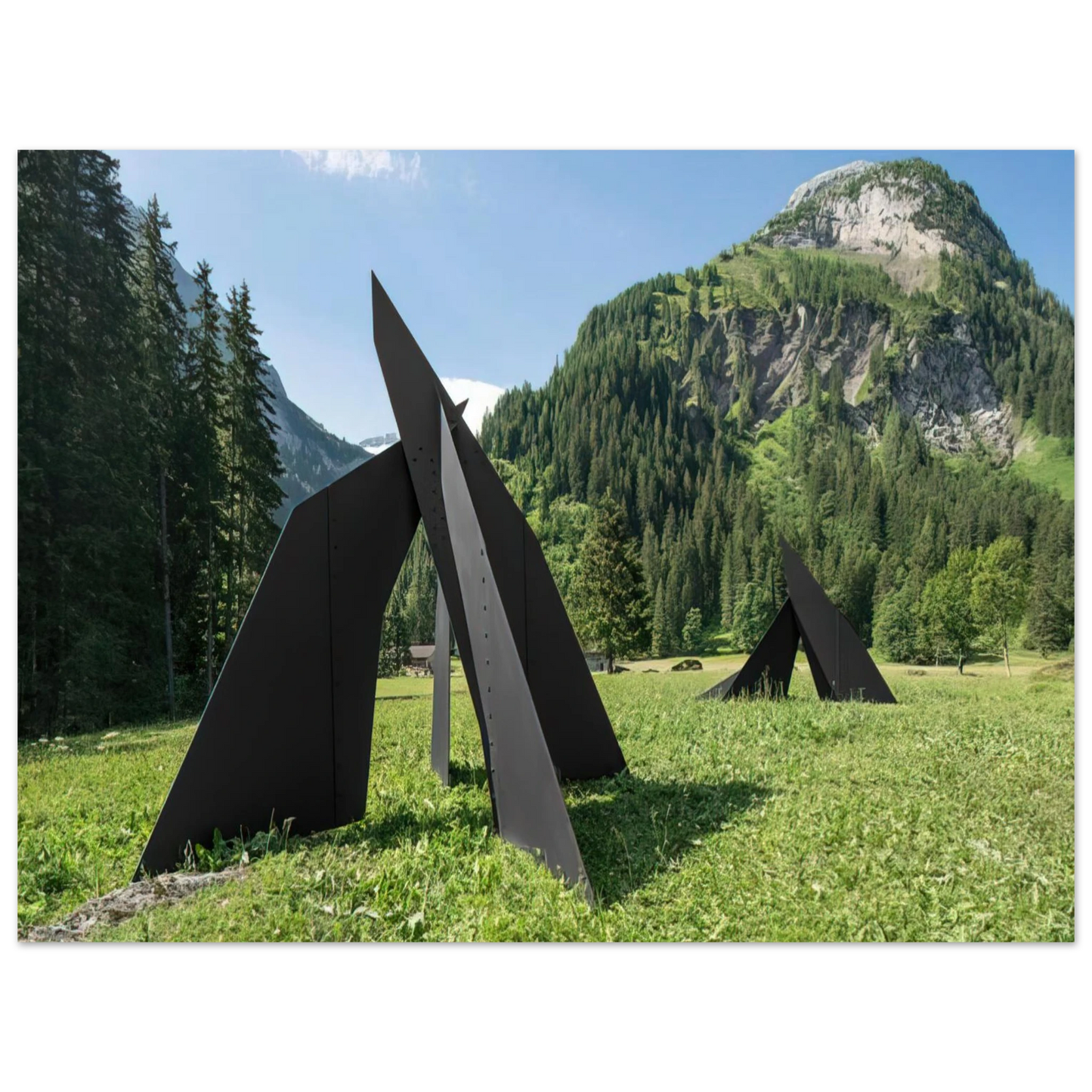
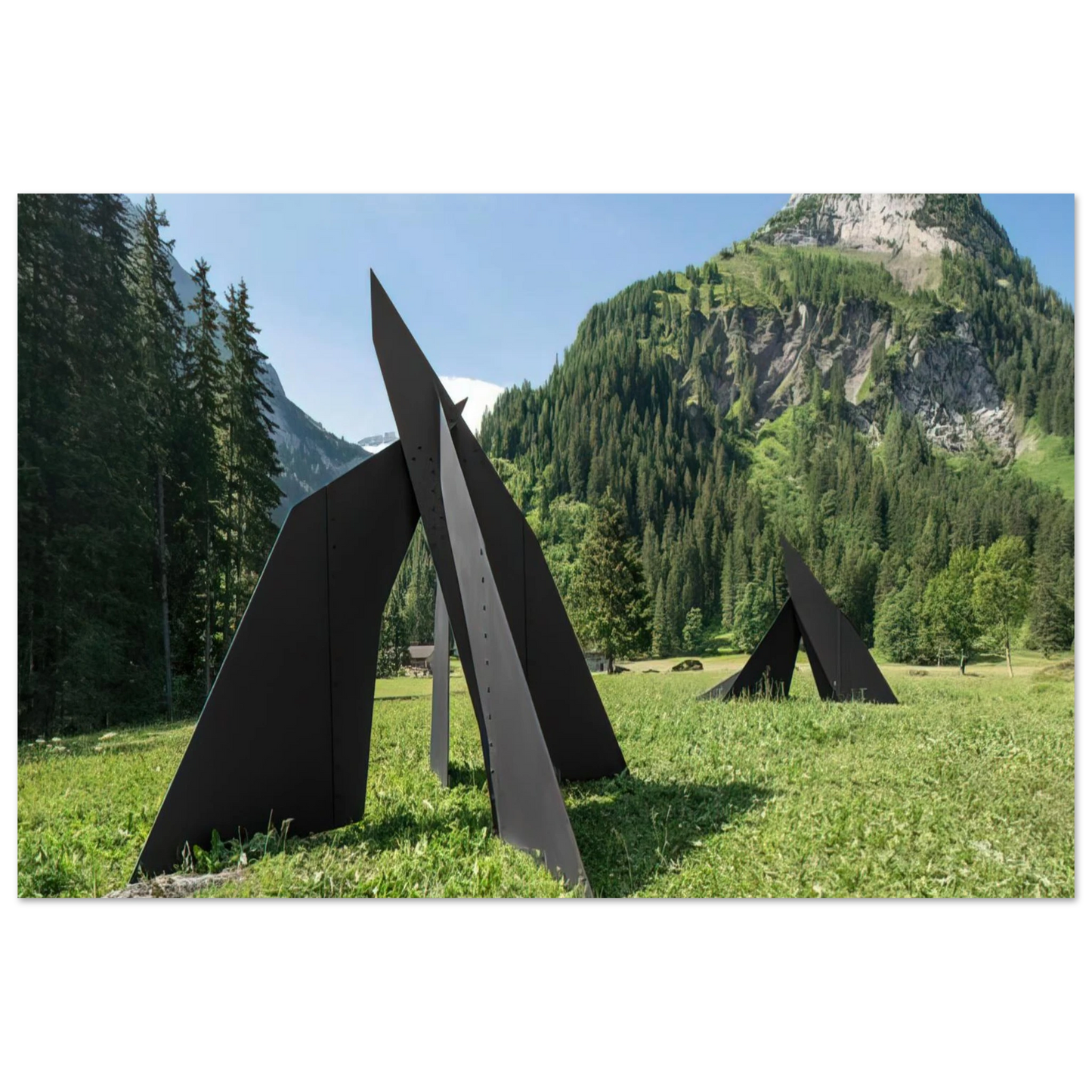
Alexander Calder - FOUR PLANES ESCARPE 1967 Fine Art Poster
Alexander Calder - FOUR PLANES ESCARPE 1967 Fine Art Poster
Couldn't load pickup availability
Alexander Calder’s Four Planes Escarpé (1967): A Symphony of Balance
Experience the profound simplicity of Alexander Calder with this museum-quality reproduction of Four Planes Escarpé (1967). A pioneer of kinetic art, Calder redefined the relationship between sculpture and two-dimensional space. This fine art poster captures the vibrant energy and rhythmic precision that defined his late 1960s output, where primary colors meet bold, architectural forms.
In 1967, Calder was at the height of his international acclaim, expertly translating the dynamism of his "mobiles" and "stabiles" into the graphic medium. Four Planes Escarpé utilizes a striking interplay of red, black, and white, creating a sense of suspended motion. Each curve and line is a testament to Calder’s background in mechanical engineering, brought to life through a playful yet rigorous aesthetic.
Archival Excellence for Your Private Collection
At RedKalion, we believe a masterpiece deserves nothing less than perfection. This archival fine art print is produced on our Master's Edition paper—a heavy-weight, 250 gsm (110 lb) stock that offers a luxurious, tactile experience. The natural white, uncoated finish ensures that the deep blacks and saturated reds are rendered with breathtaking depth, free from the glare of standard photographic prints.
- Premium Texture: 0.29 mm (11.4 mils) thickness for a substantial, gallery-grade feel.
- Archival Integrity: Acid-free (pH above 7) composition prevents yellowing, ensuring your investment remains pristine for generations.
- Sustainable Sourcing: Printed on FSC-certified paper, honoring Calder’s legacy of innovation with modern environmental responsibility.
Elevate your interior with a piece that balances modernist tradition with contemporary elegance. This is not merely a reproduction; it is a curated window into the genius of Alexander Calder, meticulously crafted by RedKalion to endure as a centerpiece of your home.

Discover Unlimited Art Possibilities
At RedKalion, you can find virtually any artwork from any artist, available in a wide range of sizes to perfectly match your space.
If you didn’t find what you’re looking for, contact us at support@redkalion.com . We will source any artwork and produce it in any size and format you need, including art prints, posters, canvas, framed pieces, framed canvas, and more.
For dedicated art enthusiasts, we also offer handcrafted replicas of any artwork, carefully painted by highly skilled artists using traditional techniques.
For custom requests, contact us at support@redkalion.com .
What makes the Alexander Calder Four Planes Escarpé print museum-quality?
Our reproductions use Master's Edition archival paper, weighing 250 gsm with a 0.29 mm thickness. This heavy-weight, acid-free stock ensures deep color saturation and a luxurious matte finish, meeting the highest standards for fine art gallery display.
What are the specific paper and finish details?
This print features a natural white, uncoated finish that provides a sophisticated texture. The 110 lb paper is FSC-certified and acid-free, preventing the degradation and yellowing commonly associated with standard poster prints.
How is my fine art poster shipped and fulfilled?
Each Alexander Calder print is fulfilled on demand with no minimum order requirements. We use secure, protective packaging to ensure your museum-quality reproduction arrives in pristine condition, ready for framing and display.
Will this Calder print fade over time?
No. By utilizing archival-grade, acid-free paper with a pH level above 7, we ensure the longevity of the pigments. Your artwork is designed to resist aging and maintain its vibrant primary colors for decades.
Is the paper used for this reproduction sustainable?
Yes, RedKalion is committed to environmental stewardship. All our Calder fine art prints are produced on FSC-certified paper, ensuring that your acquisition supports responsible forest management practices.
What is the historical significance of Four Planes Escarpé (1967)?
Created in 1967, this work represents Calder's mature lithographic style. It reflects his transition from the delicate movement of mobiles to the bold, grounded energy of his larger-scale stabiles and graphic works from the late sixties.
How does Calder use color and form in this composition?
Calder employs a restricted palette of primary colors—red, black, and white—to emphasize geometric balance. The 'planes' interact to create an illusion of three-dimensional depth, mimicking the spatial relationships found in his iconic sculptures.