RedKalion
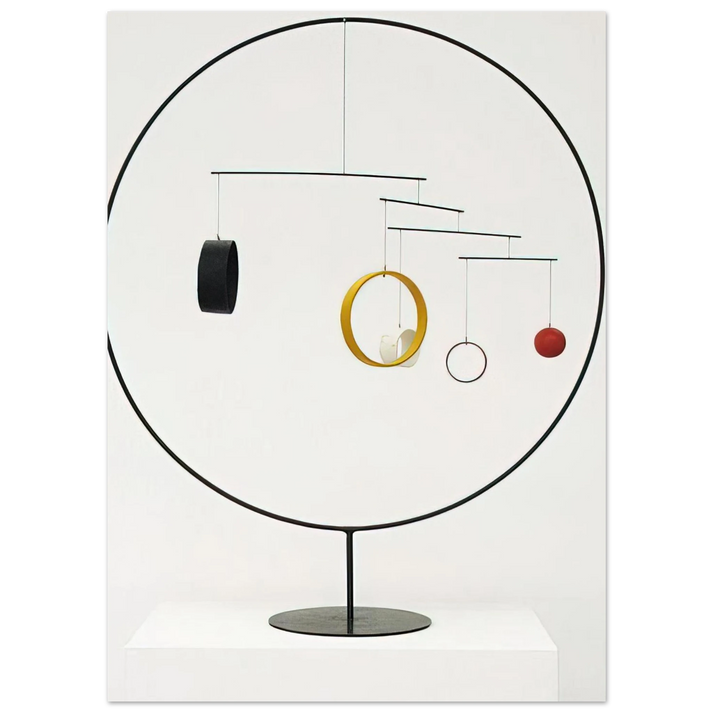
Alexander Calder - MOBILE 1934 Fine Art Poster
Alexander Calder - MOBILE 1934 Fine Art Poster
Couldn't load pickup availability
The Poetry of Motion: Alexander Calder’s 1934 Kinetic Legacy
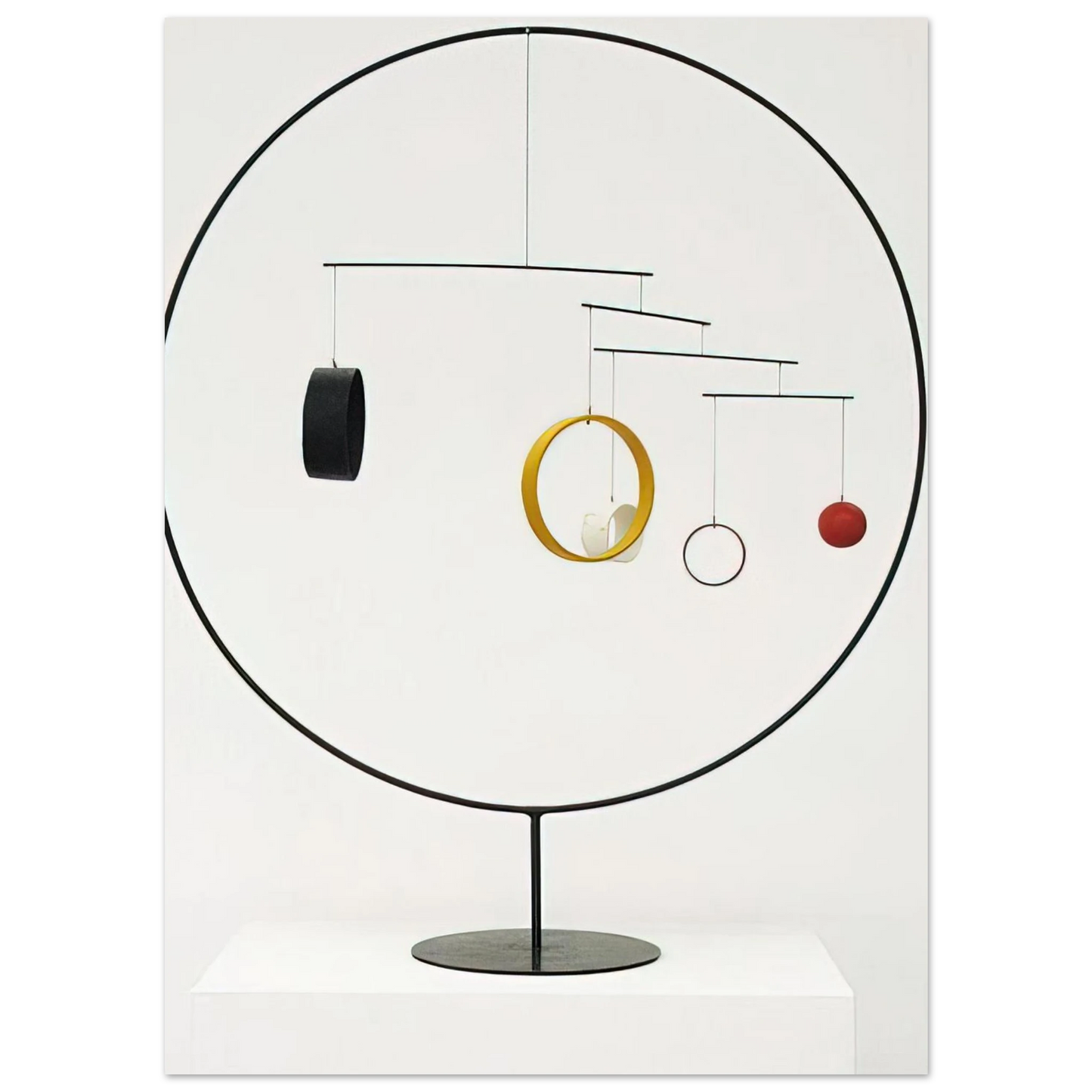
Experience the delicate equilibrium of modernism with our Alexander Calder - MOBILE 1934 Fine Art Poster. This museum-quality reproduction captures a pivotal moment in art history when Calder, influenced by the abstract purity of Mondrian and the biomorphic forms of Miró, redefined sculpture as a medium of movement and air. Originally conceived during his residence in Paris, this 1934 masterwork represents the quintessential 'mobile'—a term famously coined by Marcel Duchamp to describe Calder’s revolutionary kinetic sculptures.
At RedKalion, we believe that avant-garde masterpieces deserve a presentation that honors their historical weight. This reproduction is meticulously printed on our Master's Edition archival paper. The natural white, off-white finish provides a sophisticated, luxurious texture that eliminates glare, allowing the stark, rhythmic lines of Calder’s composition to harmonize perfectly with any curated interior space.
As an elite provider of archival-grade art, RedKalion ensures that each piece is more than a print; it is an enduring investment in aesthetic heritage. Our commitment to museum-quality reproduction means utilizing acid-free materials that prevent the yellowing or degradation common in standard prints, ensuring that the spatial poetry of Calder remains as vibrant as the day it was created.
Technical Specifications for the Discerning Collector
- Paper: Premium 250 gsm (110 lb) Master's Edition archival paper with a matte, uncoated finish.
- Durability: Acid-free (pH above 7) for long-term preservation and resistance to aging.
- Sustainability: Printed on FSC-certified paper, supporting responsible forest management.
- Detail: A thickness of 0.29 mm (11.4 mils) provides a substantial, high-end feel typical of gallery-exclusive editions.
Discover Unlimited Art Possibilities
At RedKalion, you can find virtually any artwork from any artist, available in a wide range of sizes to perfectly match your space.
If you didn’t find what you’re looking for, contact us at support@redkalion.com . We will source any artwork and produce it in any size and format you need, including art prints, posters, canvas, framed pieces, framed canvas, and more.
For dedicated art enthusiasts, we also offer handcrafted replicas of any artwork, carefully painted by highly skilled artists using traditional techniques.
For custom requests, contact us at support@redkalion.com .
What makes the Master's Edition paper special for this Alexander Calder print?
Our Master's Edition is a 250 gsm (110 lb) archival-grade paper. Its natural white, uncoated finish and museum-quality texture provide a sophisticated, matte appearance that perfectly captures the nuanced lines of Calder’s 1934 kinetic designs without reflection.
How long will this archival print last without yellowing?
This print is produced on acid-free paper with a pH level above 7. This professional archival standard ensures the paper will not yellow or become brittle over time, preserving the integrity of the artwork for decades.
Is the paper used for this fine art poster environmentally friendly?
Yes. RedKalion utilizes FSC-certified paper for our Alexander Calder reproductions. This certification ensures the materials are sourced from responsibly managed forests that provide environmental, social, and economic benefits.
How is my order fulfilled and shipped?
We operate on a print-on-demand basis with no minimum order requirements. Each museum-quality poster is printed specifically for you and shipped in protective packaging to ensure it arrives in pristine gallery condition.
Is this Calder print provided with a frame?
This fine art poster is sold unframed. This allows you the flexibility to choose a custom frame that best complements your personal decor and enhances the sophisticated aesthetic of the 1934 Mobile composition.
What was the historical inspiration behind Calder's 1934 Mobile?
In 1934, Calder was perfecting the transition from static wire sculpture to kinetic forms. His work was deeply influenced by the abstract geometry of Piet Mondrian, though Calder sought to bring those shapes into the three-dimensional, moving world.
Why is the year 1934 considered significant for Alexander Calder?
1934 marked a refinement in Calder's career where his 'mobiles' became more complex and reliant on air currents. This era solidified his reputation as the pioneer of kinetic art, merging engineering with the avant-garde.