
RedKalion
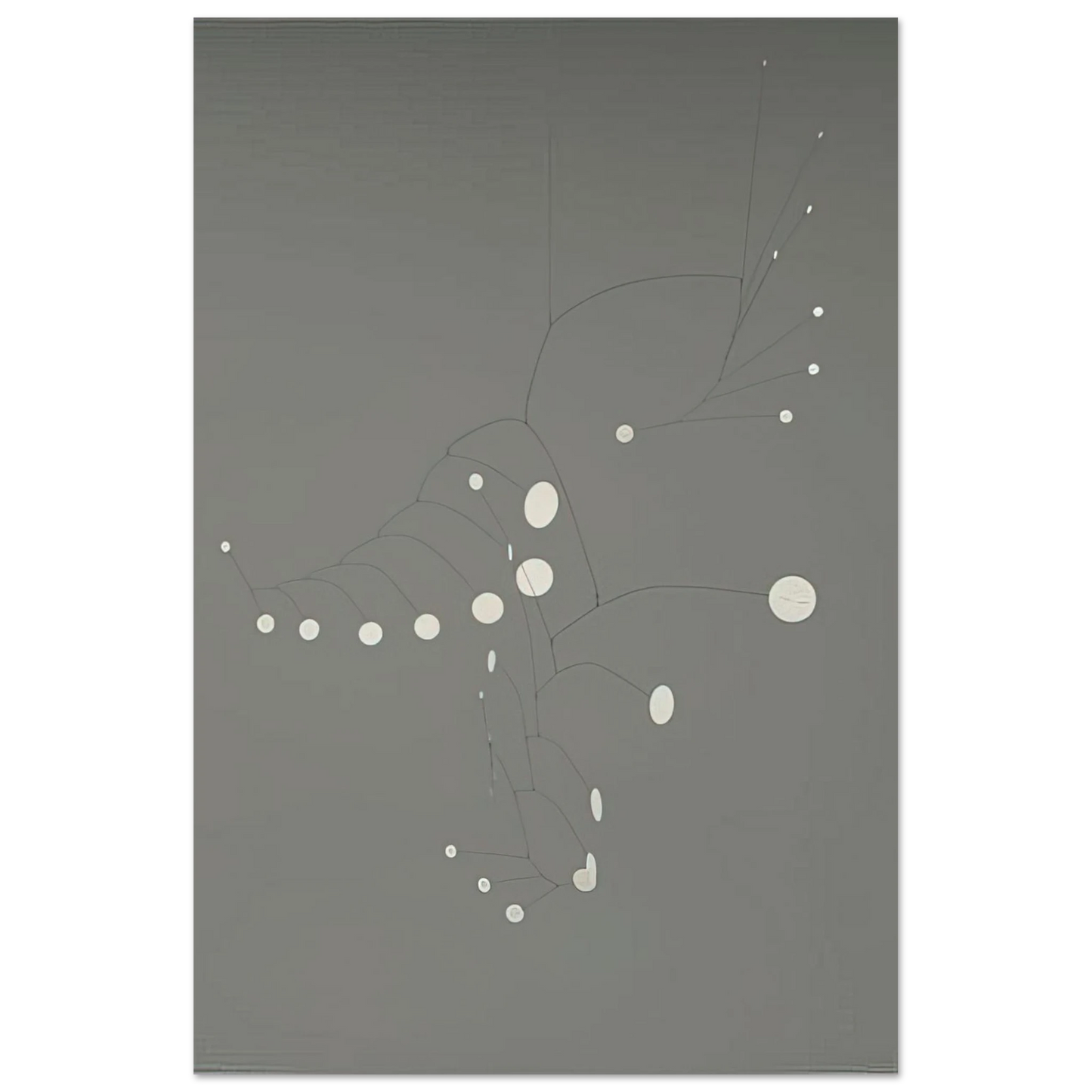
Alexander Calder - SNOW FLURRY 1948 Fine Art Poster
Alexander Calder - SNOW FLURRY 1948 Fine Art Poster
Couldn't load pickup availability
Elevate Your Space with Alexander Calder’s Kinetic Mastery
Experience the delicate equilibrium of Alexander Calder’s Snow Flurry (1948), a definitive masterwork of the mid-century avant-garde. This fine art poster captures the ethereal beauty of Calder’s transition from static geometry to the revolutionary realm of kinetic sculpture. As the pioneer who 'sculpted in air,' Calder’s 1948 compositions reflect a mature mastery of balance, where minimalist forms evoke the soft, drifting motion of a winter squall.
Museum-Quality Reproductions for the Discerning Collector
At RedKalion, we bridge the gap between historical significance and modern interior design. This archival-grade reproduction is printed on our Master's Edition archival paper, meticulously selected to preserve the nuance of Calder’s lines. Unlike standard posters, our museum-quality prints utilize 250 gsm (110 lb) natural white, uncoated paper, providing a sophisticated matte finish that eliminates glare while highlighting every subtle detail of the original composition.
Historical Context: The 1948 Snow Flurry Series
By 1948, Calder had perfected the 'mobile'—a term coined by Marcel Duchamp to describe Calder’s moving art. The Snow Flurry series is celebrated for its poetic abstraction, using graduated white discs to simulate the weightless descent of snow. This print serves as more than just decor; it is an educational piece of art history, representing a moment when American abstraction found its most playful and profound voice. At a thickness of 0.29 mm (11.4 mils), this print offers a premium tactile experience that matches its visual depth.
The RedKalion Commitment to Excellence
We believe art should endure for generations. Our prints are acid-free with a pH above 7, ensuring the natural white paper will not yellow or degrade over time. Furthermore, our commitment to the planet is as strong as our commitment to art; all reproductions are printed on FSC-certified paper and fulfilled on-demand to minimize environmental impact. Invite the timeless movement of Alexander Calder into your home with a piece that defines archival luxury.


Discover Unlimited Art Possibilities
At RedKalion, you can find virtually any artwork from any artist, available in a wide range of sizes to perfectly match your space.
If you didn’t find what you’re looking for, contact us at support@redkalion.com . We will source any artwork and produce it in any size and format you need, including art prints, posters, canvas, framed pieces, framed canvas, and more.
For dedicated art enthusiasts, we also offer handcrafted replicas of any artwork, carefully painted by highly skilled artists using traditional techniques.
For custom requests, contact us at support@redkalion.com .
What makes the Alexander Calder Snow Flurry 1948 print museum-quality?
Our museum-quality prints use Master's Edition archival paper, weighing 250 gsm (110 lb). This heavy, premium paper ensures a luxury feel and professional-grade durability, making it the definitive choice for fine art collectors.
How is the color and texture of this fine art poster?
The print features a natural white (off-white) finish with a matte, uncoated texture. This finish provides a sophisticated, non-reflective surface that enhances the minimalist elegance of Calder’s 1948 Snow Flurry series.
Will this archival print yellow over time?
No. We use acid-free paper with a pH level above 7. This archival standard prevents yellowing and ensures your reproduction remains as crisp and vibrant as the day it was printed.
What are the shipping and fulfillment details?
At RedKalion, we fulfill all orders on-demand with no minimum requirements. Each print is handled with care and shipped in robust packaging to ensure it arrives in pristine condition at your doorstep.
Is the paper used for this Calder reproduction sustainable?
Yes, all our reproductions are printed on FSC-certified paper (Forest Stewardship Council). This ensures that your artwork is sourced from responsibly managed forests that provide environmental, social, and economic benefits.
What does the 'Snow Flurry' series represent in Calder's career?
The Snow Flurry series represents Calder’s expertise in kinetic balance. It captures the essence of atmospheric movement, using monochromatic discs to represent the delicate, unpredictable path of falling snow within a structured space.
Why is 1948 a significant year for Alexander Calder's mobiles?
By 1948, Calder was enjoying international acclaim. This era marked a refinement in his engineering, where his mobiles became more complex yet visually lighter, perfectly balancing wire and sheet metal to react to the slightest air current.