
RedKalion
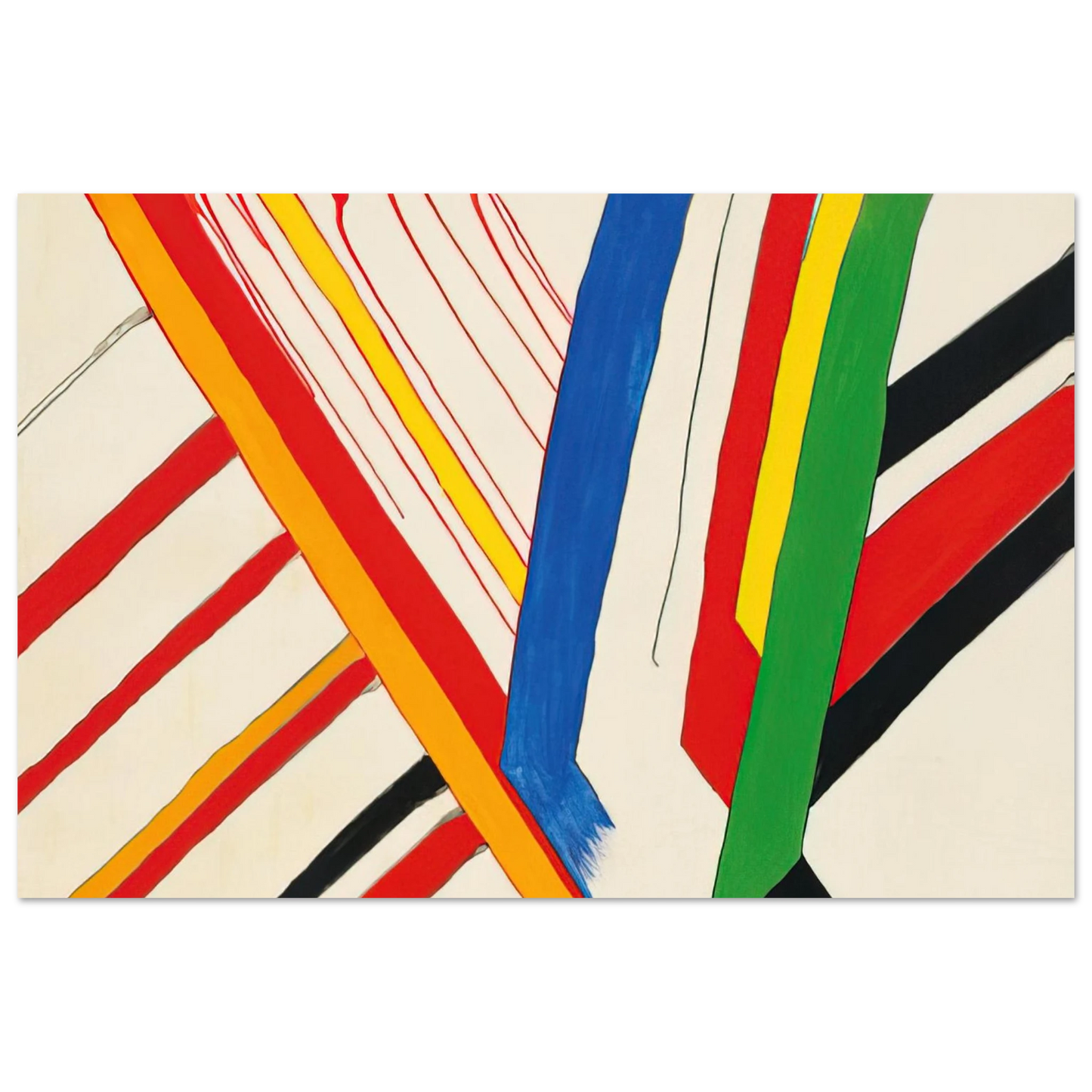
Alexander Calder - THE GREEN STRIPE 1963 Fine Art Poster
Alexander Calder - THE GREEN STRIPE 1963 Fine Art Poster
Couldn't load pickup availability
Alexander Calder: The Green Stripe (1963) – A Mid-Century Abstract Masterpiece
Experience the dynamic interplay of form and color with Alexander Calder’s 'The Green Stripe' (1963). While widely celebrated for his revolutionary kinetic mobiles, Calder’s two-dimensional works, such as this stunning fine art poster, reveal a parallel obsession with balance, weight, and the 'joy of the line.' This 1963 composition is a quintessential example of Calder’s ability to command space using a restricted primary palette and bold, graphic geometry.
At RedKalion, we curate archival reproductions that honor the integrity of the original lithograph. Our museum-quality reproduction captures the depth of the iconic green band and the surrounding abstract motifs with breathtaking precision, ensuring that the vibrancy Calder intended remains as impactful today as it was in the mid-20th century.
The Art of Archival Preservation
To ensure this piece endures as a centerpiece in your collection, we utilize the Master's Edition archival paper. This premium substrate offers a sophisticated matte, uncoated finish that eliminates glare while providing a luxurious, natural white (off-white) texture. By choosing an acid-free (pH above 7) medium, we prevent the yellowing and degradation common in standard prints, preserving the clarity of Calder's vision for generations.
Technical Excellence and Sustainability
- Premium Weight: A substantial 250 gsm (110 lb) paper weight for a high-end, gallery-ready feel.
- Substantial Thickness: 0.29 mm (11.4 mils) ensures the print remains flat and resilient.
- FSC-Certified: Our commitment to the environment matches our commitment to art; all paper is responsibly sourced.
- Crafted to Order: Each fine art print is produced on demand, ensuring zero waste and peak quality control.
Elevate your interior with an archival masterpiece that transcends temporal trends. 'The Green Stripe' is more than a poster; it is a historical artifact of modernism, reproduced with the authority and expertise that defines the RedKalion gallery.


Discover Unlimited Art Possibilities
At RedKalion, you can find virtually any artwork from any artist, available in a wide range of sizes to perfectly match your space.
If you didn’t find what you’re looking for, contact us at support@redkalion.com . We will source any artwork and produce it in any size and format you need, including art prints, posters, canvas, framed pieces, framed canvas, and more.
For dedicated art enthusiasts, we also offer handcrafted replicas of any artwork, carefully painted by highly skilled artists using traditional techniques.
For custom requests, contact us at support@redkalion.com .
What defines the quality of this Alexander Calder print?
This print is produced on Master's Edition 250 gsm archival paper. It features a museum-quality matte finish and natural white tone, ensuring the artwork looks and feels like a gallery original rather than a standard poster.
Will the colors of The Green Stripe fade over time?
No. We use acid-free paper with a pH above 7, which prevents yellowing and ink degradation. This archival-grade standard ensures the vibrant colors of Calder's 1963 masterpiece remain stable for decades.
Is the paper used for this fine art poster sustainable?
Yes, RedKalion utilizes FSC-certified paper. This ensures that the high-quality materials used for your Alexander Calder reproduction are sourced from responsibly managed forests that provide environmental, social, and economic benefits.
How is shipping and fulfillment handled for RedKalion prints?
We operate on a print-on-demand basis with no minimum orders. This allows us to maintain strict quality standards and ship your artwork securely in protective packaging to ensure it arrives in pristine condition.
What is the physical texture and finish of the poster?
The print features a luxurious matte, uncoated finish. At 0.29 mm thickness, it provides a tactile, premium hand-feel that avoids the artificial sheen of low-quality glossy prints, enhancing the mid-century aesthetic.
What is the significance of the year 1963 in Calder’s work?
By 1963, Calder had perfected the translation of his 'mobile' concepts into graphic art. 'The Green Stripe' reflects his peak interest in bold lithographic forms that balance static weight with visual movement.
Why is this specific composition titled 'The Green Stripe'?
The title highlights the central vertical element that anchors the abstract composition, a technique Calder used to create a focal point among the organic, floating shapes typical of his 1960s gouaches.