RedKalion
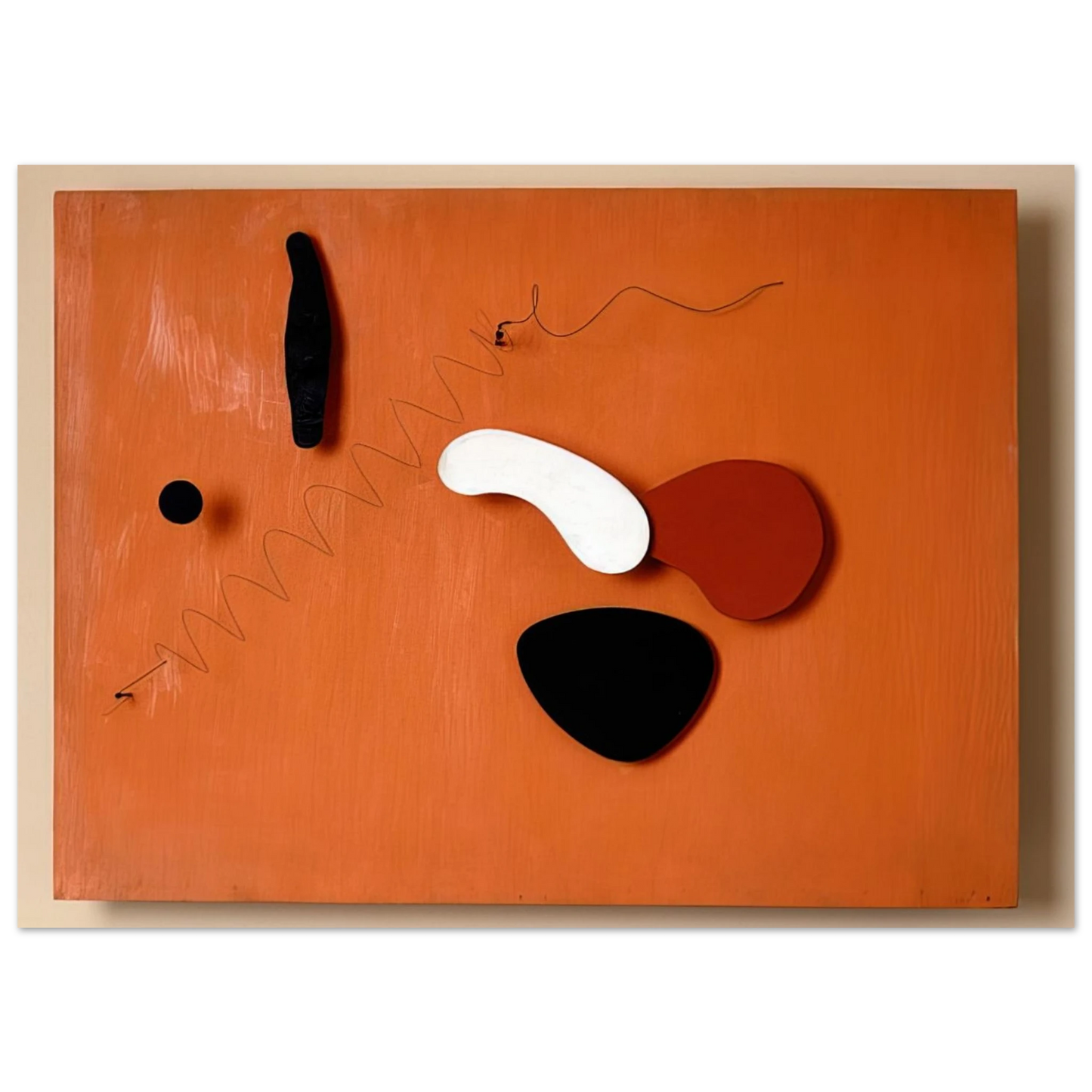
Alexander Calder - THE ORANGE PANEL 1936 Fine Art Poster
Alexander Calder - THE ORANGE PANEL 1936 Fine Art Poster
Couldn't load pickup availability
Alexander Calder: The Orange Panel (1936) – A Masterpiece of Kinetic Geometry
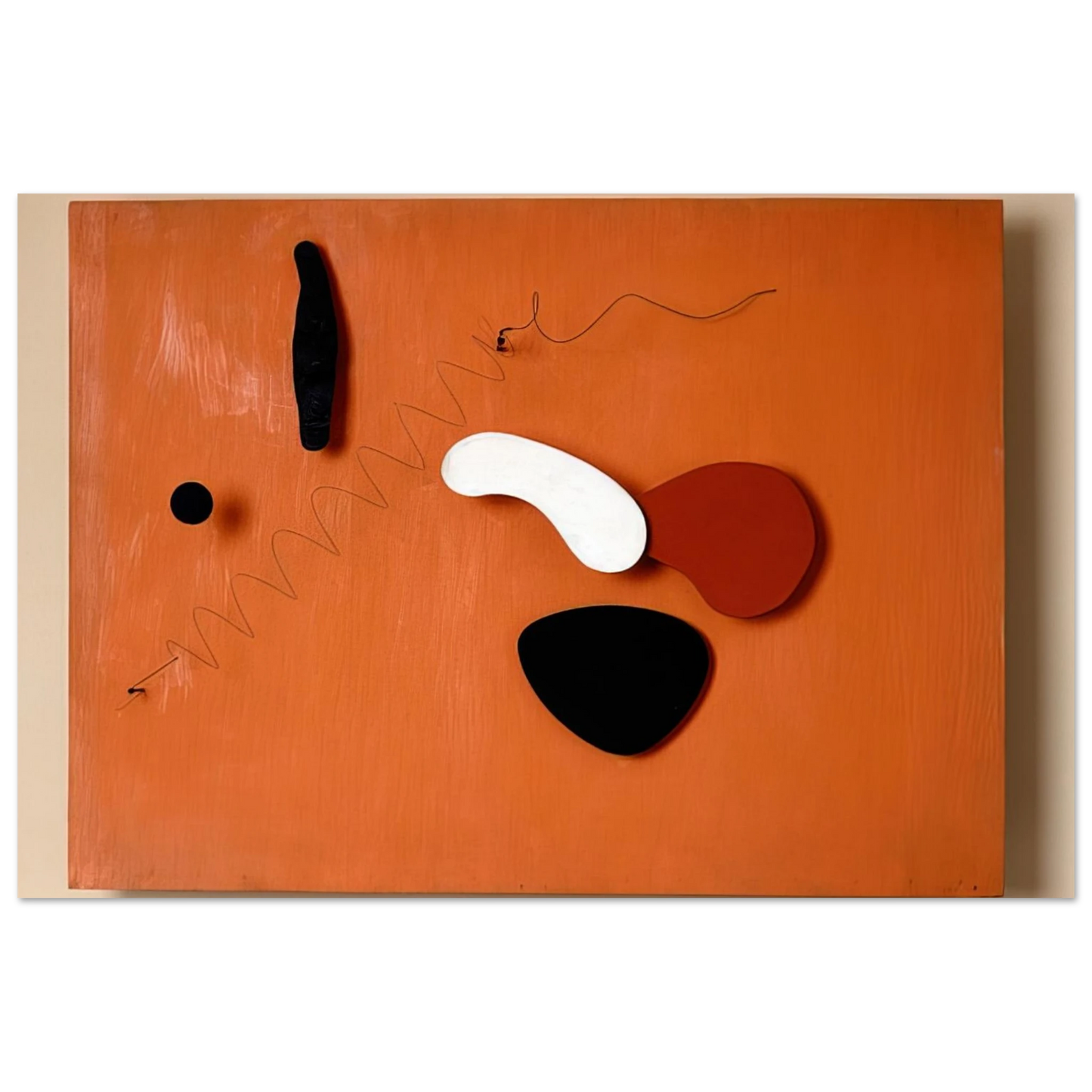
Step into the mid-century avant-garde with Alexander Calder’s 'The Orange Panel' (1936). This iconic work represents a crucial juncture in Calder’s career, where the boundaries between sculpture and painting blurred into a singular, vibrant expression of Modernism. Known primarily for his revolutionary mobiles, Calder applied the same principles of balance and weight to his 1930s panels, creating a sense of "suspended animation" on a two-dimensional surface.
This fine art poster reproduction captures the striking contrast and bold biomorphic forms that defined Calder’s aesthetic. At RedKalion, we curate these prints to honor the artist’s original vision, ensuring that the depth of the orange hue and the precision of the geometric lines are rendered with absolute clarity, reflecting the spirit of the 1936 original.
Museum-Quality Craftsmanship for the Discerning Collector
Our museum-quality reproduction of 'The Orange Panel' is designed to meet the highest standards of archival excellence. Every piece is printed on our Master's Edition archival paper, featuring a luxurious matte, uncoated finish in a natural white (off-white) tone. This specific texture minimizes glare and highlights the rich, saturated pigments of Calder’s palette.
- Superior Weight: Printed on heavy 250 gsm (110 lb) paper for a premium, substantial feel.
- Archival Integrity: Acid-free (pH above 7) to ensure your print remains vibrant without yellowing for generations.
- Sustainability: Crafted on FSC-certified paper, reflecting a commitment to environmental stewardship.
- Precision Detail: A thickness of 0.29 mm (11.4 mils) ensures a robust, gallery-standard presence.
Elevate your interior space with an archival masterpiece that endures. RedKalion provides a bridge between the historical galleries of the 20th century and the modern home, offering an enduring tribute to Alexander Calder’s visionary genius through this exquisite fine art print.

Discover Unlimited Art Possibilities
At RedKalion, you can find virtually any artwork from any artist, available in a wide range of sizes to perfectly match your space.
If you didn’t find what you’re looking for, contact us at support@redkalion.com . We will source any artwork and produce it in any size and format you need, including art prints, posters, canvas, framed pieces, framed canvas, and more.
For dedicated art enthusiasts, we also offer handcrafted replicas of any artwork, carefully painted by highly skilled artists using traditional techniques.
For custom requests, contact us at support@redkalion.com .
What are the print specifications for The Orange Panel (1936)?
This museum-quality print uses 250 gsm (110 lb) Master's Edition archival paper. It features a matte, uncoated, natural white finish and a thickness of 0.29 mm, ensuring a premium feel and high-definition visual clarity.
Is the paper used for this Calder print sustainable?
Yes, our fine art prints are produced on FSC-certified paper. This ensures the materials are sourced from responsibly managed forests, aligning with RedKalion’s commitment to quality and environmental sustainability.
How does RedKalion ensure the longevity of the artwork?
We use acid-free paper with a pH above 7. This archival-grade material prevents the paper from yellowing or becoming brittle over time, preserving the vibrant colors of Calder's work for decades.
How is shipping handled for fine art posters?
Each order is printed and shipped on demand with no minimum order requirements. We use specialized protective packaging to ensure your museum-quality reproduction arrives in pristine condition at your doorstep.
Does this reproduction capture the authentic texture of the 1936 original?
While it is a flat print, our Master's Edition paper’s luxurious matte texture and high-GSM weight mimic the sophisticated feel of original gallery pieces, capturing the depth of Calder's geometric abstractions.
What is the historical context of Alexander Calder’s "The Orange Panel"?
Created in 1936, this piece reflects Calder's exploration of abstract painting during a time when he was also perfecting his mobiles. It showcases his dialogue with European abstractionists like Mondrian and Miró.
Why is the year 1936 significant for Calder’s abstract work?
1936 was a pivotal year where Calder solidified his "kinetic" style. The Orange Panel demonstrates his ability to translate physical movement and spatial balance into a static, two-dimensional geometric composition.