RedKalion
Alexander Calder - UNTITLED 1953 Fine Art Poster
Alexander Calder - UNTITLED 1953 Fine Art Poster
Couldn't load pickup availability
Alexander Calder: The Lyrical Abstraction of Untitled (1953)
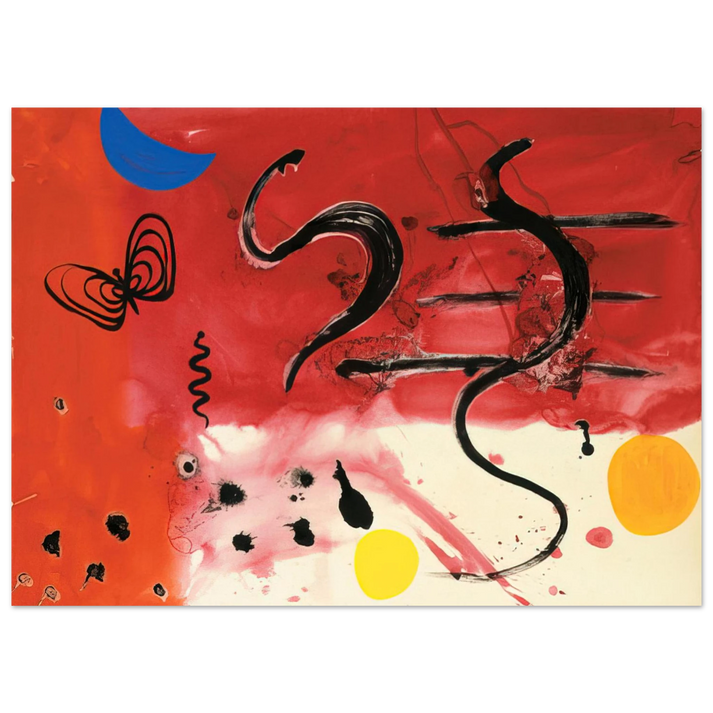
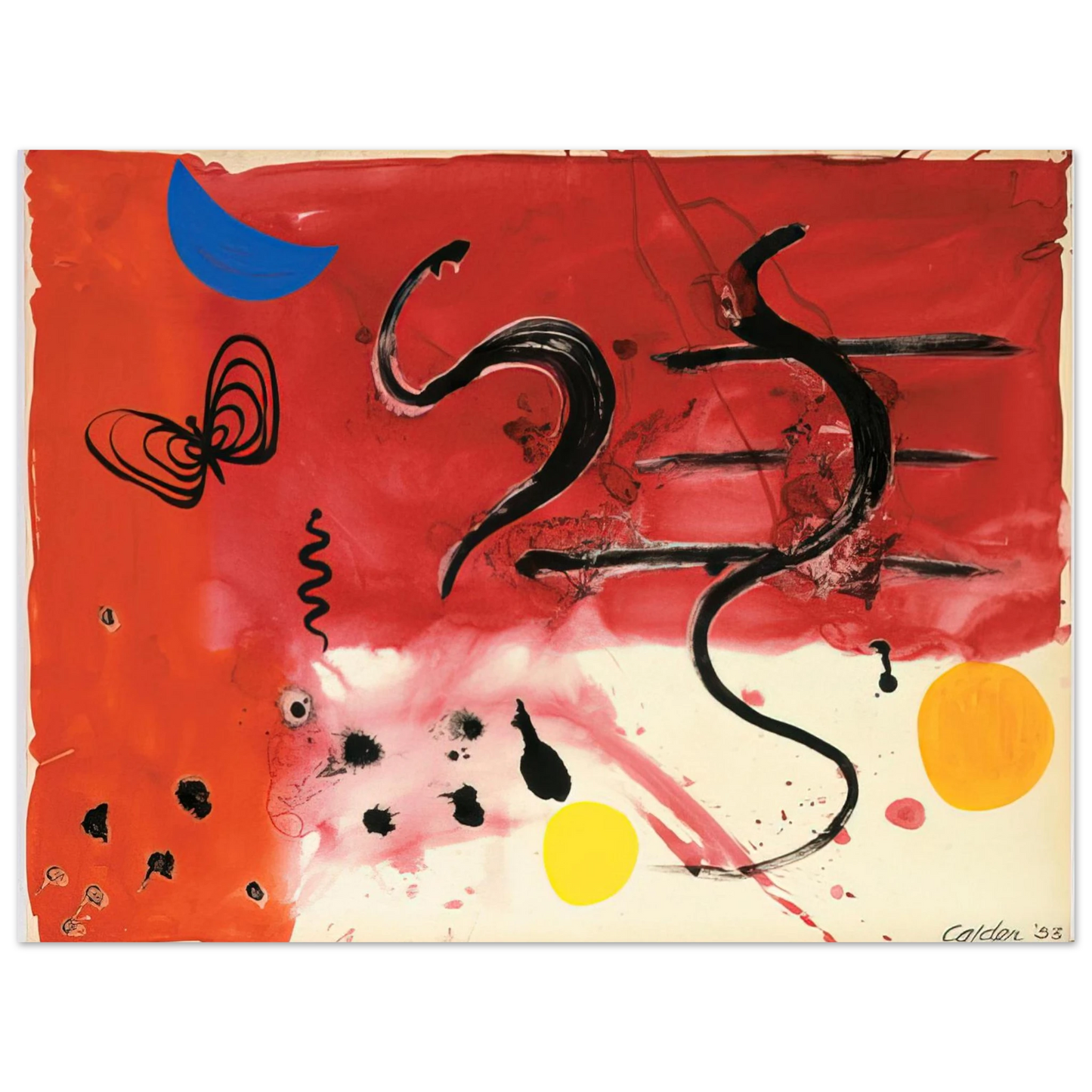
Experience the rhythmic precision and balance of Alexander Calder’s Untitled (1953), a definitive expression of mid-century modernism. While Calder is globally celebrated for pioneering the 'mobile,' his graphic works and gouaches from the 1950s translate that same kinetic energy onto a two-dimensional plane. This museum-quality fine art print captures the vibrant primary colors and organic geometry that define Calder’s legacy, offering a window into the artist's exploration of celestial movement and mathematical harmony.
At RedKalion, we honor the integrity of the original work by utilizing our Master’s Edition archival paper. This premium substrate provides a luxurious, natural white (off-white) finish that avoids the glare of standard coatings, allowing the depth of Calder's composition to resonate. Each reproduction is crafted to endure as a legacy piece, ensuring the artist's vision remains as striking as it was in 1953.
The Artistry Behind the Print
In 1953, Calder’s work reached a pinnacle of lyrical abstraction. This piece exemplifies his ability to command space using minimalist forms. By integrating this museum-quality reproduction into your collection, you are not merely decorating a wall; you are curating a historical dialogue between form and void.
- Archival Excellence: Printed on 250 gsm (110 lb) acid-free paper with a pH above 7 to prevent yellowing or degradation over time.
- Sophisticated Texture: A matte, uncoated finish that highlights the tactile quality of the heavy-weight 0.29 mm (11.4 mils) thickness.
- Sustainable Stewardship: This print is produced on FSC-certified paper, reflecting a commitment to both artistic and environmental preservation.
- Bespoke Fulfillment: Every order is printed and shipped on demand, ensuring your artwork arrives in pristine, gallery-standard condition.
Elevate your interior with a masterpiece that transcends eras. This Alexander Calder fine art print is more than a visual statement; it is an investment in the enduring heritage of abstract expressionism.

Discover Unlimited Art Possibilities
At RedKalion, you can find virtually any artwork from any artist, available in a wide range of sizes to perfectly match your space.
If you didn’t find what you’re looking for, contact us at support@redkalion.com . We will source any artwork and produce it in any size and format you need, including art prints, posters, canvas, framed pieces, framed canvas, and more.
For dedicated art enthusiasts, we also offer handcrafted replicas of any artwork, carefully painted by highly skilled artists using traditional techniques.
For custom requests, contact us at support@redkalion.com .
What is the quality of the paper used for this Alexander Calder print?
We use Master's Edition archival paper, a premium 250 gsm (110 lb) substrate. It is acid-free and museum-quality, ensuring the vibrant colors of Calder's 1953 work remain vivid for generations.
How does the archival nature benefit the artwork?
The paper is acid-free with a pH level above 7. This prevents the natural white fibers from yellowing or becoming brittle, maintaining the integrity of your fine art print indefinitely.
Is the print sustainably sourced?
Yes, RedKalion utilizes FSC-certified paper or equivalent certifications. This ensures that your museum-quality reproduction is produced with respect for global forest conservation standards.
How is the order fulfilled and shipped?
Each print is produced on-demand with no minimum order requirements. We use robust, protective packaging to ensure your Alexander Calder masterpiece arrives in perfect condition, ready for display.
Does the print come with a frame?
This listing is for the high-weight fine art poster only. Its standard dimensions and matte finish make it ideal for custom framing to suit your specific interior design aesthetic.
What is the significance of Calder's 1953 works?
By 1953, Calder had perfected the balance between his sculptural 'mobiles' and graphic works. This era represents his mastery of primary colors and cosmic-inspired geometric abstraction.
Why is this 'Untitled' piece considered representative of Calder's style?
Untitled (1953) showcases Calder's 'language of symbols'—circles, lines, and bold colors—that suggest motion and kinetic energy even within a static, two-dimensional medium.