RedKalion
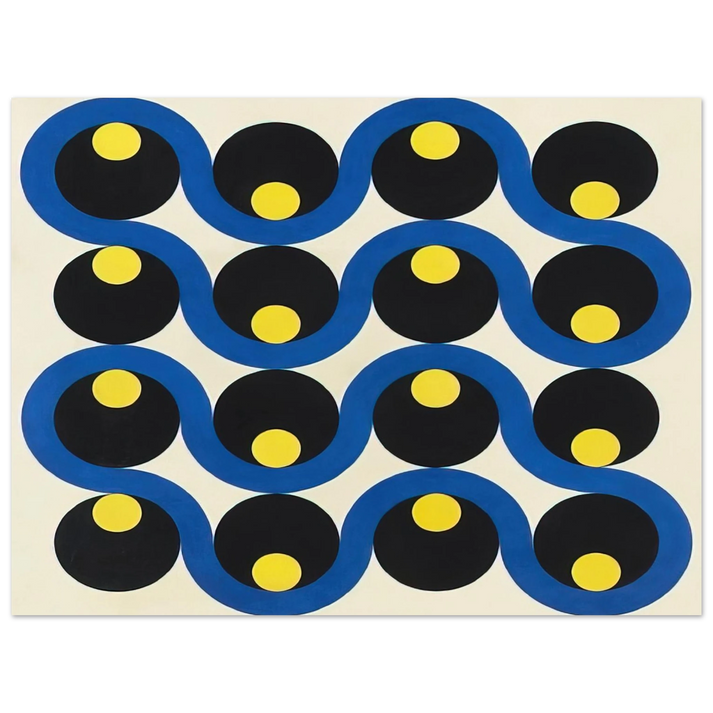
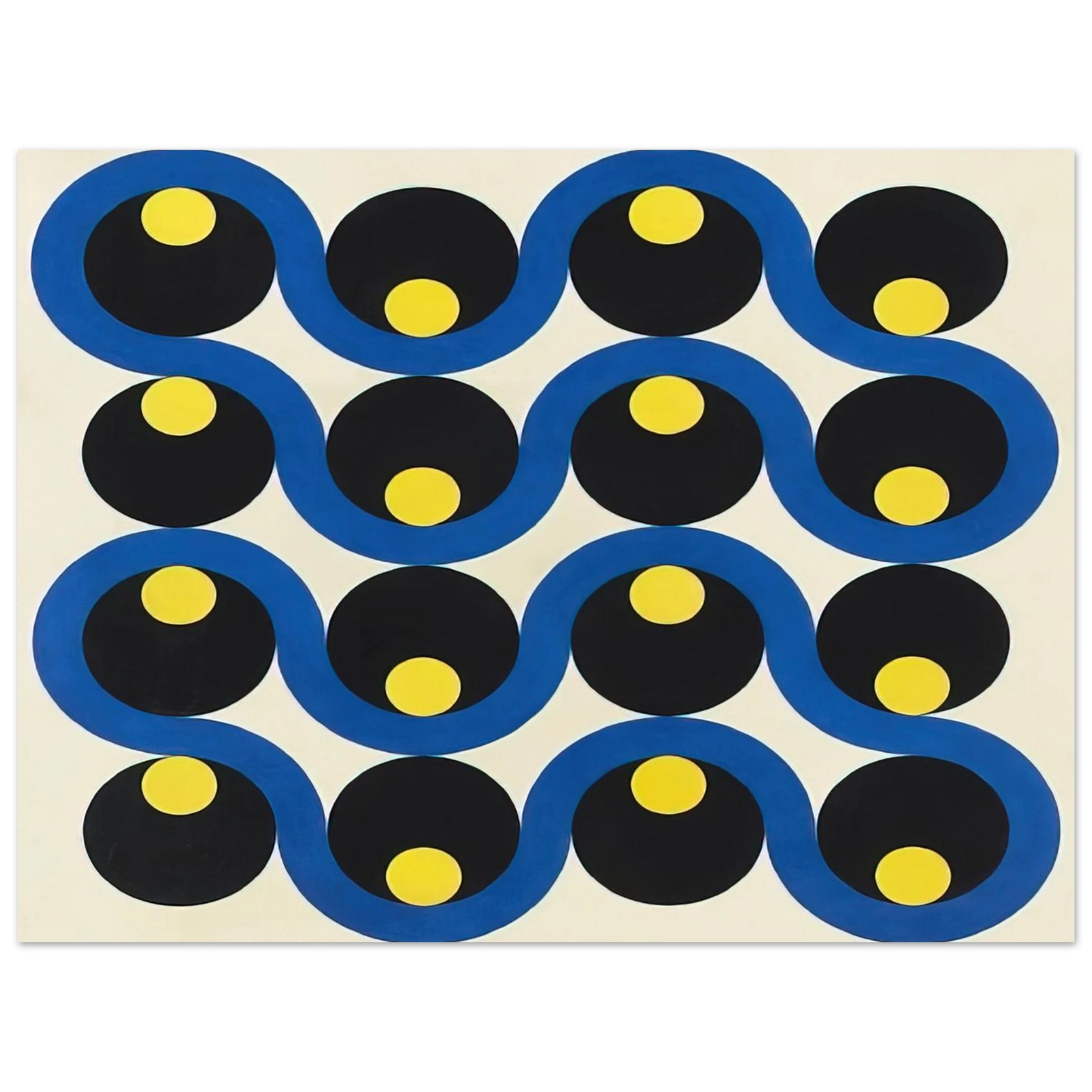
Alexander Liberman - Beat - 1952 75x100 cm / 30x40inches Fine Art Poster
Alexander Liberman - Beat - 1952 75x100 cm / 30x40inches Fine Art Poster
Couldn't load pickup availability
Elevate Your Space with Alexander Liberman's Iconic Minimalism
Experience the rhythmic precision of Alexander Liberman’s 'Beat' (1952), a seminal work that defines the transition into mid-century geometric abstraction. As a pioneer of the Hard-edge movement, Liberman utilized the purity of the circle and the cadence of repetition to create a visual language that is both cerebral and profoundly modern. This 75x100 cm (30x40 inches) fine art poster captures the essence of Liberman's 1950s period, where he sought to remove the 'hand of the artist' in favor of mathematical clarity and structural harmony.
Museum-Quality Execution by RedKalion
At RedKalion, we honor the integrity of the original masterpiece by utilizing the Master's Edition archival paper. This premium reproduction is printed on 250 gsm (110 lb) museum-quality paper, ensuring a substantial feel and exceptional durability. The matte, uncoated finish provides a luxurious, natural white (off-white) texture that eliminates glare, allowing the stark contrasts and geometric forms of Liberman's 'Beat' to resonate with depth and clarity.
Archival Standards and Sustainability
- Longevity: Our acid-free (pH above 7) paper prevents yellowing or degradation, ensuring your investment endures for generations.
- Substance: A thickness of 0.29 mm (11.4 mils) provides the structural integrity expected of high-end gallery prints.
- Responsibility: We utilize FSC-certified paper, supporting sustainable forest management without compromising on aesthetic excellence.
- Craftsmanship: Each piece is printed and shipped on demand with no minimum order requirements, reducing waste and ensuring a fresh, bespoke print every time.
Transform your interior with a piece that bridged the world of high-fashion editorial design and avant-garde fine art. This archival-grade reproduction of Beat is more than a poster; it is an enduring statement of mid-century sophistication.
Discover Unlimited Art Possibilities
At RedKalion, you can find virtually any artwork from any artist, available in a wide range of sizes to perfectly match your space.
If you didn’t find what you’re looking for, contact us at support@redkalion.com . We will source any artwork and produce it in any size and format you need, including art prints, posters, canvas, framed pieces, framed canvas, and more.
For dedicated art enthusiasts, we also offer handcrafted replicas of any artwork, carefully painted by highly skilled artists using traditional techniques.
For custom requests, contact us at support@redkalion.com .
What paper is used for this Alexander Liberman print?
We use Master's Edition archival paper. It is a 250 gsm (110 lb) museum-quality paper with a matte, uncoated, and natural white finish, specifically chosen for its luxurious texture and superior ink absorption.
How long will this fine art reproduction last?
This print is designed to last a lifetime. Because the paper is acid-free with a pH above 7, it is resistant to yellowing and chemical degradation, preserving the artwork's original vibrancy for decades.
Is the paper used for the 'Beat' print sustainable?
Yes, RedKalion is committed to environmental responsibility. We use FSC-certified paper (Forest Stewardship Council), ensuring that the materials are sourced from responsibly managed forests that provide environmental and social benefits.
How is my order shipped?
Each Alexander Liberman fine art poster is printed on demand and shipped in robust packaging to ensure it arrives in pristine condition. There are no minimum orders, and we ship globally using premium carriers.
What are the physical dimensions and weight of the poster?
The print measures 75x100 cm (30x40 inches). It features a weight of 250 gsm (110 lb) and a thickness of 0.29 mm (11.4 mils), providing a premium, heavy-weight gallery feel.
What is the artistic significance of Alexander Liberman's 'Beat' (1952)?
'Beat' represents Liberman's exploration of Hard-edge abstraction. It utilizes circular motifs to create a visual rhythm or 'beat,' reflecting the artist's move toward objective, geometric clarity that influenced post-painterly abstraction.
How does the matte finish affect the appearance of this geometric artwork?
The matte, uncoated finish is ideal for geometric minimalism. It prevents light reflections from obscuring the sharp lines and bold shapes, offering a smooth, sophisticated surface that emphasizes the work's structural precision.