RedKalion
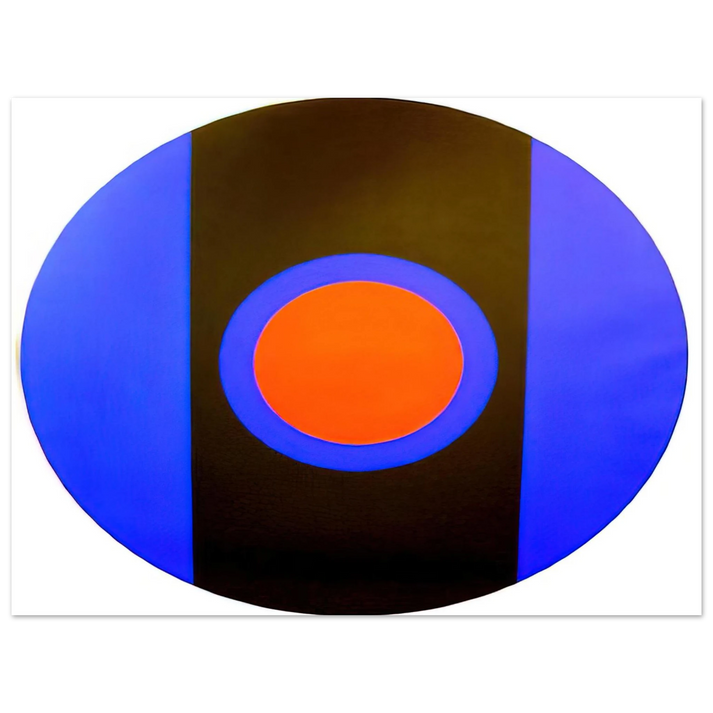
Alexander Liberman - Socrates - 1962 75x100 cm / 30x40inches Fine Art Poster
Alexander Liberman - Socrates - 1962 75x100 cm / 30x40inches Fine Art Poster
Couldn't load pickup availability
Elevate Your Space with Alexander Liberman’s 'Socrates' (1962)
Alexander Liberman’s Socrates (1962) is a masterclass in mid-century geometric abstraction. As a leading figure in the Hard-edge painting movement and the legendary editorial director of Condé Nast, Liberman sought to distill art to its most essential forms. This fine art print captures the profound simplicity of the circle—a shape Liberman viewed as a symbol of cosmic order and divine perfection. The 1962 'Socrates' exemplifies this philosophical pursuit, offering a serene yet powerful focal point for any modern interior.
Museum-Quality Execution and Historical Context
In the early 1960s, Liberman transitioned from the gestural energy of Abstract Expressionism toward the calculated precision of Minimalism. 'Socrates' reflects this evolution, utilizing clean lines and a disciplined palette to evoke intellectual clarity. By choosing this museum-quality reproduction, you are bringing a piece of post-war art history into your home, curated with the same attention to detail that Liberman applied to his own canvases.
The RedKalion Archival Standard
At RedKalion, we believe that world-class art deserves world-class materials. Our archival-grade prints are produced on Master's Edition archival paper, chosen for its luxurious texture and enduring quality. This 250 gsm (110 lb), acid-free paper ensures that the vibrant depth of Liberman's geometry remains crisp for generations without yellowing or degradation. The matte, natural white finish eliminates glare, allowing the viewer to fully appreciate the subtle nuances of the composition.
- Artist: Alexander Liberman
- Title: Socrates (1962)
- Material: 250 gsm (110 lb) Master's Edition archival paper
- Finish: Premium matte, off-white, uncoated
- Sustainability: FSC-certified paper from responsibly managed sources
- Longevity: Acid-free (pH above 7) for archival permanence
Discover Unlimited Art Possibilities
At RedKalion, you can find virtually any artwork from any artist, available in a wide range of sizes to perfectly match your space.
If you didn’t find what you’re looking for, contact us at support@redkalion.com . We will source any artwork and produce it in any size and format you need, including art prints, posters, canvas, framed pieces, framed canvas, and more.
For dedicated art enthusiasts, we also offer handcrafted replicas of any artwork, carefully painted by highly skilled artists using traditional techniques.
For custom requests, contact us at support@redkalion.com .
What makes the 'Socrates' (1962) print a museum-quality reproduction?
Our Alexander Liberman prints use 250 gsm Master's Edition archival paper. This heavy-weight, acid-free material ensures the artwork maintains its structural integrity and color vibrancy for decades, mirroring the standards found in the world's leading galleries.
What are the specific paper and finish details?
The print features a matte, uncoated finish on natural white (off-white) paper. With a thickness of 0.29 mm (11.4 mils), it provides a luxurious, tactile feel that enhances the minimalist aesthetic of Liberman's geometric forms.
Is the paper used for this fine art poster sustainable?
Yes, sustainability is core to RedKalion's values. We use FSC-certified paper, ensuring that the materials for your fine art print are sourced from responsibly managed forests that provide environmental and social benefits.
How does RedKalion ensure the longevity of this archival print?
We use acid-free paper with a pH level above 7. This prevents the paper from yellowing or becoming brittle over time, ensuring your investment in fine art remains a lasting legacy in your collection.
How is my order fulfilled and shipped?
RedKalion operates on a print-on-demand basis with no minimum order requirements. Each Socrates (1962) print is produced specifically for you and shipped in robust packaging to ensure it arrives in pristine condition.
Why did Alexander Liberman choose the circle for 'Socrates'?
Liberman believed the circle represented the ultimate form of harmony and the 'ideal.' In 'Socrates' (1962), the geometry serves as a visual metaphor for philosophical clarity and universal truth, hallmarks of the Hard-edge movement.
Will the colors of the print match the original 1962 painting?
Our reproduction process uses advanced color-matching techniques to honor Liberman's original intent. The matte, off-white paper base specifically complements the mid-century palette, providing an authentic visual experience without the distraction of gloss.