
RedKalion
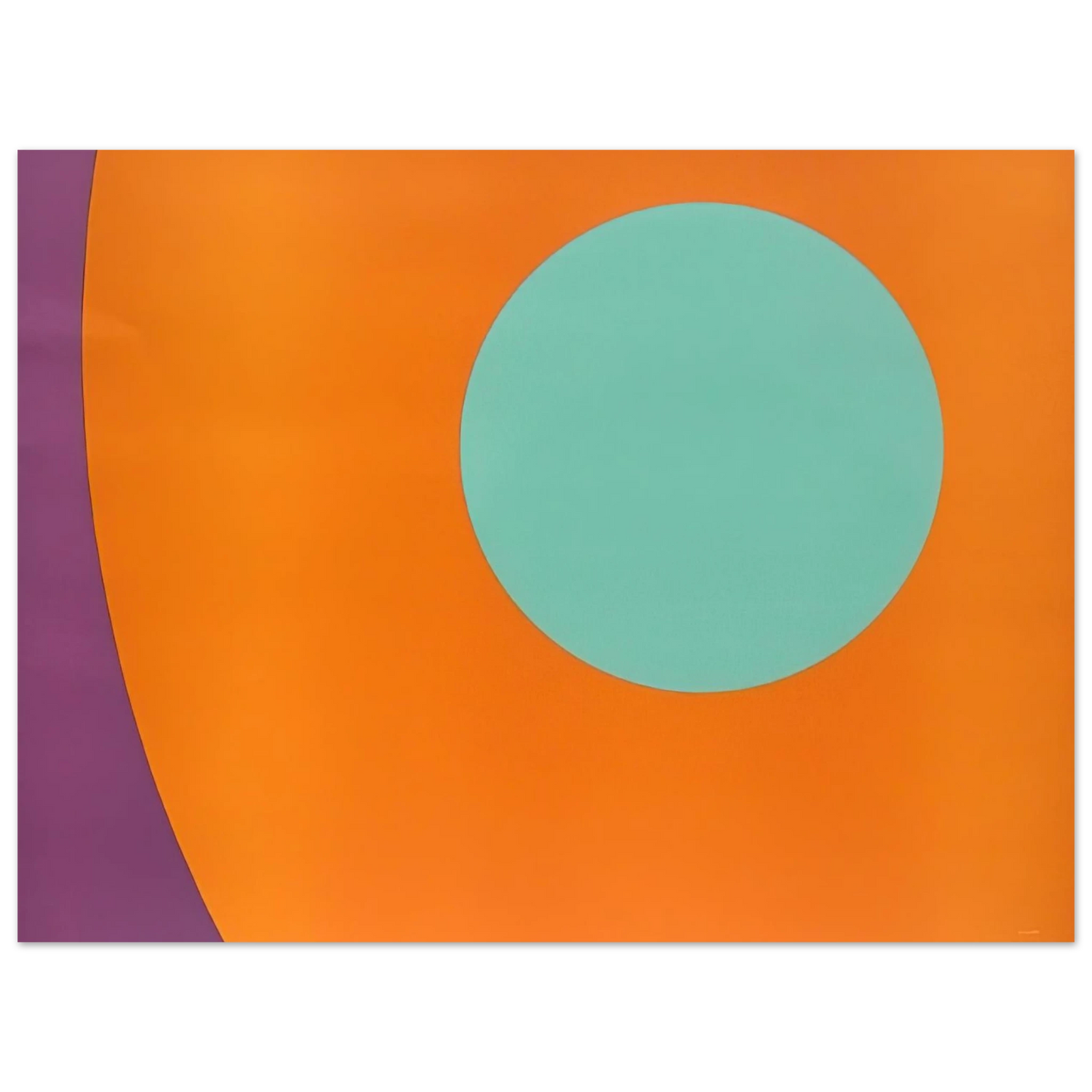
Alexander Liberman - Untitled Abstract - 1962 75x100 cm / 30x40inches Fine Art Poster
Alexander Liberman - Untitled Abstract - 1962 75x100 cm / 30x40inches Fine Art Poster
Couldn't load pickup availability
Alexander Liberman's 1962 Untitled Abstract: A Masterpiece of Mid-Century Geometry
Invite the sophisticated clarity of Alexander Liberman’s Untitled Abstract (1962) into your collection. This iconic fine art print represents a pivotal moment in 20th-century minimalism, where Liberman transitioned toward the rigorous, hard-edge geometric abstraction that defined his legacy. This 75x100 cm (30x40 inches) piece serves as a cornerstone of modern aesthetic theory, focusing on the purity of form and the precision of the circle.
As a legendary curator of visual culture, Liberman explored the tension between simplicity and depth. This museum-quality reproduction captures the precise interplay of form and negative space, offering a timeless aesthetic that anchors modern interiors. At RedKalion, we honor this vision by utilizing archival-grade materials that preserve the artist's original intent, ensuring every tonal nuance is rendered with absolute fidelity.
Our Master's Edition archival paper provides a luxurious, matte, uncoated finish. The natural white (off-white) tone ensures that the colors resonate with an authentic, non-reflective elegance. This Alexander Liberman poster is more than a decoration; it is an enduring investment in art history, crafted to remain as vibrant as the day it was printed.
- Premium Weight: 250 gsm (110 lb) for a substantial, professional feel.
- Archival Quality: Acid-free (pH above 7) to ensure zero yellowing or degradation over decades.
- Sustainable Choice: FSC-certified paper sourced from responsibly managed forests.
- Expert Craftsmanship: 0.29 mm thickness (11.4 mils) reflecting true gallery standards.
Elevate your space with an archival masterpiece that endures. RedKalion prints are designed for those who demand the finest in texture, longevity, and historical accuracy.
Discover Unlimited Art Possibilities
At RedKalion, you can find virtually any artwork from any artist, available in a wide range of sizes to perfectly match your space.
If you didn’t find what you’re looking for, contact us at support@redkalion.com . We will source any artwork and produce it in any size and format you need, including art prints, posters, canvas, framed pieces, framed canvas, and more.
For dedicated art enthusiasts, we also offer handcrafted replicas of any artwork, carefully painted by highly skilled artists using traditional techniques.
For custom requests, contact us at support@redkalion.com .
What paper is used for this Alexander Liberman print?
We use Master's Edition archival paper, a 250 gsm (110 lb) museum-quality medium. It features a matte, natural white finish that provides a luxurious, non-reflective texture perfect for high-end abstract art.
How does the archival quality prevent aging?
The paper is acid-free with a pH above 7. This chemical balance prevents the paper from yellowing or becoming brittle over time, ensuring your fine art investment remains in pristine condition for generations.
Is the production process environmentally friendly?
Yes. All our prints use FSC-certified paper, ensuring the materials are sourced from responsibly managed forests that provide environmental, social, and economic benefits.
How will my fine art poster be delivered?
Each order is printed on demand with no minimums. We use specialized protective packaging designed for museum-grade art to ensure your 30x40 inch print arrives in flawless gallery condition.
What makes RedKalion prints different from standard posters?
RedKalion specializes in museum-grade reproductions. Unlike standard posters, our Master's Edition prints use 250 gsm thickness, archival-grade paper, and acid-free chemistry, meeting the rigorous standards of professional collectors.
What was Alexander Liberman’s influence in 1962?
By 1962, Liberman was a leading figure in hard-edge abstraction. This period focused on the circle as a perfect form, stripping away the 'hand of the artist' to achieve objective, universal beauty.
Why choose an untitled abstract for modern decor?
Untitled works allow for subjective interpretation. The geometric balance of Liberman’s 1962 works provides a neutral yet powerful focal point that perfectly complements contemporary and mid-century modern design aesthetics.