RedKalion
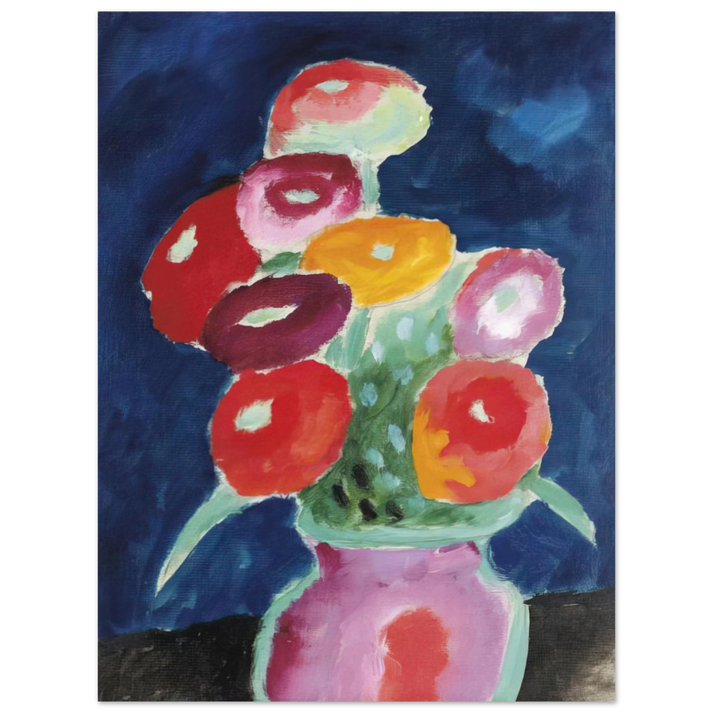
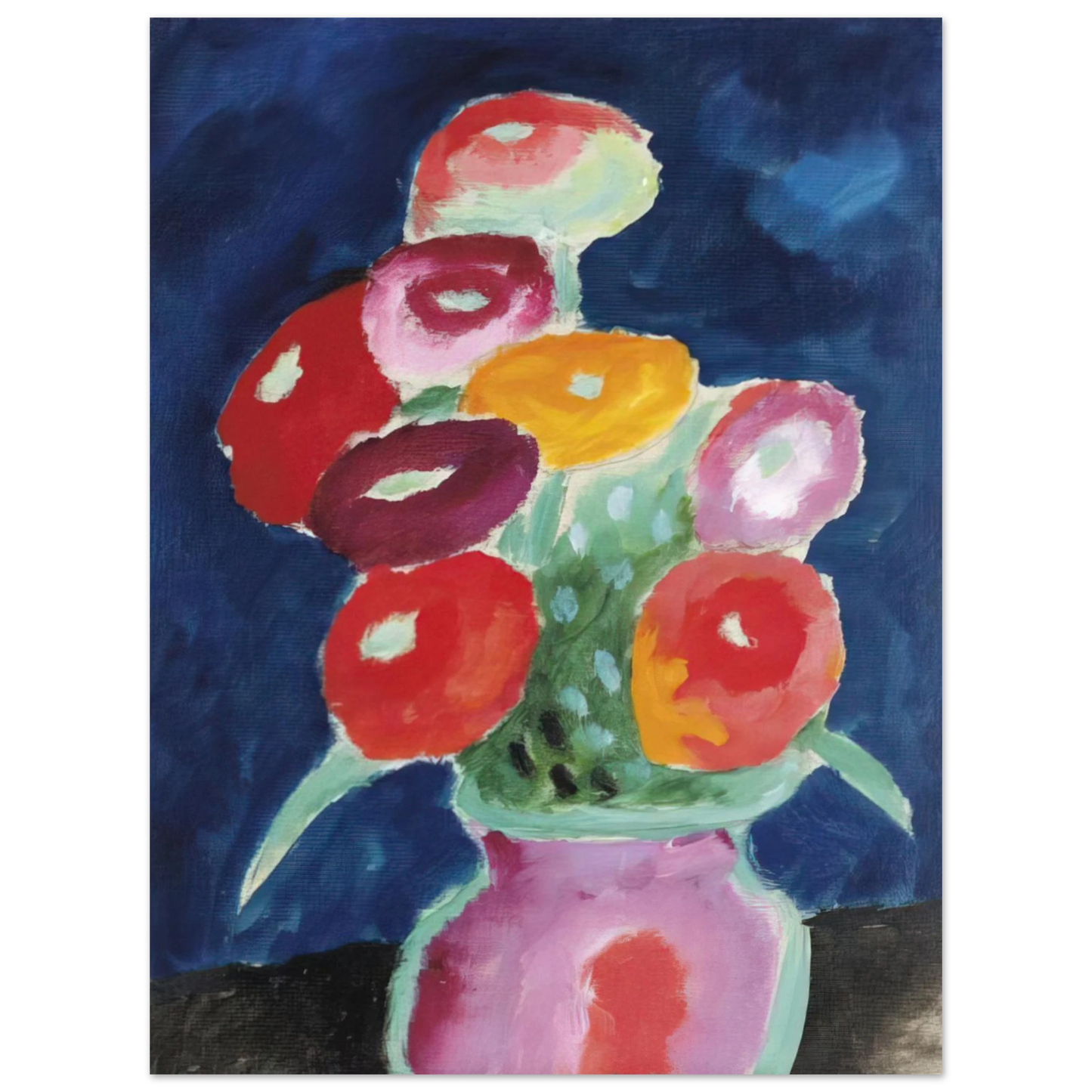
Alexej von Jawlensky - BLUMEN IN EINER VASE 1918 75x100 cm / 30x40inches Fine Art Poster
Alexej von Jawlensky - BLUMEN IN EINER VASE 1918 75x100 cm / 30x40inches Fine Art Poster
Couldn't load pickup availability
A Masterpiece of Expressionist Radiance: 'Blumen in einer Vase' (1918)
Experience the profound spiritual energy of Alexej von Jawlensky’s 'Blumen in einer Vase' (1918). This significant work, created during the artist's fruitful period of exile in Switzerland, captures the transition from literal representation to a more mystical, abstracted aesthetic. As a seminal figure in the Der Blaue Reiter (The Blue Rider) movement, Jawlensky utilized color not merely to depict nature, but to evoke the internal 'soul' of his subjects.
Our museum-quality reproduction honors Jawlensky’s legacy by meticulously preserving the vibrant strokes and saturated hues of the original still life. At the generous dimensions of 75x100 cm (30x40 inches), this fine art print serves as a commanding centerpiece, bringing the intense emotionality of Early Modernism into your modern home or gallery space.
The RedKalion Archival Standard
At RedKalion, we curate more than just images; we provide archival experiences. This print is produced using the highest industry standards to ensure longevity and aesthetic depth:
- Master's Edition Paper: A heavy 250 gsm (110 lb) paper that provides a substantial, high-end feel.
- Luxurious Finish: The matte, uncoated, natural white (off-white) surface eliminates glare and offers a sophisticated texture.
- Archival Longevity: Acid-free (pH above 7) composition prevents yellowing, ensuring your investment remains as striking as the day it arrived.
- Sustainable Excellence: We utilize FSC-certified paper, reflecting a commitment to both art and the environment.
Elevate your interior with an archival masterpiece that endures. This print is produced on demand with no minimum order, ensuring each piece is treated with the care of a bespoke commission.
Discover Unlimited Art Possibilities
At RedKalion, you can find virtually any artwork from any artist, available in a wide range of sizes to perfectly match your space.
If you didn’t find what you’re looking for, contact us at support@redkalion.com . We will source any artwork and produce it in any size and format you need, including art prints, posters, canvas, framed pieces, framed canvas, and more.
For dedicated art enthusiasts, we also offer handcrafted replicas of any artwork, carefully painted by highly skilled artists using traditional techniques.
For custom requests, contact us at support@redkalion.com .
What paper quality is used for this Jawlensky print?
We use our exclusive Master's Edition archival paper. It is a 250 gsm (110 lb) museum-quality paper with a matte, uncoated finish and a natural white tone for a premium feel.
Is the 'Blumen in einer Vase' print archival?
Yes. The paper is acid-free with a pH value above 7, ensuring it will not yellow or degrade over time, preserving the vibrant Expressionist colors for generations.
Does the print come with a frame?
This product is sold as a premium unframed fine art print. This allows you to select a custom frame that perfectly complements your personal decor and protects the 75x100 cm artwork.
How is the color accuracy maintained?
RedKalion utilizes advanced giclée printing techniques to ensure every nuance of Jawlensky’s 1918 palette is captured with exceptional fidelity, depth, and color accuracy.
What is the shipping process for this large-format print?
Our 30x40 inch prints are printed on demand and shipped in protective, heavy-duty packaging to ensure they arrive in pristine condition, with no minimum order requirements.
What is the significance of the year 1918 in Jawlensky’s work?
1918 was a pivotal year where Jawlensky’s work became more meditative and simplified. This still life reflects the synthesis of his Fauvist roots and his growing interest in spiritual abstraction.
How does Jawlensky's use of color define this piece?
Jawlensky believed color was a vehicle for the soul. In this piece, he uses bold, non-naturalistic tones and heavy outlines to convey emotional resonance rather than traditional realism.