RedKalion
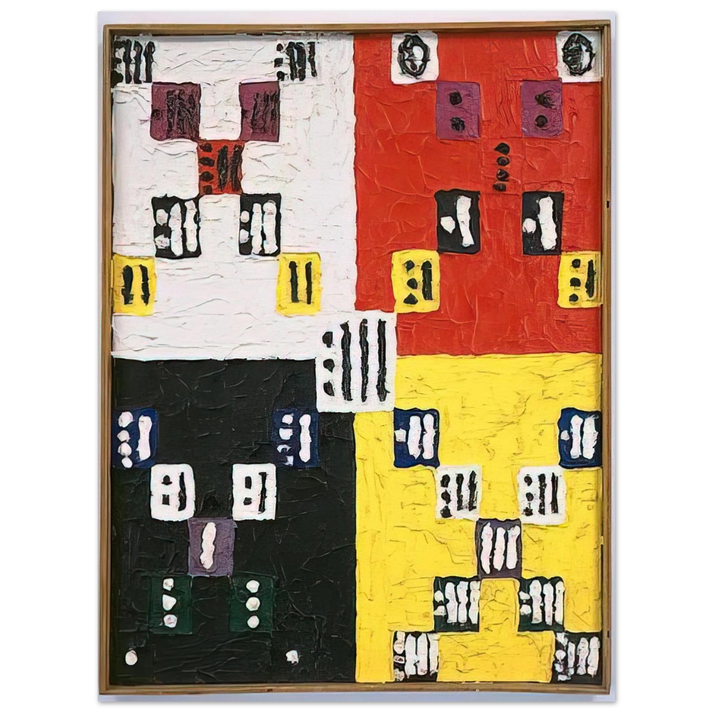
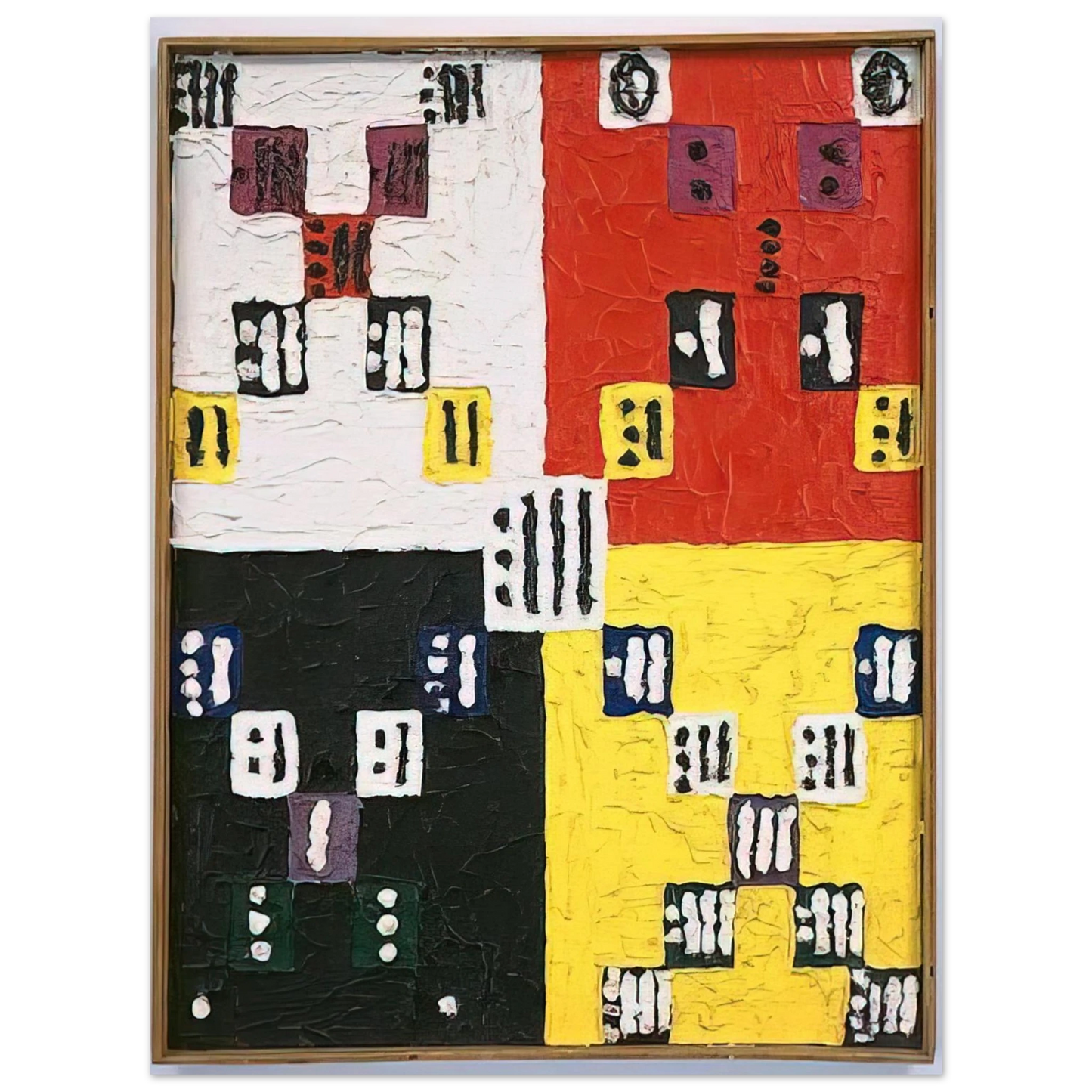
Alfred Jensen - The Apex is Nothing - 1960 75x100 cm / 30x40inches Fine Art Poster
Alfred Jensen - The Apex is Nothing - 1960 75x100 cm / 30x40inches Fine Art Poster
Couldn't load pickup availability
The Visionary Geometry of Alfred Jensen: The Apex is Nothing
Experience the intellectual depth and vibrant energy of Alfred Jensen's 1960 masterpiece, 'The Apex is Nothing'. This stunning fine art print captures the essence of Jensen’s unique approach to geometric abstraction, where ancient mathematics, physics, and cosmic systems converge on the canvas. As an elite museum-quality reproduction from RedKalion, this piece transforms your space into a gallery of mid-century intellectual rigor and visual brilliance.
The Art of Mathematical Expression
Alfred Jensen was not merely a painter; he was a cosmologist of the canvas. In 'The Apex is Nothing', Jensen utilizes his signature impasto technique and rigorous grid systems to explore the concept of duality and the infinite. His work is celebrated for its ability to bridge the gap between scientific theory and spiritual inquiry, making this archival art print a profound statement piece for any sophisticated collection.
Museum-Grade Craftsmanship
At RedKalion, we believe that world-class art deserves world-class materials. This reproduction is meticulously crafted to meet the highest archival standards:
- Master's Edition Paper: We utilize premium, off-white archival paper that provides a luxurious, natural texture.
- Uncoated Matte Finish: The matte surface eliminates glare, allowing the complex numerical patterns and vibrant hues of Jensen's work to shine in any lighting.
- Substantial Weight: At 250 gsm (110 lb) and a thickness of 0.29 mm, this print possesses a significant, high-end feel.
- Long-Term Preservation: Our paper is acid-free with a pH above 7, ensuring your investment remains free from yellowing or degradation for generations.
By choosing this FSC-certified masterpiece, you are opting for a sustainable, museum-quality reproduction that honors both the artist's legacy and the environment. Elevate your interior with a piece that is as enduring as it is intellectually stimulating.
Discover Unlimited Art Possibilities
At RedKalion, you can find virtually any artwork from any artist, available in a wide range of sizes to perfectly match your space.
If you didn’t find what you’re looking for, contact us at support@redkalion.com . We will source any artwork and produce it in any size and format you need, including art prints, posters, canvas, framed pieces, framed canvas, and more.
For dedicated art enthusiasts, we also offer handcrafted replicas of any artwork, carefully painted by highly skilled artists using traditional techniques.
For custom requests, contact us at support@redkalion.com .
What makes the Master's Edition paper special for this Alfred Jensen print?
Our Master's Edition archival paper is museum-quality, featuring a 250 gsm weight and a natural white, uncoated matte finish. This ensures a luxurious texture and deep color saturation without the glare found in inferior posters.
Is this Alfred Jensen fine art print sustainable?
Yes, RedKalion is committed to environmental responsibility. This print is produced on FSC-certified paper, ensuring it meets the highest standards for sustainable forestry and ethical production.
How long will the print last before yellowing?
This print is archival-grade and acid-free (pH above 7). It is specifically designed to resist yellowing and degradation over time, preserving the vibrant geometry of Jensen's work for decades.
How is my order fulfilled and shipped?
RedKalion prints and ships each order on demand. There are no minimum order requirements, and each piece is handled with extreme care to ensure it arrives at your door in perfect gallery condition.
What is the finish of the paper?
The print features a premium matte finish. This uncoated, natural white surface provides an elegant, non-reflective appearance that highlights the intricate details and textures of the original 1960 artwork.
What is the meaning behind Alfred Jensen’s 'The Apex is Nothing'?
Created in 1960, this work reflects Jensen's fascination with mathematical systems and ancient philosophies. It explores the relationship between numbers and physical space, suggesting that the 'apex' or pinnacle of a system often leads back to a state of void or infinity.
What was Alfred Jensen’s artistic style?
Jensen is known for 'Concrete Expressionism,' characterized by thick impasto, vivid colors, and complex grids. His style blends mid-century abstraction with scientific diagrams, Mayan mathematics, and Pythagorean theories.