
RedKalion
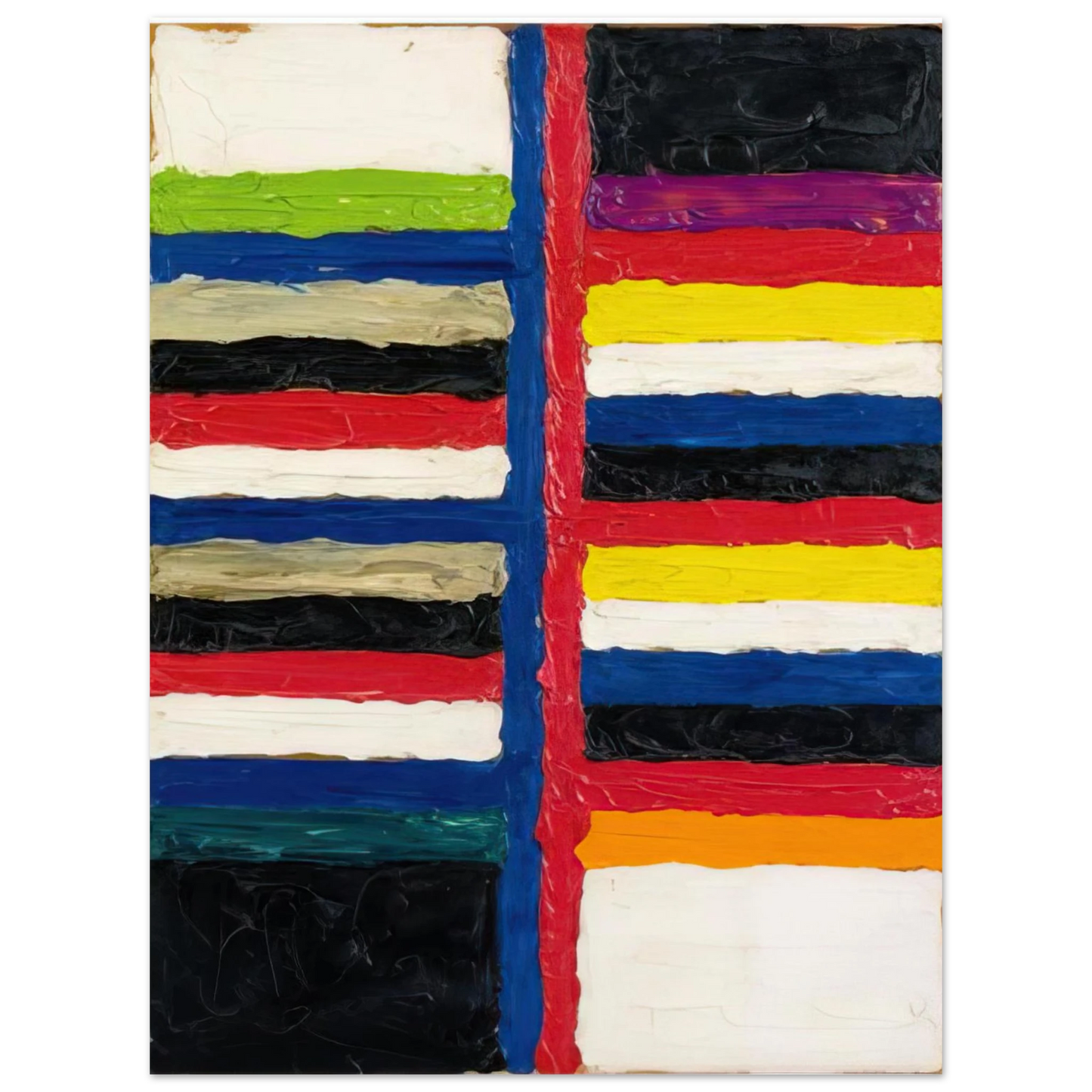
Alfred Jensen - Untitled - 1960 75x100 cm / 30x40inches Fine Art Poster
Alfred Jensen - Untitled - 1960 75x100 cm / 30x40inches Fine Art Poster
Couldn't load pickup availability
Alfred Jensen: Untitled (1960) – A Masterwork of Mathematical Abstraction
Experience the intellectual rigor and vibrant chromatic energy of the mid-century avant-garde with this exquisite fine art print of Alfred Jensen’s Untitled (1960). Alfred Jensen, a singular figure in the history of abstract art, bypassed the gestural norms of his era to explore a structured, almost mystical language based on mathematics, color theory, and ancient cosmological diagrams. This 1960 masterpiece is a quintessential example of his ability to transform complex numerical systems into a visually arresting grid-based composition.
At RedKalion, we honor Jensen’s precise vision by providing a museum-quality reproduction that captures the depth and intensity of the original work. Each print is meticulously crafted on our Master’s Edition archival paper, ensuring that the rhythmic patterns and bold hues remain as vivid as the day they were conceived. The matte, natural white finish provides a luxurious, non-reflective surface that allows the viewer to fully engage with the artwork's intricate geometry.
- Paper Grade: Master's Edition, museum-quality 250 gsm (110 lb).
- Archival Excellence: Acid-free (pH above 7) to prevent yellowing or degradation, ensuring your investment endures for generations.
- Sustainable Craftsmanship: FSC-certified paper, printed and shipped on demand with no minimum orders.
- Premium Texture: A thickness of 0.29 mm (11.4 mils) offers a robust, professional feel suitable for high-end framing.
Elevate your space with an archival masterpiece that bridges the gap between science and art. This curated print from RedKalion serves as both a sophisticated focal point and a tribute to the enduring legacy of 20th-century geometric exploration.
Discover Unlimited Art Possibilities
At RedKalion, you can find virtually any artwork from any artist, available in a wide range of sizes to perfectly match your space.
If you didn’t find what you’re looking for, contact us at support@redkalion.com . We will source any artwork and produce it in any size and format you need, including art prints, posters, canvas, framed pieces, framed canvas, and more.
For dedicated art enthusiasts, we also offer handcrafted replicas of any artwork, carefully painted by highly skilled artists using traditional techniques.
For custom requests, contact us at support@redkalion.com .
What makes this Alfred Jensen print museum-quality?
RedKalion uses Master's Edition archival paper (250 gsm) and precision printing techniques. This ensures the reproduction maintains the color accuracy and structural integrity required for museum-grade displays and professional fine art collections.
What are the technical specifications of the paper used?
The print is produced on 250 gsm (110 lb) acid-free paper with a thickness of 0.29 mm. It features a matte, uncoated, natural white finish that prevents glare and provides a premium tactile experience.
Will the colors of my Alfred Jensen reproduction fade?
No. By using acid-free paper with a pH value above 7, our prints are chemically stable and resistant to yellowing or fading, ensuring the artwork’s longevity for decades in standard indoor conditions.
How is the artwork packaged and shipped?
Each fine art poster is printed on demand to ensure peak quality. We ship in protective, eco-friendly packaging designed to prevent creases or damage during transit, with no minimum order requirements.
Is the paper used for this print sustainable?
Yes. RedKalion is committed to environmental responsibility. This Alfred Jensen print is produced on FSC-certified paper, supporting sustainable forestry practices worldwide.
What inspired Alfred Jensen’s 1960 series?
Jensen was deeply influenced by Pythagorean geometry, Mayan calendars, and Chinese numerical systems. His 1960 works often represent the 'logic of color' where specific hues are assigned mathematical values to represent cosmic order.
What is the significance of the grid in "Untitled" (1960)?
For Jensen, the grid was not merely a design choice but a 'mapping' of space and time. It allowed him to organize complex philosophical concepts into a balanced, rhythmic visual field.