RedKalion
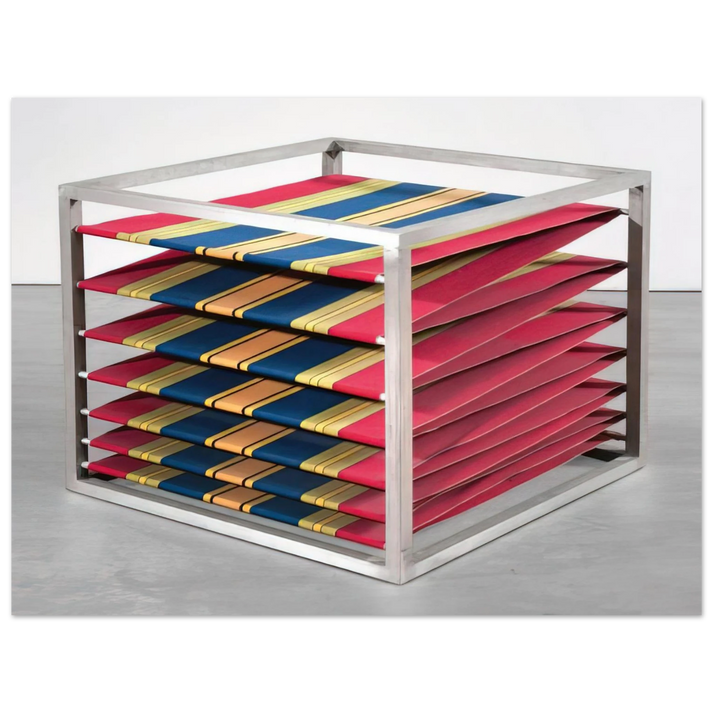
Alighiero Boetti - ZIG ZAG 1967 75x100 cm / 30x40inches Fine Art Poster
Alighiero Boetti - ZIG ZAG 1967 75x100 cm / 30x40inches Fine Art Poster
Couldn't load pickup availability
Elevate Your Collection with Alighiero Boetti’s 'ZIG ZAG' (1967)
Experience the radical spirit of 1960s Italian avant-garde with this museum-quality reproduction of Alighiero Boetti's 'ZIG ZAG' (1967). As a cornerstone of the Arte Povera movement, Boetti transformed simple geometric concepts into profound explorations of space and rhythm. This piece captures the meticulous tension between industrial precision and artistic intuition, making it an essential acquisition for the discerning collector of contemporary art prints.
Historical Context and Artistic Vision
In 1967, Boetti was at the height of his early experimental phase in Turin. 'ZIG ZAG' represents his fascination with the 'one and the many,' using repetitive forms to create a visual language that transcends its initial simplicity. By introducing this fine art poster into your space, you are not merely hanging a decoration; you are preserving a moment of art history where the boundaries between sculpture, mathematics, and graphic design were permanently blurred.
Uncompromising Museum-Quality Specifications
At RedKalion, we believe a masterpiece deserves a medium that endures. This Alighiero Boetti reproduction is rendered on our Master's Edition archival paper. This premium, off-white, natural white paper offers a luxurious, uncoated matte finish that eliminates glare and emphasizes the depth of the ink. With a substantial weight of 250 gsm (110 lb) and a thickness of 0.29 mm, this print possesses the tactile authority of an original gallery acquisition.
Archival Integrity and Sustainability
- Longevity: Our acid-free (pH above 7) paper ensures your investment is protected against yellowing and degradation for decades.
- FSC-Certified: We prioritize the planet as much as the art, utilizing responsibly sourced materials.
- Sophisticated Texture: The 30x40 inch (75x100 cm) format provides a commanding presence, perfect for minimalist or mid-century modern interiors.
Invest in a piece that resonates with intellectual depth and physical excellence. RedKalion's commitment to archival-grade reproductions ensures that 'ZIG ZAG' will remain a centerpiece of your collection, maintaining its vibrancy and structural integrity for a lifetime.
Discover Unlimited Art Possibilities
At RedKalion, you can find virtually any artwork from any artist, available in a wide range of sizes to perfectly match your space.
If you didn’t find what you’re looking for, contact us at support@redkalion.com . We will source any artwork and produce it in any size and format you need, including art prints, posters, canvas, framed pieces, framed canvas, and more.
For dedicated art enthusiasts, we also offer handcrafted replicas of any artwork, carefully painted by highly skilled artists using traditional techniques.
For custom requests, contact us at support@redkalion.com .
What defines the quality of this Alighiero Boetti print?
This print is produced on Master's Edition archival paper, a 250 gsm museum-quality medium. It features a matte, natural white finish that ensures deep color saturation and a luxurious, glare-free texture suitable for high-end gallery displays.
Is the paper used for ZIG ZAG sustainable?
Yes, sustainability is core to RedKalion’s curation. The paper used for this Alighiero Boetti reproduction is FSC-certified, ensuring it meets the highest environmental standards while providing a premium, archival-grade foundation for the artwork.
How long will this archival print last?
Designed for longevity, the paper is acid-free with a pH above 7. This archival quality prevents the paper from yellowing or becoming brittle over time, ensuring the 'ZIG ZAG' print maintains its original brilliance for generations.
What is the fulfillment process for my order?
RedKalion operates on a precision on-demand fulfillment model. There are no minimum orders, and each print is meticulously produced and shipped individually to ensure the highest quality control and minimize environmental waste.
Is the finish of the poster glossy or matte?
The Alighiero Boetti 'ZIG ZAG' print features a sophisticated matte, uncoated finish. This natural white (off-white) texture provides an elegant, non-reflective surface that highlights the rhythmic geometric patterns without the distraction of artificial shine.
What was the significance of 1967 for Alighiero Boetti?
1967 was a pivotal year for Boetti, marking his first solo exhibition and his deep involvement with the Arte Povera movement in Turin. His works from this era focused on industrial materials and the concept of 'doubling.'
How does 'ZIG ZAG' reflect the principles of Arte Povera?
'ZIG ZAG' reflects the movement’s interest in the relationship between man-made geometry and organic perception. It uses repetition and simple forms to challenge the viewer's understanding of physical space and artistic materiality.