RedKalion
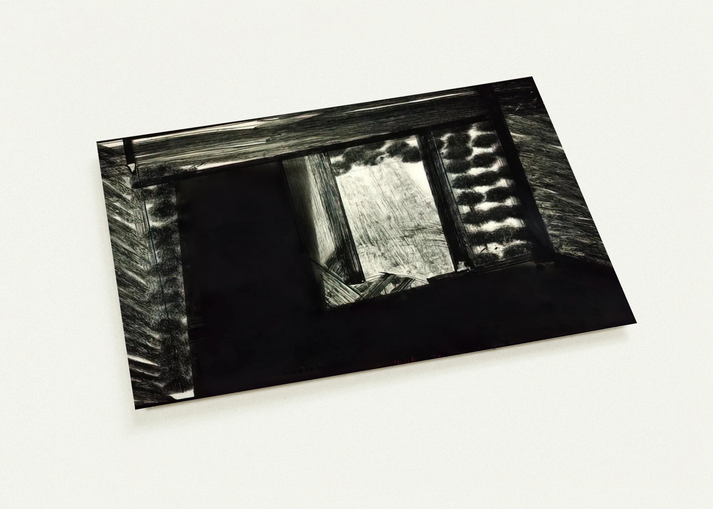
All alone in the Museum of Art - 1979 By Howard Hodgkin Pack of 10 Post Cards | Howard Hodgkin Post Cards | A6 (10.5 x 14.8 cm) - 4.1 x 5.8 inches
All alone in the Museum of Art - 1979 By Howard Hodgkin Pack of 10 Post Cards | Howard Hodgkin Post Cards | A6 (10.5 x 14.8 cm) - 4.1 x 5.8 inches
Couldn't load pickup availability
The Intimacy of Memory: 'All alone in the Museum of Art' (1979) by Howard Hodgkin
In 1979, Sir Howard Hodgkin crafted one of his most evocative works, 'All alone in the Museum of Art'. This piece captures Hodgkin's signature ability to translate a fleeting, private emotion into a bold, semi-abstract visual language. Rather than depicting the literal interior of a museum, Hodgkin explores the psychological sensation of being solitary within a space dedicated to the weight of art history. At RedKalion, we have meticulously reproduced this masterpiece as a set of ten premium post cards, allowing you to share or display a piece of contemporary British history.
Museum-Quality Reproduction for Daily Life
This collection is not merely stationery; it is a testament to fine art craftsmanship. Each card in this pack of 10 is produced using our advanced 12-color fine art printing technology. Unlike standard 4-color commercial prints, our process captures the deep saturation and nuanced layering that Hodgkin was known for. Every stroke and color field is rendered with stunning depth, honoring the artist's legacy of emotional abstraction.
- Artist: Howard Hodgkin (1979)
- Paper Weight: Professional-grade 200 gsm (80 lb) for a substantial, high-end feel.
- Finish: A smooth matte finish that eliminates glare while enhancing color fidelity.
- Sustainability: Printed on FSC-certified paper, ensuring an eco-conscious choice for the discerning collector.
- Dimensions: Standard A6 (10.5 x 14.8 cm / 4.1 x 5.8 inches).
Whether used for personal correspondence or as a curated mini-gallery on your desk, these cards represent the pinnacle of archival-grade reproduction. RedKalion remains the trusted destination for those who seek to elevate their environment with art that endures.

Discover Unlimited Art Possibilities
At RedKalion, you can find virtually any artwork from any artist, available in a wide range of sizes to perfectly match your space.
If you didn’t find what you’re looking for, contact us at support@redkalion.com . We will source any artwork and produce it in any size and format you need, including art prints, posters, canvas, framed pieces, framed canvas, and more.
For dedicated art enthusiasts, we also offer handcrafted replicas of any artwork, carefully painted by highly skilled artists using traditional techniques.
For custom requests, contact us at support@redkalion.com .
What is the printing quality of these Howard Hodgkin post cards?
We use 12-color fine art printing technology, which offers superior color vibrancy and accuracy compared to standard 4-color inkjet printing, ensuring every nuance of Hodgkin’s palette is preserved.
What paper is used for this collection?
These cards are printed on 200 gsm (80 lb) FSC-certified paper with a thickness of 0.26 mm. The smooth matte finish ensures a clean, glare-free display for framing or writing.
Are these cards suitable for mailing?
Yes, these A6 post cards (10.5 x 14.8 cm) are designed for mailing. The 200 gsm weight provides the durability required for international post while maintaining a premium feel.
How does RedKalion ensure color accuracy?
By utilizing 12-color pigment-based inks, we achieve a wider color gamut. This allows for deep blacks and vivid hues that mirror the original 1979 artwork more accurately than commercial printers.
What is the shipping policy for these cards?
All cards are printed on demand to ensure quality control and minimize waste. There are no minimum orders, and we ship in protective packaging to prevent bending during transit.
What does 'All alone in the Museum of Art' represent?
This 1979 work by Howard Hodgkin represents a memory of an emotional experience within a physical space, using abstraction to convey the intimacy and isolation of viewing art.
Why is Howard Hodgkin's style unique?
Hodgkin often painted over the frames of his works to turn the painting into an object, blending the boundary between the representational world and the viewer's physical space.