

RedKalion
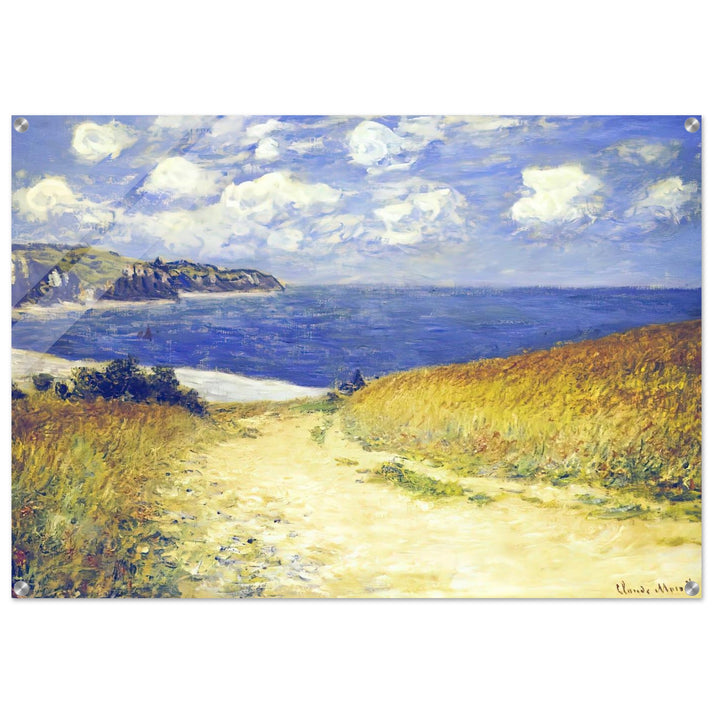
Alley near Pourville - claude monet Acrylic Print - 70x100 cm / 28x40″ inches
Alley near Pourville - claude monet Acrylic Print - 70x100 cm / 28x40″ inches
Couldn't load pickup availability
The Ethereal Radiance of Monet’s Normandy Coast
In 1882, Claude Monet returned to the dramatic cliffs and winding paths of Pourville-sur-Mer. Alley near Pourville serves as a breathtaking testament to this period, where the master of Impressionism captured the fleeting effects of light and coastal breeze. This piece exemplifies Monet's signature technique: using rhythmic brushstrokes and a vibrant palette to suggest the movement of wind through the foliage along a narrow coastal path.
A Modern Presentation of Impressionist Genius
At RedKalion, we believe a museum-quality reproduction should honor the original while embracing contemporary durability. This 70x100 cm (28x40″) fine art acrylic print utilizes a premium 4mm (0.15") acrylic panel to create an immersive depth that brings Monet’s color theory to life. The glass-like finish enhances the luminosity of the sun-drenched path, offering a sleek, vibrant, and durable finish that surpasses traditional framing.
Premium Craftsmanship & Architectural Detail
Designed for the sophisticated collector, this Claude Monet acrylic print features modern straight-cut corners and a refined hanging system. Each piece arrives with a comprehensive hanging kit, including hardware and screws. The pre-drilled holes (located 14mm from each edge with an 8mm diameter) ensure a secure and elegant installation. Elevate your space with an archival masterpiece that endures, curated by RedKalion to meet the highest standards of international galleries.
- Material: 4mm (0.15") high-grade acrylic for a sleek, vibrant finish.
- Design: Minimalist straight-cut corners for a contemporary aesthetic.
- Installation: Includes complete hardware with 15mm (0.6") screw heads.
- Longevity: Archival-grade materials ensure the Impressionist palette remains vivid for generations.


Discover Unlimited Art Possibilities
At RedKalion, you can find virtually any artwork from any artist, available in a wide range of sizes to perfectly match your space.
If you didn’t find what you’re looking for, contact us at support@redkalion.com . We will source any artwork and produce it in any size and format you need, including art prints, posters, canvas, framed pieces, framed canvas, and more.
For dedicated art enthusiasts, we also offer handcrafted replicas of any artwork, carefully painted by highly skilled artists using traditional techniques.
For custom requests, contact us at support@redkalion.com .
What materials are used for this fine art reproduction?
This print is crafted on 4mm (0.15") high-grade acrylic, providing a sleek, vibrant, and durable finish. The material enhances color depth and mimics the luminosity of original oil paintings, ensuring a museum-quality presentation for your home gallery.
How is the artwork prepared for hanging?
Each print includes a professional hanging kit with screws and hardware. The panel features pre-drilled holes at each corner, 14mm from the edge, designed for 15mm screw heads to ensure a secure, flush-to-wall installation.
How does RedKalion ensure the durability of the print?
We use archival-grade materials and 4mm thick acrylic to protect against moisture and fading. This ensures the print remains a long-lasting investment that maintains its brilliance without the need for traditional heavy framing.
What are the exact dimensions of this Claude Monet print?
This specific edition is produced in a 70x100 cm (28x40 inches) format, a grand scale that perfectly captures the expansive atmosphere of the Normandy coast as seen in Monet's original composition.
How are shipping and logistics handled for fragile acrylic?
RedKalion employs specialized gallery-standard packaging to ensure safe transit. Every acrylic print is secured with protective layering to prevent scratches or impact damage, arriving ready for immediate display in your professional or private space.
What is the historical significance of the Pourville series?
Claude Monet spent 1882 in Pourville-sur-Mer, creating a series of works that defined his mature Impressionist style. These paintings focus on the interplay of coastal light, sea air, and the rugged French landscape.
Why did Monet choose an alleyway as his subject here?
Monet often used paths or 'alleys' to create a sense of depth and movement. In this piece, the path acts as a visual guide, leading the eye through the changing textures of the Normandy vegetation and light.