
RedKalion
Alphonse Allais - First Communion of Anaemic Young Girls in the Snow 75x100 cm / 30x40inches Fine Art Poster
Alphonse Allais - First Communion of Anaemic Young Girls in the Snow 75x100 cm / 30x40inches Fine Art Poster
Couldn't load pickup availability
Elevate Your Space with Alphonse Allais’ Avant-Garde Masterpiece
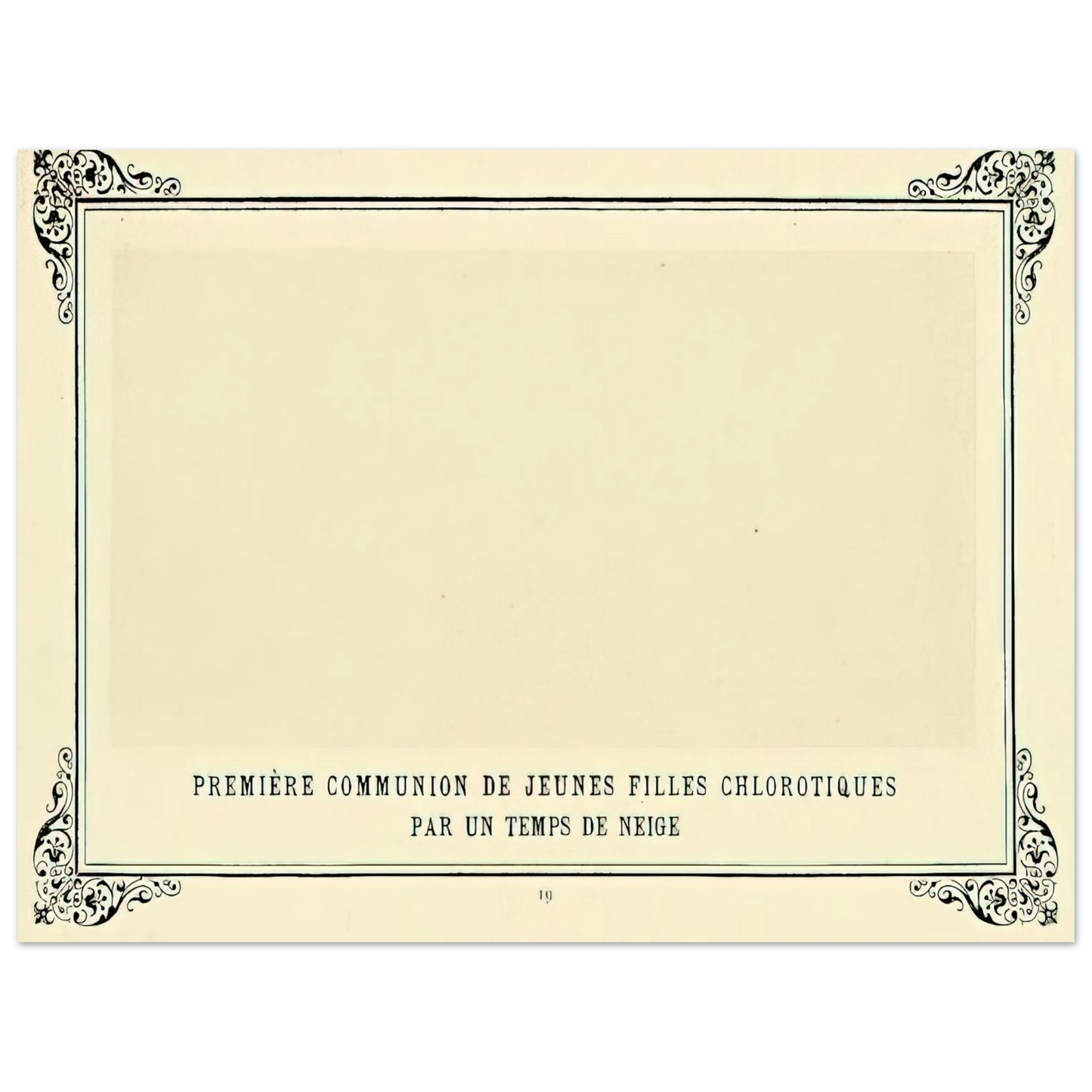
Experience a pivotal moment in art history with this exquisite museum-quality reproduction of Alphonse Allais’ 'First Communion of Anaemic Young Girls in the Snow' (Première communion de jeunes filles chlorotiques par un temps de neige). Originally presented in 1883 as part of the Incoherent exhibitions in Paris, this radical work is celebrated as one of the earliest examples of monochrome art, predating the minimalist movement and Suprematism by decades.
A Masterpiece of Conceptual Minimalism
Alphonse Allais, a renowned French humorist and writer, challenged the artistic conventions of the 19th century with this bold, conceptual piece. By presenting a pure white canvas, Allais invited viewers to engage with art through imagination and wit. This 75x100 cm (30x40 inches) fine art poster captures the essence of his satirical genius, making it a sophisticated addition to any modern interior or minimalist collection.
RedKalion’s Commitment to Museum-Quality Standards
At RedKalion, we curate archival-grade reproductions designed to endure. This fine art print is meticulously produced on our Master's Edition archival paper. With a robust weight of 250 gsm (110 lb) and a thickness of 0.29 mm (11.4 mils), the print offers a substantial, luxurious feel. The matte, uncoated finish ensures a natural white (off-white) texture that avoids glare, allowing the subtle nuances of the composition to shine under any lighting.
Technical Excellence and Sustainability
- Archival Longevity: Our acid-free paper (pH above 7) prevents yellowing and degradation over time.
- Premium Texture: The luxurious, natural white surface provides an authentic artistic experience.
- Eco-Conscious Production: We use FSC-certified paper, ensuring your art is as sustainable as it is beautiful.
- Precision Fulfillment: Each piece is printed on demand with no minimum order requirements, ensuring a fresh, pristine product delivered directly to your door.
Invest in a piece of art history that serves as both a historical landmark and a contemporary statement. This RedKalion reproduction preserves the integrity of Allais’ vision, offering an archival masterpiece that will elevate your home or office for generations.
Discover Unlimited Art Possibilities
At RedKalion, you can find virtually any artwork from any artist, available in a wide range of sizes to perfectly match your space.
If you didn’t find what you’re looking for, contact us at support@redkalion.com . We will source any artwork and produce it in any size and format you need, including art prints, posters, canvas, framed pieces, framed canvas, and more.
For dedicated art enthusiasts, we also offer handcrafted replicas of any artwork, carefully painted by highly skilled artists using traditional techniques.
For custom requests, contact us at support@redkalion.com .
What makes this print museum-quality?
This print uses 250 gsm Master's Edition archival paper. The thickness and weight provide a premium feel, while the acid-free composition ensures the artwork remains vibrant and does not yellow over time, meeting museum-grade preservation standards.
Is the paper finish reflective?
No, the artwork features a matte, uncoated finish. This creates a luxurious, off-white texture that absorbs light rather than reflecting it, making the print easy to view from any angle without distracting glare.
How long will this fine art reproduction last?
Designed for longevity, our paper is acid-free with a pH above 7. This prevents the natural degradation and yellowing common in standard posters, ensuring your investment remains in pristine condition for decades.
How is my order shipped and fulfilled?
We provide on-demand printing with no minimum orders. Your fine art poster is carefully packaged and shipped using FSC-certified materials, ensuring it arrives in perfect condition while supporting sustainable forestry practices.
What are the exact dimensions of this poster?
This specific reproduction measures 75x100 cm, which is approximately 30x40 inches. It is a large-format piece ideal for creating a bold focal point in any room or gallery wall.
Who was Alphonse Allais and why is this piece famous?
Alphonse Allais was a 19th-century French writer and humorist. This piece is famous for being a precursor to monochrome art, using humor to push the boundaries of what was considered fine art long before the Minimalist movement.
Is this considered the first minimalist artwork?
While intended as a satirical piece for the 'Incoherents' movement in the 1880s, it is historically recognized as one of the first conceptual, monochrome works, significantly predating Kazimir Malevich’s later Suprematist works.