

RedKalion
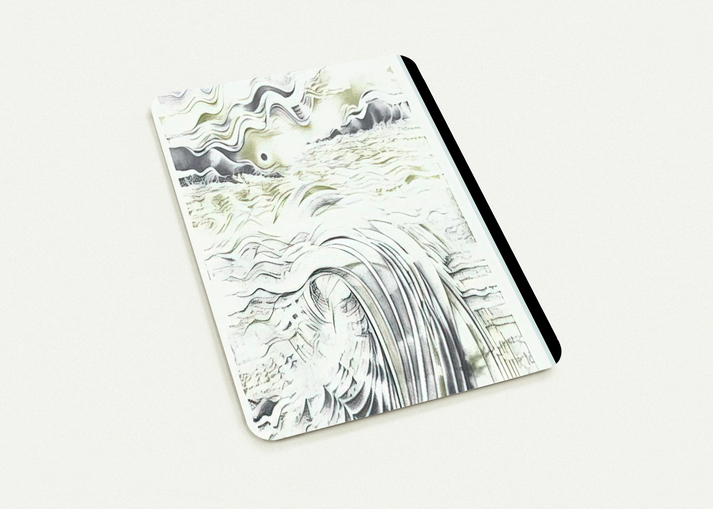
AN UNTITLED PRINT 1982 By Lee Bontecou Pack of 10 Post Cards | Lee Bontecou Post Cards | A6 (10.5 x 14.8 cm) - 4.1 x 5.8 inches
AN UNTITLED PRINT 1982 By Lee Bontecou Pack of 10 Post Cards | Lee Bontecou Post Cards | A6 (10.5 x 14.8 cm) - 4.1 x 5.8 inches
Couldn't load pickup availability
Elevate Your Correspondence with Lee Bontecou’s Intricate Vision
Experience the profound artistic depth of Lee Bontecou with this exclusive pack of 10 flat post cards, featuring her evocative Untitled Print 1982. Known for her ability to merge the organic with the industrial, Bontecou’s work from the early 1980s marks a sophisticated transition toward celestial and biological forms. At RedKalion, we honor this legacy by transforming her complex linework into museum-quality reproductions that serve as both a collector’s item and a premium medium for personal messages.
Museum-Quality Reproductions
Every post card is produced using our advanced 12-color fine art printing technology. This process ensures a depth of color and precision that far exceeds standard inkjet methods, capturing the subtle tonal shifts and intricate details characteristic of Bontecou’s printmaking. The result is a vibrant, accurate representation that maintains the integrity of the original 1982 masterpiece.
Superior Materiality and Sustainability
To provide a tactile experience befitting fine art, these cards are printed on 200 gsm (80 lb) FSC-certified paper. This environmentally conscious material features a smooth matte finish, offering a clean, glare-free display that highlights the artwork’s texture without distraction. With a thickness of 0.26 mm, these cards possess a substantial, archival feel that endures long after they are sent.
- Artist: Lee Bontecou
- Title: Untitled Print 1982
- Format: Pack of 10 flat postcards
- Dimensions: A6 (10.5 x 14.8 cm / 4.1 x 5.8 inches)
- Sustainability: FSC-certified paper, printed on demand to reduce waste.
Whether displayed in a frame or sent as a thoughtful sentiment, these Lee Bontecou post cards from RedKalion bring a touch of archival sophistication to any setting.


Discover Unlimited Art Possibilities
At RedKalion, you can find virtually any artwork from any artist, available in a wide range of sizes to perfectly match your space.
If you didn’t find what you’re looking for, contact us at support@redkalion.com . We will source any artwork and produce it in any size and format you need, including art prints, posters, canvas, framed pieces, framed canvas, and more.
For dedicated art enthusiasts, we also offer handcrafted replicas of any artwork, carefully painted by highly skilled artists using traditional techniques.
For custom requests, contact us at support@redkalion.com .
What printing technology is used for these post cards?
We use 12-color fine art printing technology, which provides superior color vibrancy and depth compared to standard 4-color printing, ensuring your Lee Bontecou reproduction is museum-quality.
What are the paper specifications for the Lee Bontecou pack?
The cards are printed on 200 gsm (80 lb) FSC-certified paper with a thickness of 0.26 mm and a smooth matte finish for a premium, glare-free feel.
Is the paper used for these prints eco-friendly?
Yes, we use environmentally conscious, FSC-certified paper and a print-on-demand process to minimize waste and ensure sustainable production standards.
What is the size of each post card in the pack?
Each card in this pack of 10 is A6 size, measuring 10.5 x 14.8 cm (4.1 x 5.8 inches), making them perfect for framing or mailing.
How long will the colors last on these fine art prints?
Our archival-grade inks and FSC-certified matte paper are designed for longevity, maintaining color accuracy and vibrancy for decades when kept out of direct sunlight.
Who was Lee Bontecou and why is her work significant?
Lee Bontecou was a pioneering American artist known for her complex sculptures and prints that blend biological, mechanical, and celestial themes, challenging traditional artistic boundaries.
What distinguishes Bontecou's 1982 work from her earlier pieces?
By 1982, Bontecou's style evolved from the aggressive industrial voids of the 1960s toward more delicate, intricate drawings and prints inspired by nature and cosmic structures.