
RedKalion
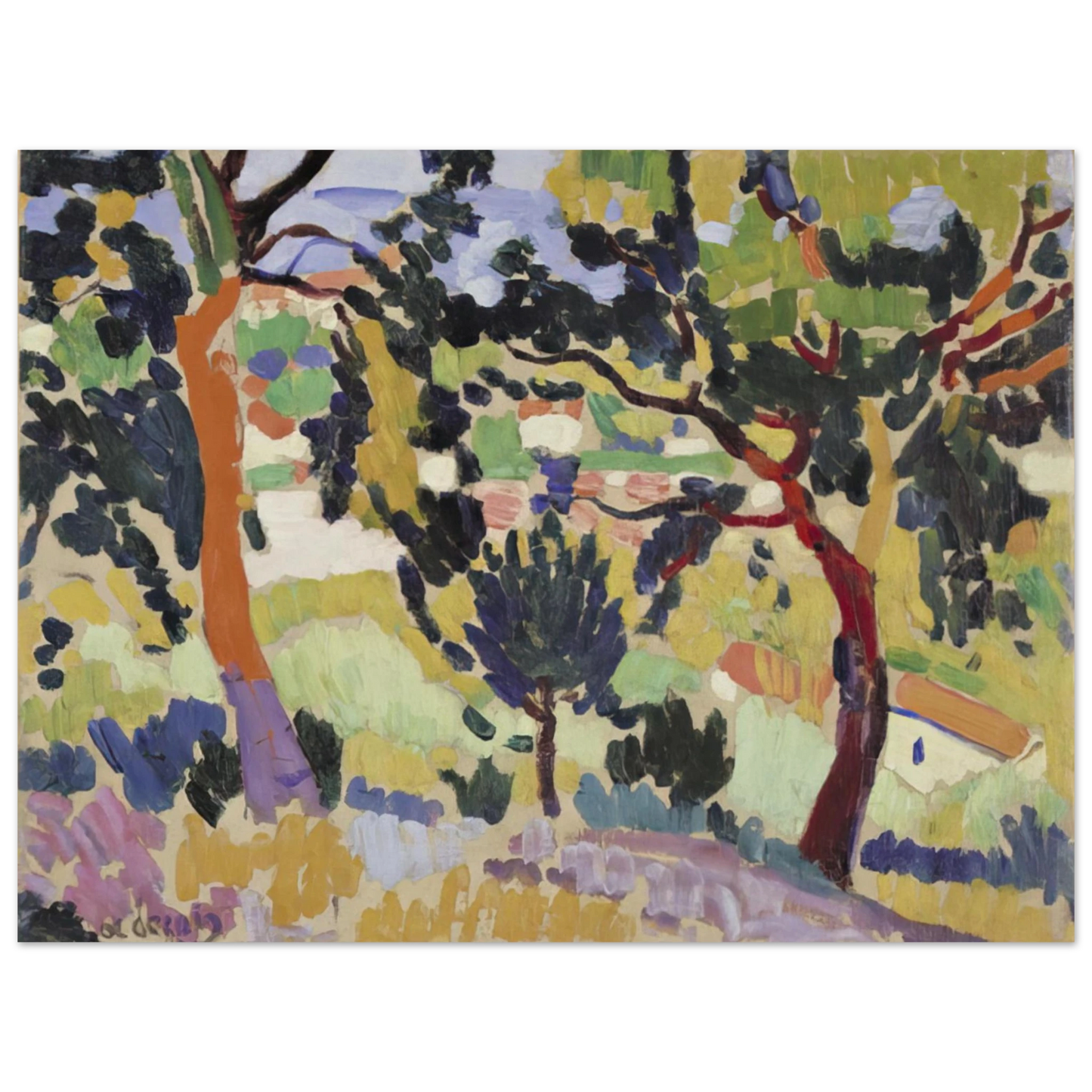
Andre Derain - L ESTAQUE 1906 75x100 cm / 30x40inches Fine Art Poster
Andre Derain - L ESTAQUE 1906 75x100 cm / 30x40inches Fine Art Poster
Couldn't load pickup availability
Bring the Vibrance of Fauvism Home with André Derain's L'Estaque (1906)
Step into the revolutionary world of Fauvism with this museum-quality reproduction of André Derain's 'L'Estaque' (1906). A definitive masterpiece of the early 20th century, this piece captures the Mediterranean sun through a kaleidoscope of non-naturalistic, bold colors that challenged the artistic conventions of its time. At RedKalion, we preserve the electric energy of Derain’s brushwork, ensuring every stroke of cobalt, vermilion, and ochre is rendered with breathtaking precision.
A Legacy of Artistic Rebellion
Painted during the height of the Les Fauves movement, 'L'Estaque' reflects Derain's collaboration with Henri Matisse. Moving away from the soft nuances of Impressionism, Derain utilized the landscape of the French Riviera to experiment with structural forms and expressive color. This fine art print serves as a historical bridge between traditional landscape and modern abstraction, making it a sophisticated addition to any curated collection.
Museum-Grade Materials for the Discerning Collector
To honor the integrity of Derain's vision, each museum-quality reproduction is crafted using our Master's Edition archival paper. This premium 250 gsm (110 lb) foundation provides a luxurious, heavy feel that mirrors the originals found in world-class galleries. The specifications of your print include:
- Finish: A sophisticated matte, uncoated natural white finish that eliminates glare and highlights texture.
- Archival Excellence: Acid-free paper (pH above 7) designed to resist yellowing and degradation for generations.
- Substantial Weight: 250 gsm thickness (0.29 mm) for a durable, premium tactile experience.
- Sustainability: Printed on FSC-certified paper, reflecting a commitment to both art and the environment.
Elevate your interior with an archival masterpiece that endures. RedKalion ensures that each print is fulfilled on demand with meticulous attention to detail, providing you with a piece of art history that remains as vibrant as the day it was conceived.
Discover Unlimited Art Possibilities
At RedKalion, you can find virtually any artwork from any artist, available in a wide range of sizes to perfectly match your space.
If you didn’t find what you’re looking for, contact us at support@redkalion.com . We will source any artwork and produce it in any size and format you need, including art prints, posters, canvas, framed pieces, framed canvas, and more.
For dedicated art enthusiasts, we also offer handcrafted replicas of any artwork, carefully painted by highly skilled artists using traditional techniques.
For custom requests, contact us at support@redkalion.com .
What defines the quality of this André Derain print?
Our reproductions use Master's Edition archival paper, a 250 gsm (110 lb) museum-quality medium that ensures high color accuracy and a premium, heavy-weight feel suitable for professional framing.
Is the paper used for 'L'Estaque' sustainable?
Yes, RedKalion utilizes FSC-certified paper or equivalent certifications depending on regional availability, ensuring your fine art print supports responsible forest management.
How will my artwork be shipped?
Your print is produced on demand with no minimum order requirements. We use robust packaging to ensure your museum-quality reproduction arrives in pristine condition, ready for display.
Will the colors of 'L'Estaque' fade over time?
No. By using acid-free paper with a pH above 7, our prints are chemically stable and resistant to yellowing, preserving the intense Fauvist palette for decades.
What is the finish of the fine art poster?
This print features a matte, uncoated finish on natural white paper. This luxurious texture enhances the depth of Derain's colors without the distraction of reflections.
Why is the 1906 L'Estaque considered a turning point in Fauvism?
In 1906, Derain abandoned traditional perspective for bold color blocks and rhythmic lines, establishing the 'wild' style that defined the Fauvist movement's peak.
How does Derain's use of color in this piece differ from Impressionism?
Unlike Impressionists who captured light through observation, Derain used color expressively and subjectively to evoke emotion, often using hues that did not exist in nature.