RedKalion
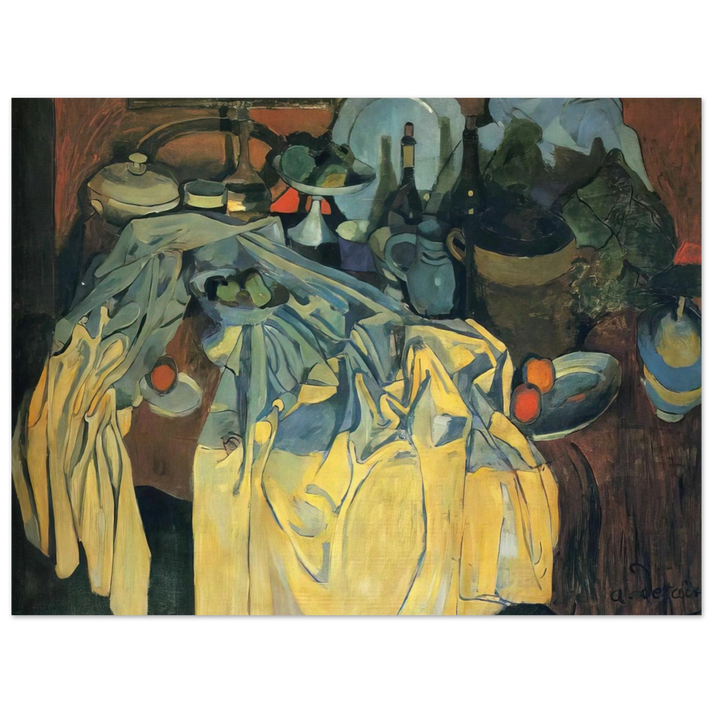
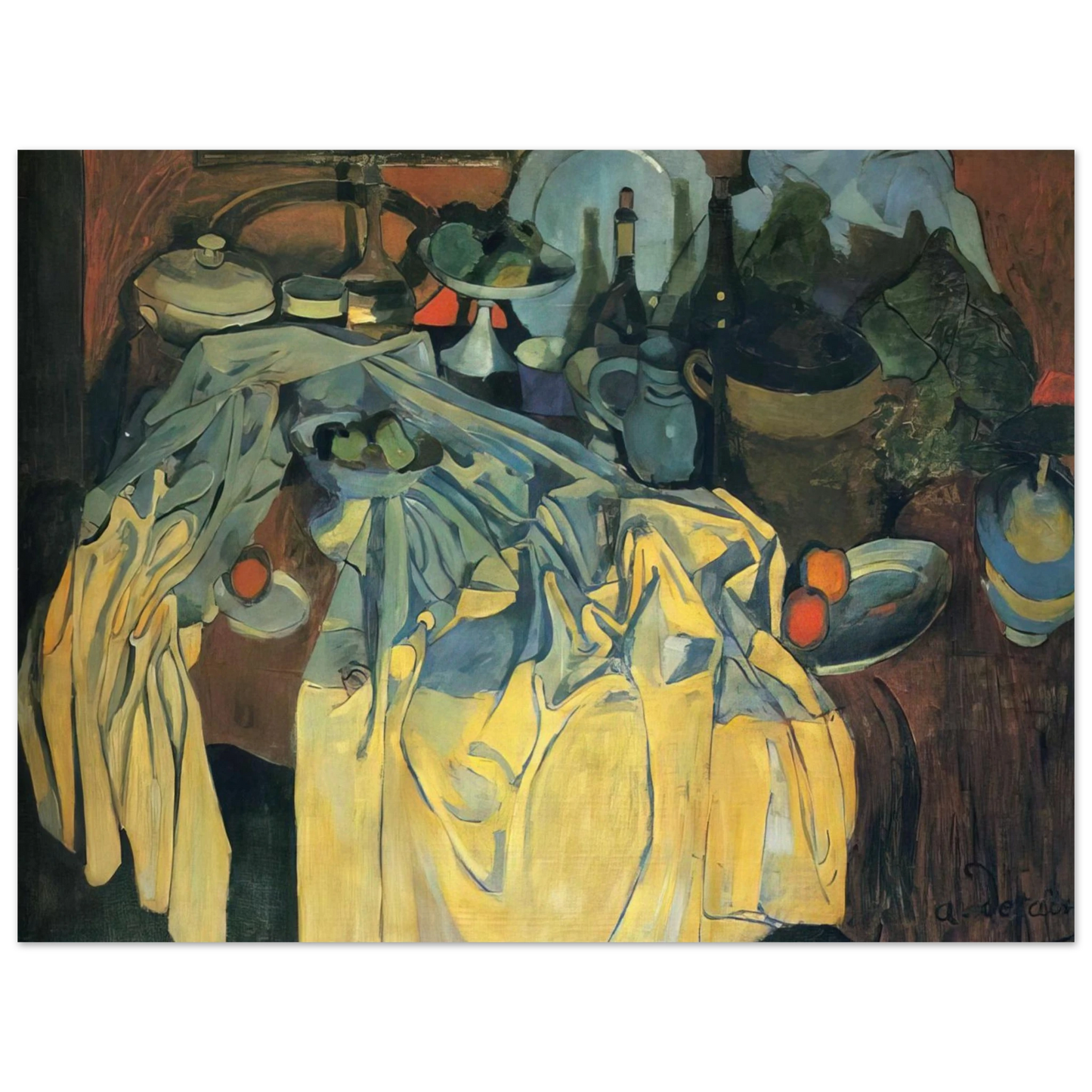
Andre Derain - STILL LIFE ON THE TABLE 1904 75x100 cm / 30x40inches Fine Art Poster
Andre Derain - STILL LIFE ON THE TABLE 1904 75x100 cm / 30x40inches Fine Art Poster
Couldn't load pickup availability
Elevate Your Space with André Derain's Fauvist Masterpiece
Experience the vibrant energy of early 20th-century modernism with André Derain’s "Still Life on the Table" (1904). This museum-quality fine art print captures a pivotal moment in art history when Derain, a co-founder of Fauvism, began to break away from traditional representation. Using bold, non-naturalistic colors and expressive brushwork, this piece transforms a simple domestic scene into a vivid exploration of light and form.
Artistic Significance and Historical Context
Created during the height of the Fauvist movement, "Still Life on the Table" represents the radical shift toward using color as an emotional language. Derain, alongside Henri Matisse, abandoned the muted tones of the past in favor of a saturated palette that challenged the viewer's perception. This specific 1904 work showcases the artist's transition toward the structured yet explosive style that would define the Salon d'Automne revolution. By choosing this reproduction, you are bringing a cornerstone of the avant-garde into your personal collection.
RedKalion Museum-Quality Specifications
At RedKalion, we are committed to archival excellence. This reproduction is produced on our Master's Edition archival paper, designed to meet the rigorous standards of galleries and museums worldwide. The specifications include:
- Premium Weight: A substantial 250 gsm (110 lb) paper that provides a luxurious feel and exceptional durability.
- Sophisticated Finish: A matte, uncoated, natural white (off-white) surface that eliminates glare and enhances the depth of Derain's color palette.
- Archival Longevity: Acid-free paper (pH above 7) ensures your print will not yellow or degrade, preserving the 0.29 mm (11.4 mils) thick masterpiece for generations.
- Sustainability: Printed on FSC-certified paper, reflecting our commitment to environmental responsibility.
Each order is printed and shipped on demand with meticulous care, ensuring that you receive a pristine, archival-grade reproduction that honors the legacy of André Derain.
Discover Unlimited Art Possibilities
At RedKalion, you can find virtually any artwork from any artist, available in a wide range of sizes to perfectly match your space.
If you didn’t find what you’re looking for, contact us at support@redkalion.com . We will source any artwork and produce it in any size and format you need, including art prints, posters, canvas, framed pieces, framed canvas, and more.
For dedicated art enthusiasts, we also offer handcrafted replicas of any artwork, carefully painted by highly skilled artists using traditional techniques.
For custom requests, contact us at support@redkalion.com .
What is the significance of Derain's 1904 Still Life?
André Derain's 1904 Still Life is a foundational work of Fauvism. It showcases the radical use of non-naturalistic color and simplified forms, marking a departure from Impressionism and laying the groundwork for modern art movements of the 20th century.
What is the quality of the paper used for this fine art print?
We use Master's Edition archival paper, which is museum-quality. It is 250 gsm (110 lb) weight with a thickness of 0.29 mm, providing a heavy, premium feel that ensures long-lasting durability and a luxurious aesthetic.
Is the Still Life on the Table print archival?
Yes. The print is produced on acid-free paper with a pH above 7. This archival standard prevents the paper from yellowing or becoming brittle over time, ensuring the colors remain vibrant for decades.
How is the print shipped?
Our prints are fulfilled on demand with no minimum order requirements. They are carefully packaged in robust materials to ensure your André Derain reproduction arrives in perfect, gallery-ready condition.
Is the paper used for this reproduction sustainable?
Absolutely. RedKalion utilizes FSC-certified paper (Forest Stewardship Council), ensuring that the materials for your fine art print are sourced from responsibly managed forests that provide environmental and social benefits.
Does the print have a glossy or matte finish?
This print features a matte, uncoated finish. The natural white (off-white) base provides a sophisticated, non-reflective surface that perfectly complements the bold Fauvist colors without the distraction of glare.
Can you describe Derain's technique in this specific work?
In 1904, Derain used a technique characterized by broad, intentional brushstrokes and a heightened palette. He focused on the structural qualities of objects, using color contrast rather than shadow to create depth and spatial relationships.