
RedKalion
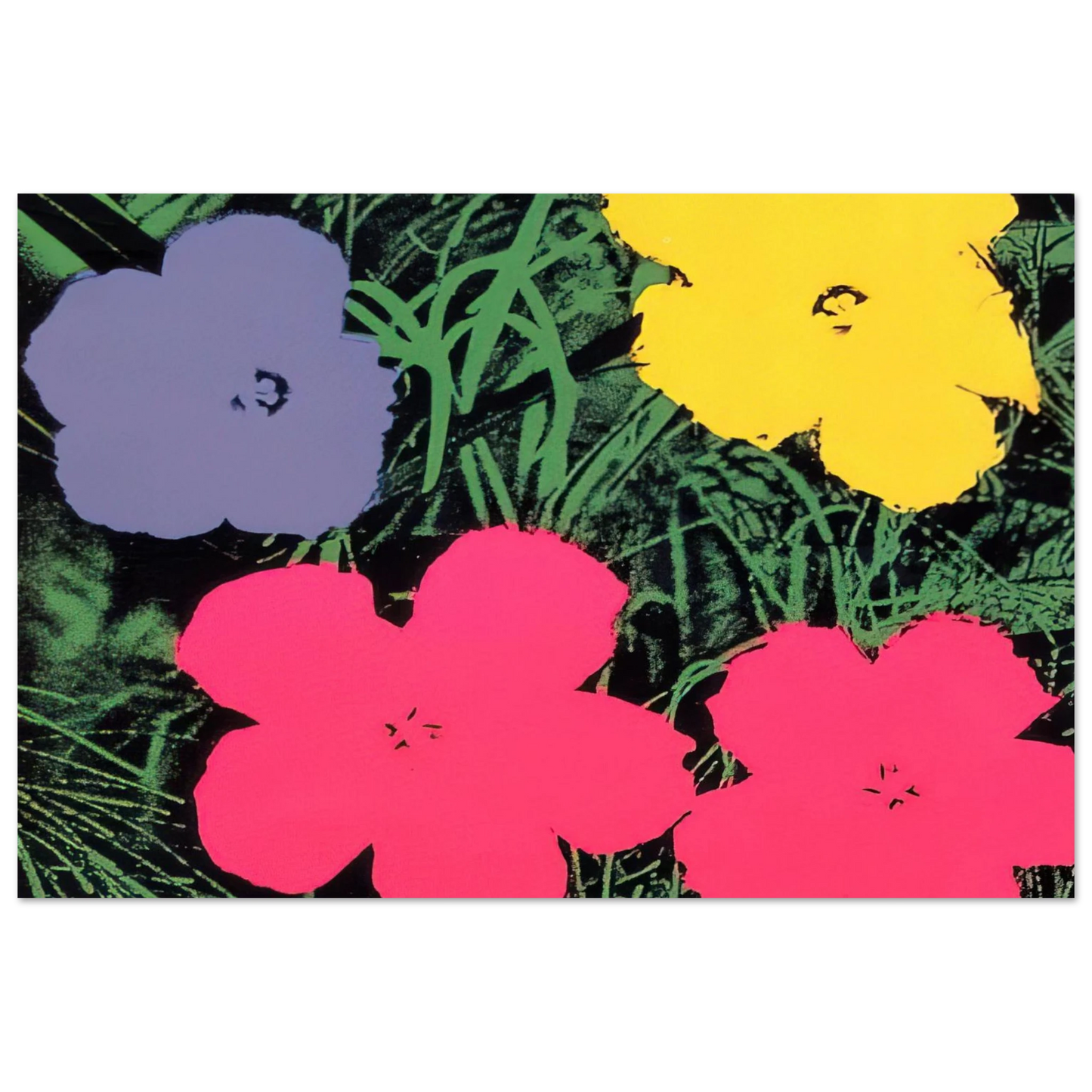
Andy Warhol - Flowers Fine Art Poster
Andy Warhol - Flowers Fine Art Poster
Couldn't load pickup availability
The Vibrant Legacy of Andy Warhol’s Flowers
In 1964, Andy Warhol transitioned from his iconic explorations of consumer culture to the organic, yet mechanically rendered, world of flora. This Andy Warhol Flowers fine art poster captures the essence of his transformative exhibition at the Leo Castelli Gallery. Warhol’s approach—stripping away detail from a photograph by Patricia Caulfield to create flat, high-contrast silhouettes—resulted in a series that is both hauntingly simple and visually explosive. At RedKalion, we honor this Pop Art masterpiece through a meticulous museum-quality reproduction that captures every bold hue and graphic line with breathtaking clarity.
Uncompromising Material Excellence
Every print is produced on our Master's Edition archival paper. This premium, natural white (off-white) stock provides a sophisticated backdrop that complements Warhol’s vibrant palette without the distracting glare of traditional glossy posters. With a substantial weight of 250 gsm (110 lb) and a thickness of 0.29 mm (11.4 mils), this print offers a luxurious, tactile experience that speaks to its premium nature.
- Archival Integrity: Our acid-free paper (pH above 7) ensures your investment remains vibrant, resisting yellowing and degradation for generations.
- Sophisticated Finish: The matte, uncoated texture enhances the depth of the ink, providing a gallery-standard aesthetic suitable for high-end interiors.
- Ethical Craftsmanship: We utilize FSC-certified paper, reflecting a commitment to global forest conservation and sustainable production.
By choosing a RedKalion reproduction, you are not merely purchasing a poster; you are acquiring a piece of art history. Our on-demand printing process ensures that your Andy Warhol Flowers print is handled with the care and precision that a work of this significance deserves. Elevate your space with an archival masterpiece that endures.


Discover Unlimited Art Possibilities
At RedKalion, you can find virtually any artwork from any artist, available in a wide range of sizes to perfectly match your space.
If you didn’t find what you’re looking for, contact us at support@redkalion.com . We will source any artwork and produce it in any size and format you need, including art prints, posters, canvas, framed pieces, framed canvas, and more.
For dedicated art enthusiasts, we also offer handcrafted replicas of any artwork, carefully painted by highly skilled artists using traditional techniques.
For custom requests, contact us at support@redkalion.com .
What makes the Andy Warhol Flowers series historically significant?
Created in 1964, the Flowers series marked Warhol's shift toward abstraction. By using a cropped, high-contrast image of hibiscus flowers, he merged the organic with mechanical screen-printing, challenging traditional notions of fine art nature studies.
What are the technical specifications of the paper used?
We use Master's Edition archival paper. It is a 250 gsm (110 lb) stock with a thickness of 0.29 mm. It features a matte, uncoated, natural white finish for a premium, glare-free appearance.
Will this fine art print yellow over time?
No. Our paper is acid-free with a pH value above 7, which prevents yellowing and ensures the print's longevity for decades, making it a true archival-grade investment.
Is the paper used for this poster sustainably sourced?
Yes, RedKalion uses FSC-certified paper or equivalent certifications depending on regional availability. This ensures that the materials for your fine art poster support responsible forest management.
What are the shipping and fulfillment details for this print?
Our prints are fulfilled on demand with no minimum order requirements. Each piece is carefully packaged to ensure it arrives in museum-quality condition, ready for framing and display.
Who was the original photographer for Warhol's Flowers?
The source image was originally a photograph of hibiscus blossoms taken by Patricia Caulfield for Modern Photography magazine. Warhol cropped and manipulated the image to create his iconic square compositions.
Why is a matte finish preferred for this Warhol reproduction?
A matte, uncoated finish eliminates reflections and glare, allowing the saturated colors and graphic textures of Warhol’s work to remain the focal point, providing a more authentic gallery aesthetic.