RedKalion
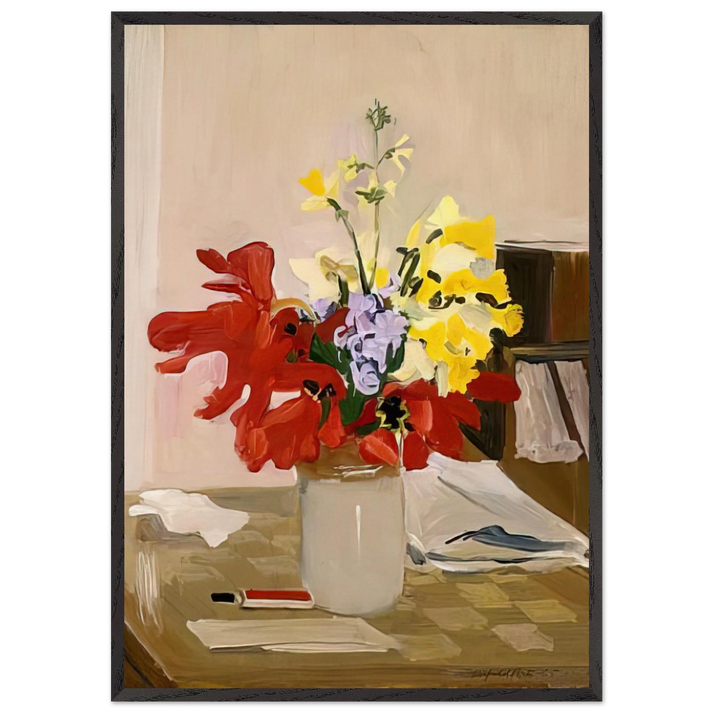
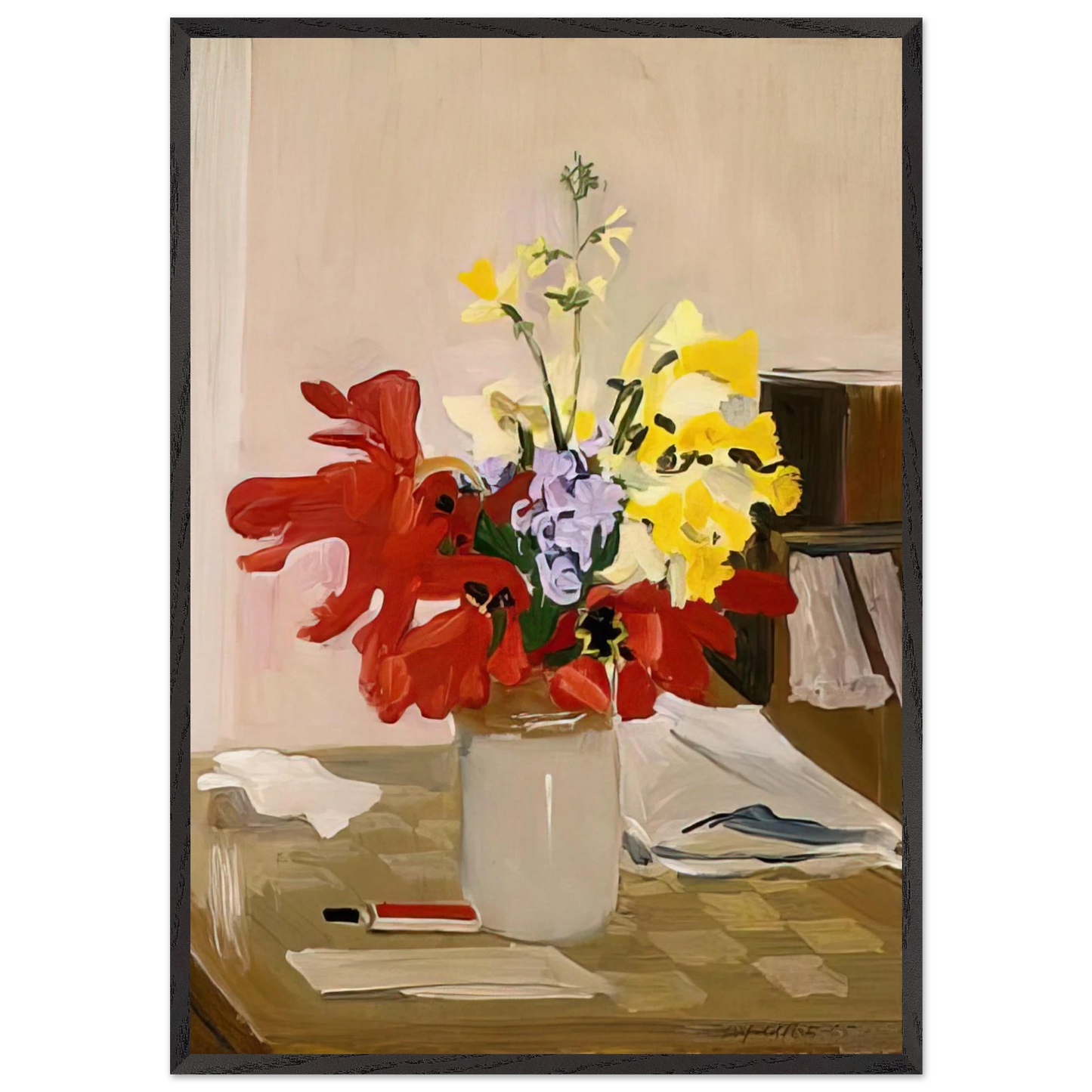
ANEMONE AND DAFFODIL 1965 - Fairfield Porter 70x100 cm / 28x40 inches Framed Art Print – Black Wooden Frame
ANEMONE AND DAFFODIL 1965 - Fairfield Porter 70x100 cm / 28x40 inches Framed Art Print – Black Wooden Frame
Couldn't load pickup availability
The Domestic Radiance of Fairfield Porter’s Anemone and Daffodil (1965)
In 1965, Fairfield Porter reached a zenith of his unique style, blending the structural rigor of American Realism with the luminous, gestural freedom of the Abstract Expressionists. His masterpiece, Anemone and Daffodil, is a profound exploration of light and intimacy within a domestic setting. This museum-quality fine art print captures the subtle interplay of shadow and vibrancy that defined Porter’s career, making it an essential acquisition for collectors of contemporary realist art.
The Artistry and Historical Context
Fairfield Porter was a critic as well as a painter, known for his insistence on the beauty of the everyday. Unlike his contemporaries who moved toward complete abstraction, Porter found transcendence in the quietude of a flower arrangement. This 70x100 cm (28x40 inches) reproduction showcases his mastery of color, where the cool tones of the anemone contrast beautifully with the warm, reaching yellow of the daffodils. At RedKalion, we curate these archival-grade reproductions to ensure the painterly texture and nuanced palette of the 1965 original are preserved for generations.
Exceptional Material Standards
To match the sophistication of Porter’s work, our prints are produced on 250 gsm (110 lb) natural white museum-quality paper. This heavy-weight, archival paper features a matte, uncoated finish that eliminates glare and highlights the depth of the pigments. To ensure longevity and aesthetic integrity, each piece is housed in a responsibly sourced black wooden frame, crafted from oak or ash. The frame measures 20mm (0.79") in width and thickness, providing a more robust and premium profile than standard gallery frames.
- Sustainable Craftsmanship: Our paper is FSC-certified or equivalent, reflecting a commitment to environmental stewardship.
- Premium Protection: Each print is shielded by shatterproof plexiglass, ensuring your investment remains pristine.
- Ready-to-Hang: Delivered with a professional hanging kit, your artwork is prepared to elevate your space immediately upon arrival.
Discover Unlimited Art Possibilities
At RedKalion, you can find virtually any artwork from any artist, available in a wide range of sizes to perfectly match your space.
If you didn’t find what you’re looking for, contact us at support@redkalion.com . We will source any artwork and produce it in any size and format you need, including art prints, posters, canvas, framed pieces, framed canvas, and more.
For dedicated art enthusiasts, we also offer handcrafted replicas of any artwork, carefully painted by highly skilled artists using traditional techniques.
For custom requests, contact us at support@redkalion.com .
What defines the quality of this Fairfield Porter print?
Our reproductions use 250 gsm (110 lb) natural white archival museum-quality paper. This ensures the Fairfield Porter fine art print retains its original vibrancy and textural detail without yellowing over time.
How is the Anemone and Daffodil print framed?
This print features a premium 20mm black wooden frame made from responsibly sourced oak or ash. It includes shatterproof plexiglass for protection and a wider profile than standard 14mm frames for a sophisticated look.
Is the paper used for this 1965 reproduction sustainable?
Yes, RedKalion utilizes FSC-certified materials or equivalent. We prioritize sustainable sourcing for both our 250 gsm fine art paper and our solid wood frames, ensuring an eco-conscious purchase.
How do I hang my new Fairfield Porter framed art?
Every 70x100 cm framed print arrives ready-to-hang. We include a complete hanging kit in the package, allowing you to easily mount this archival masterpiece on your wall as soon as it arrives.
Will the colors of this still life fade over time?
No, we use archival-grade, matte-finish paper and high-quality inks. This combination provides exceptional longevity and resistance to fading, ensuring that the light and color of Porter's work remain constant for decades.
What was Fairfield Porter's artistic philosophy in Anemone and Daffodil?
Porter believed in "painterly realism," focusing on the extraordinary nature of ordinary life. In this 1965 work, he emphasizes the relationship between light, space, and the domestic subject matter through bold, confident brushwork.
Why is the year 1965 significant for Porter's still life works?
1965 marks a period where Porter successfully synthesized abstract techniques with traditional still life. This era of his work is celebrated for its clarity, sophisticated color relationships, and monumental handling of intimate subjects.