

RedKalion
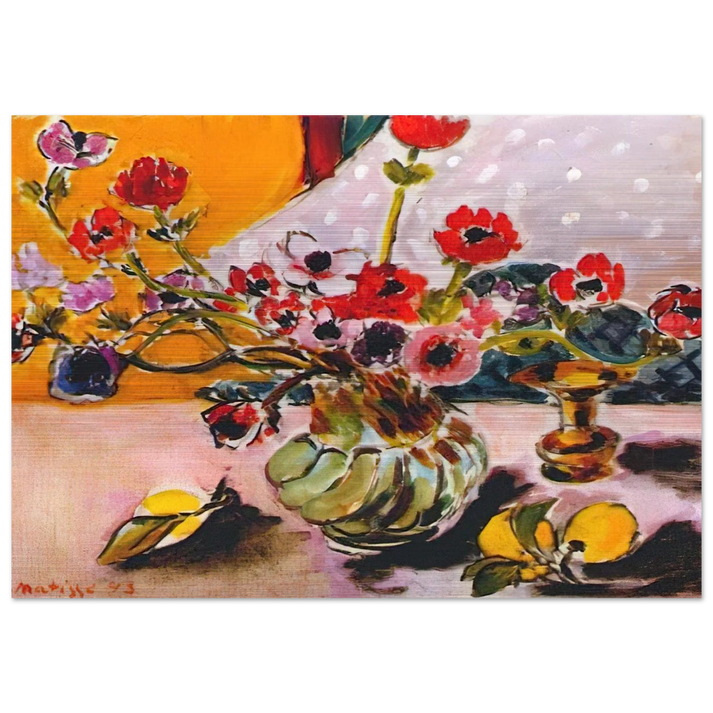
ANEMONES AND CHINESE VASE 1943 - Henri Matisse Brushed Aluminum Print - 70x100 cm / 28x40 inches | Henri Matisse Aluminum Print | Henri Matisse Prints
ANEMONES AND CHINESE VASE 1943 - Henri Matisse Brushed Aluminum Print - 70x100 cm / 28x40 inches | Henri Matisse Aluminum Print | Henri Matisse Prints
Couldn't load pickup availability
A Masterpiece of Color and Form
Henri Matisse’s Anemones and Chinese Vase (1943) represents the pinnacle of the artist's pursuit of 'essential' expression during his prolific residency in Vence. This museum-quality reproduction captures the rhythmic dance of the anemones and the structured elegance of the vase, reflecting Matisse’s enduring fascination with domestic intimacy and decorative harmony. As a premier Henri Matisse aluminum print, this edition offers a contemporary dialogue between mid-century modernism and industrial innovation.
The RedKalion Archival Standard
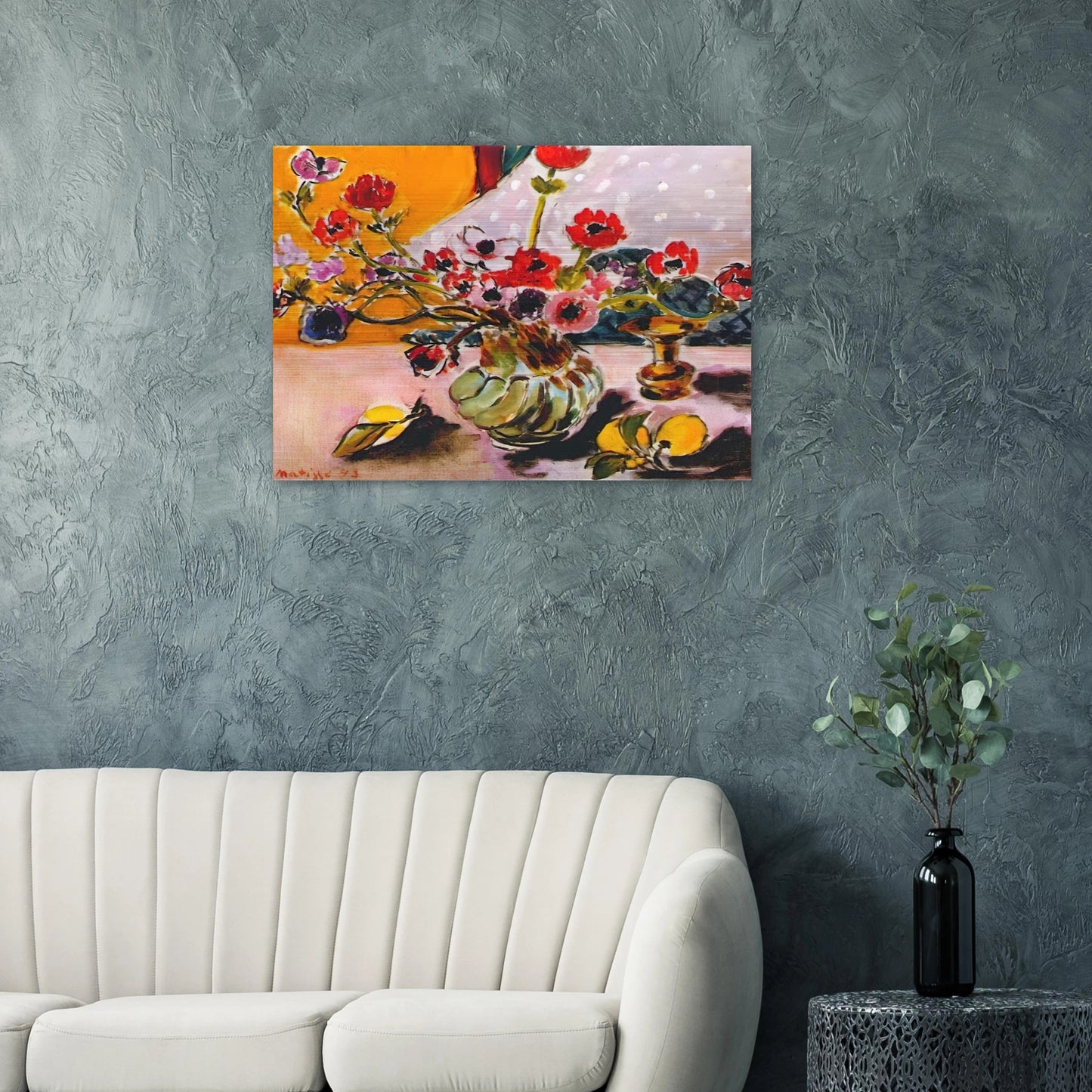
At RedKalion, we elevate Henri Matisse prints by utilizing advanced printing technology on brushed silver Aluminum DIBOND®. This 3mm (0.12") rigid substrate features a horizontal grain that breathes life into the composition. The unique metallic finish allows unprinted white areas to shine with a silver luster, while the high-density direct print ensures vivid, matte colors that remain glare-free under any lighting condition.
- Artist: Henri Matisse (1943)
- Material: Brushed Aluminum DIBOND® with a horizontal grain and metallic finish.
- Durability: 3mm thickness, warp-resistant, and archival-grade for long-term preservation.
- Finish: Sophisticated matte surface with high color saturation and no glare.
- Mounting: Ready-to-hang kit included, tailored to your location for seamless installation.
By choosing this fine art print, you are investing in a piece that harmonizes historical significance with the longevity of modern engineering. Elevate your space with an archival masterpiece that endures, capturing the joie de vivre that defined Matisse's late career.


Discover Unlimited Art Possibilities
At RedKalion, you can find virtually any artwork from any artist, available in a wide range of sizes to perfectly match your space.
If you didn’t find what you’re looking for, contact us at support@redkalion.com . We will source any artwork and produce it in any size and format you need, including art prints, posters, canvas, framed pieces, framed canvas, and more.
For dedicated art enthusiasts, we also offer handcrafted replicas of any artwork, carefully painted by highly skilled artists using traditional techniques.
For custom requests, contact us at support@redkalion.com .
What makes this Matisse brushed aluminum print unique?
This Henri Matisse aluminum print uses brushed silver DIBOND®, where unprinted areas reveal a stunning metallic grain, adding depth and a contemporary shimmer to the 1943 masterpiece.
What are the material specifications for this artwork?
The artwork is printed on a 3mm (0.12") thick Aluminum DIBOND® base, offering a rigid, durable, and lightweight fine art solution for modern interiors.
How is the print finished for display?
We use a direct-to-substrate printing method resulting in a sophisticated matte finish, which eliminates glare while preserving the vibrant color intensity of Matisse’s palette.
Is the hanging hardware included with the print?
Yes, every RedKalion print arrives with a specialized hanging kit included. The specific hardware type may vary depending on the country of fulfillment to ensure safe delivery.
What is the archival longevity of this aluminum print?
Built to last, our aluminum prints are highly resistant to UV light and moisture, ensuring your museum-quality reproduction remains vibrant and beautiful for decades.
What inspired Matisse to paint Anemones and Chinese Vase in 1943?
Retreating to Vence during WWII, Matisse focused on 'drawing with color,' simplifying forms into decorative patterns that evoke a sense of tranquility and emotional harmony.
Where did Henri Matisse paint this particular work?
Matisse painted this piece in his studio at Villa le Rêve in Vence, France, a period marked by his famous 'Themes and Variations' series.