
RedKalion
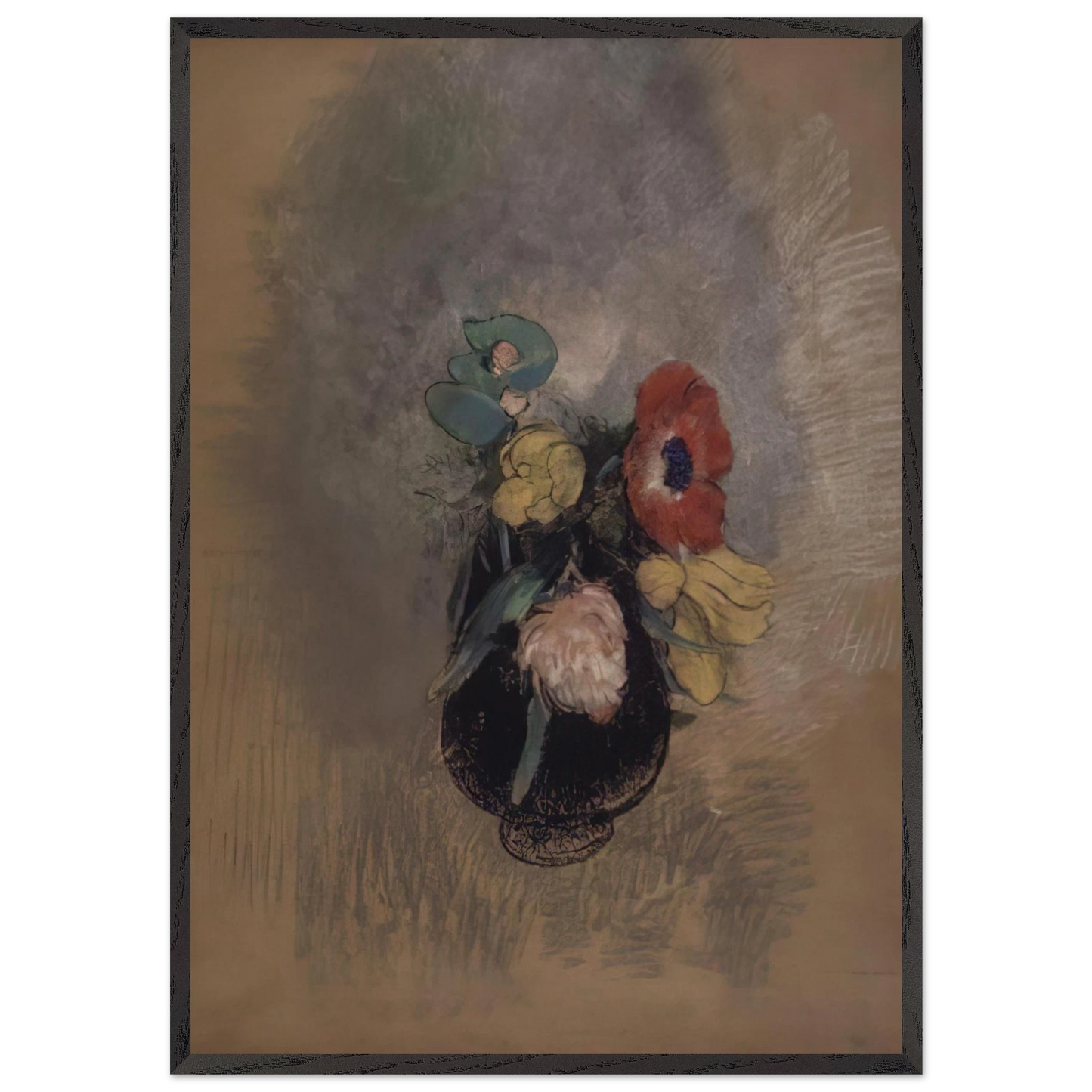
ANEMONES AND TULIPS - Odilon Redon 70x100 cm / 28x40 inches Framed Art Print – Black Wooden Frame
ANEMONES AND TULIPS - Odilon Redon 70x100 cm / 28x40 inches Framed Art Print – Black Wooden Frame
Couldn't load pickup availability
The Ethereal Radiance of Odilon Redon’s Anemones and Tulips
Experience the transcendental beauty of Odilon Redon’s Anemones and Tulips, a masterpiece that captures the French Symbolist’s shift from his dark 'Noirs' to a world of luminous, dreamlike color. This stunning 70x100 cm (28x40 inches) museum-quality reproduction brings Redon's mystical vision into the modern home, offering a sophisticated focal point for any interior. Unlike traditional floral still lifes, Redon’s work imbues botanical subjects with a sense of wonder and inner life, rendered with a delicate touch that oscillates between the real and the imagined.
Museum-Grade Archival Quality
At RedKalion, we believe that world-class art deserves world-class materials. This fine art print is meticulously produced on 250 gsm (110 lb) natural white, matte, and uncoated paper. This archival-grade surface ensures that the vibrant teals, deep reds, and soft yellows of Redon’s palette remain true to the original for generations. The finish is intentionally matte to eliminate glare, allowing the intricate textures of the brushwork to be viewed clearly from any angle.
Exceptional Framing and Craftsmanship
Each print is encased in a premium black wooden frame, crafted from responsibly sourced oak and ash. To provide a superior aesthetic presence, our frames feature a 20mm (0.79") width and thickness, offering a more robust and luxurious profile than the standard 14mm frames common in the industry. Your artwork is protected by high-clarity shatterproof plexiglass, ensuring both longevity and safety.
- Artist: Odilon Redon
- Title: Anemones and Tulips
- Frame: Solid black oak/ash wood with a sophisticated 20mm profile.
- Sustainability: FSC-certified materials representing our commitment to the environment.
- Installation: Arrives ready-to-hang with a professional hanging kit included.
Elevate your collection with an archival masterpiece that endures. This Anemones and Tulips framed print is not merely a decoration, but an investment in the legacy of Symbolist art, curated with the expertise and authority of RedKalion.
Discover Unlimited Art Possibilities
At RedKalion, you can find virtually any artwork from any artist, available in a wide range of sizes to perfectly match your space.
If you didn’t find what you’re looking for, contact us at support@redkalion.com . We will source any artwork and produce it in any size and format you need, including art prints, posters, canvas, framed pieces, framed canvas, and more.
For dedicated art enthusiasts, we also offer handcrafted replicas of any artwork, carefully painted by highly skilled artists using traditional techniques.
For custom requests, contact us at support@redkalion.com .
What paper quality is used for this Odilon Redon print?
We use 250 gsm (110 lb) archival museum-quality paper. It is natural white, matte, and uncoated, ensuring the colors of Anemones and Tulips remain vibrant and fade-resistant for decades.
Is the frame made of genuine wood?
Yes, the frame is crafted from responsibly sourced solid oak and ash wood. It features a premium 20mm (0.79") thickness, providing a more substantial look than standard gallery frames.
How is the artwork protected during shipping and display?
Your print is protected by shatterproof, transparent plexiglass. This ensures the artwork remains safe during transit and is shielded from dust and damage once hung on your wall.
Does the framed print arrive ready to hang?
Absolutely. Every RedKalion print includes a specialized hanging kit. Your artwork arrives fully assembled in its black wooden frame, ready to be displayed immediately upon arrival.
Is the paper used for this print environmentally friendly?
Yes, we prioritize sustainability. All paper and frame components are made from FSC-certified materials or equivalent, ensuring your fine art print supports responsible forest management.
Why is Odilon Redon significant in art history?
Odilon Redon was a leading figure in the Symbolist movement. He is celebrated for his ability to translate internal dreams and emotions into visual art, moving from dark lithographs to vibrant, mystical floral paintings.
What is the significance of floral still lifes in Redon’s later work?
In his later years, Redon used flowers like anemones and tulips to explore color harmony and light. These works represent a spiritual connection to nature, blending scientific observation with a dreamlike, ethereal atmosphere.