RedKalion
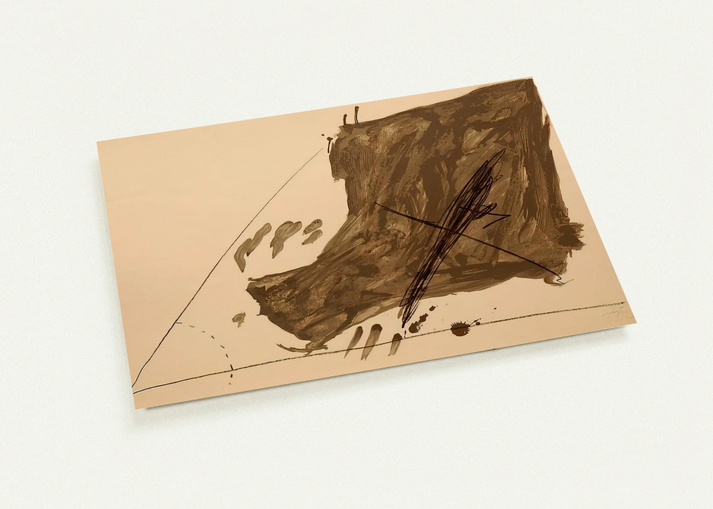
ANGLE ET TACHES 1968 By Antoni Tapies Pack of 10 Post Cards | Antoni Tapies Post Cards | A6 (10.5 x 14.8 cm) - 4.1 x 5.8 inches
ANGLE ET TACHES 1968 By Antoni Tapies Pack of 10 Post Cards | Antoni Tapies Post Cards | A6 (10.5 x 14.8 cm) - 4.1 x 5.8 inches
Couldn't load pickup availability
Embrace Informalism with Antoni Tàpies' Angle et Taches (1968)
Experience the tactile power of Antoni Tàpies, one of the most influential figures of the 20th-century avant-garde. This pack of ten museum-quality postcards features Angle et Taches (1968), a work that epitomizes Tàpies' mastery of 'Matter Painting.' Known for his ability to transform the mundane into the metaphysical, Tàpies uses symbolic geometry and gestural stains to explore the dualities of existence.
Unrivaled Print Fidelity and Material Quality
At RedKalion, we believe fine art demands superior reproduction. These postcards are produced using 12-color fine art printing technology. Unlike standard 4-color inkjet processes, our method captures the subtle gradations and deep, earthy tones characteristic of Tàpies' palette, providing a level of vibrancy and depth that respects the original 1968 composition.
- Sophisticated Finish: A smooth matte finish ensures a clean, glare-free aesthetic, perfect for personal correspondence or gallery-style display.
- Substantial Weight: Printed on 200 gsm (80 lb) paper with a thickness of 0.26 mm (10.3 mils), these cards offer a premium, sturdy feel.
- Eco-Conscious Standards: We utilize FSC-certified paper, ensuring your appreciation for art aligns with environmental responsibility.
- Dimensions: Standard A6 size (10.5 x 14.8 cm / 4.1 x 5.8 inches).
Whether you are a collector of contemporary Spanish art or seeking to elevate your daily correspondence, these archival-grade postcards represent RedKalion’s commitment to preserving the integrity of world-class art for the modern connoisseur.

Discover Unlimited Art Possibilities
At RedKalion, you can find virtually any artwork from any artist, available in a wide range of sizes to perfectly match your space.
If you didn’t find what you’re looking for, contact us at support@redkalion.com . We will source any artwork and produce it in any size and format you need, including art prints, posters, canvas, framed pieces, framed canvas, and more.
For dedicated art enthusiasts, we also offer handcrafted replicas of any artwork, carefully painted by highly skilled artists using traditional techniques.
For custom requests, contact us at support@redkalion.com .
What are the physical dimensions and quantity of this set?
This pack includes 10 flat postcards, each measuring A6 size (10.5 x 14.8 cm / 4.1 x 5.8 inches). They are ideal for framing, collecting, or sending as high-end stationery.
What makes the 12-color printing technology superior?
Our 12-color fine art printing provides a wider color gamut and smoother transitions than standard 4-color prints. This ensures the complex textures of Tàpies' work are reproduced with museum-quality accuracy.
Is the paper quality suitable for archival storage?
Yes. We use 200 gsm (80 lb) FSC-certified paper with a 10.3 mil thickness and a matte finish. This provides the durability and glare-free surface required for long-lasting fine art reproductions.
How does RedKalion handle shipping and production?
Every order is printed on demand to ensure the highest quality control and reduce waste. We ship internationally with protective packaging to ensure your Antoni Tàpies postcards arrive in pristine condition.
Does the matte finish affect the visibility of the artwork?
The smooth matte finish is specifically chosen to reduce reflections and glare, allowing the viewer to appreciate the intricate details and 'stains' of the 1968 original without interference from overhead lighting.
What is the significance of the year 1968 in Tàpies' career?
1968 was a pivotal year for Tàpies, marked by heightened political engagement and a refinement of his 'Informalism' style, where he combined social commentary with his signature material-focused abstraction.
What does 'Angle et Taches' represent in Tàpies' iconography?
'Angle et Taches' (Angle and Stains) explores the tension between human-made structures (angles) and organic, spontaneous marks (stains), reflecting Tàpies' interest in Zen philosophy and the raw materiality of existence.