RedKalion
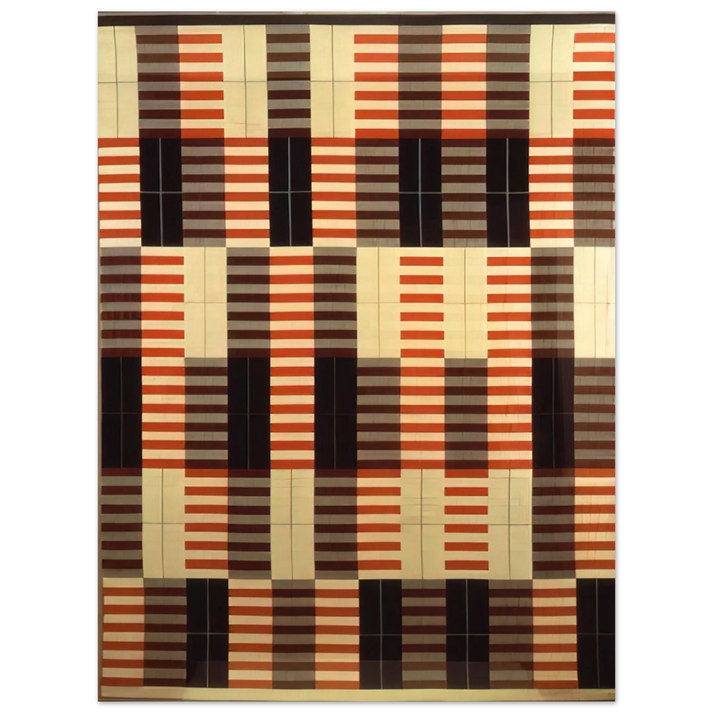
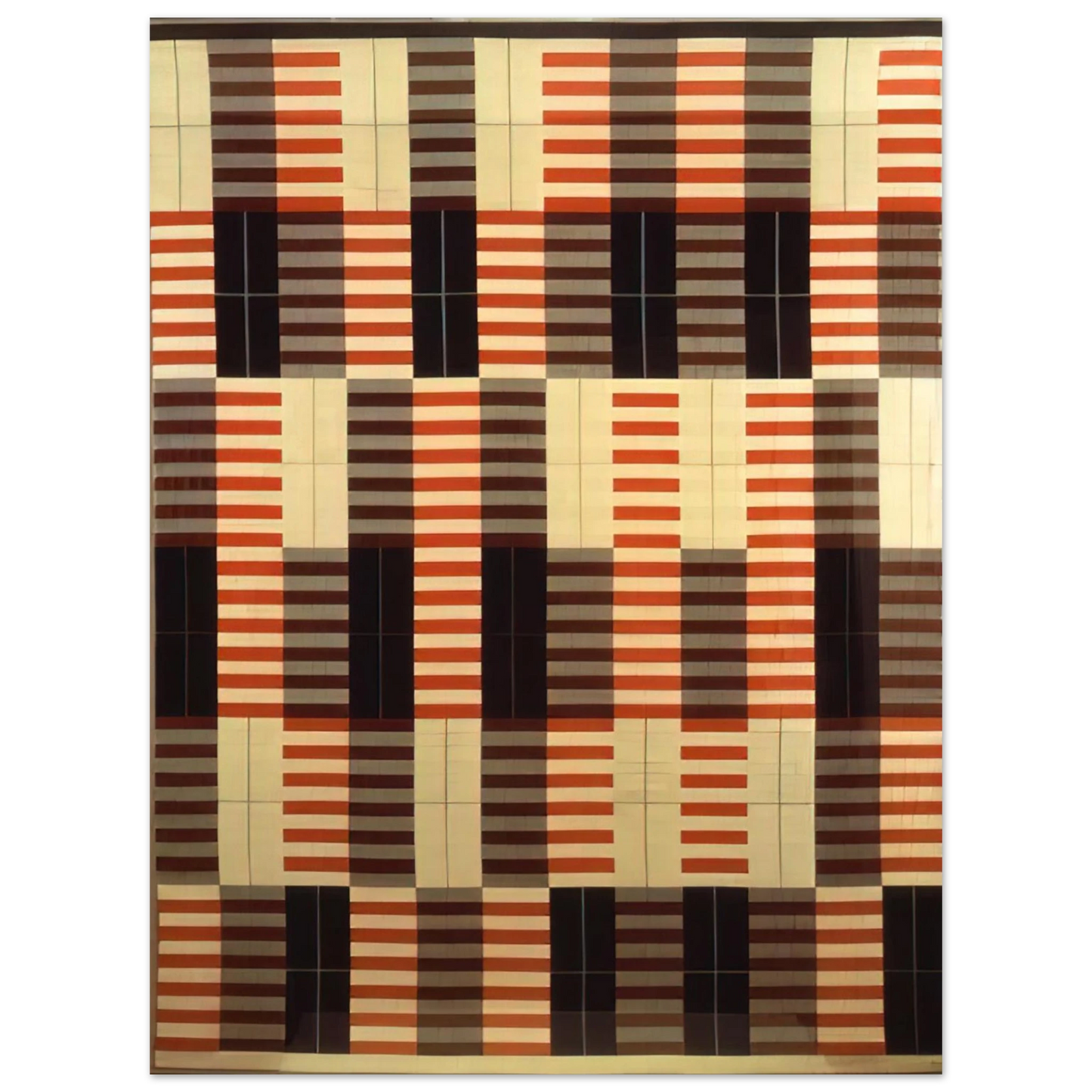
Anni Albers - BLACK WHITE RED 1964 75x100 cm / 30x40inches Fine Art Poster
Anni Albers - BLACK WHITE RED 1964 75x100 cm / 30x40inches Fine Art Poster
Couldn't load pickup availability
A Synthesis of Form: Anni Albers’ Black-White-Red (1964)
Experience the rhythmic precision of Anni Albers' Black-White-Red (1964), a definitive work that captures the transition of one of the 20th century's most influential artists from the loom to the printing press. In this 1964 masterpiece, Albers translates the structural logic of weaving into a compelling geometric abstraction, utilizing a striking palette of crimson, obsidian, and stark white to explore the interplay of visual weight and linear connection.
Museum-Quality Execution for the Discerning Collector
At RedKalion, we honor Albers' Bauhaus heritage by presenting this work as a museum-quality reproduction. Printed on our exclusive Master's Edition archival paper, this fine art print preserves the subtle nuances of the original composition. The matte, uncoated finish and natural white tone of the paper provide a sophisticated, glare-free texture that enhances the depth of the pigments while maintaining the integrity of the minimalist aesthetic.
The Art of Longevity
True to the standards of archival preservation, each print is rendered on 250 gsm (110 lb) acid-free paper with a thickness of 0.29 mm. This ensures that the artwork remains vibrant and resists yellowing over decades, establishing it as an enduring addition to your private collection. Our commitment to excellence is matched by our dedication to the planet; every print utilizes FSC-certified paper and is produced on-demand to minimize environmental impact.
- Artist: Anni Albers
- Title: Black-White-Red (1964)
- Material: 250 gsm Master's Edition natural white archival paper
- Longevity: Acid-free and alkaline buffered for maximum age resistance
- Philosophy: Elevate your space with an archival masterpiece that endures.
Discover Unlimited Art Possibilities
At RedKalion, you can find virtually any artwork from any artist, available in a wide range of sizes to perfectly match your space.
If you didn’t find what you’re looking for, contact us at support@redkalion.com . We will source any artwork and produce it in any size and format you need, including art prints, posters, canvas, framed pieces, framed canvas, and more.
For dedicated art enthusiasts, we also offer handcrafted replicas of any artwork, carefully painted by highly skilled artists using traditional techniques.
For custom requests, contact us at support@redkalion.com .
What makes the RedKalion Master's Edition of Black-White-Red unique?
Our Master's Edition uses premium archival paper and specialized printing techniques to replicate the precise color balance and geometric clarity of Anni Albers' original 1964 composition, ensuring a gallery-standard aesthetic.
What are the specifications of the paper used for this Anni Albers print?
We use 250 gsm (110 lb) natural white paper with a thickness of 0.29 mm. It is acid-free, matte, and uncoated, offering a luxurious, museum-quality texture that prevents glare.
Is the Black-White-Red 1964 poster environmentally friendly?
Yes, all our prints use FSC-certified paper, ensuring responsible forest management. We fulfill orders on-demand with no minimums to reduce waste and carbon footprint.
How is the artwork shipped and fulfilled?
Each print is produced on demand and shipped in protective, robust packaging to ensure it arrives in pristine condition. We offer worldwide shipping with no minimum order requirements.
Will this archival print yellow or fade over time?
No. Because our paper is acid-free with a pH above 7, it is specifically designed to resist yellowing and degradation, maintaining its original brilliance for decades.
What was Anni Albers' inspiration for the Black-White-Red series in 1964?
By 1964, Albers focused heavily on printmaking. This series reflects her fascination with the 'horizontal and vertical' constraints of the loom, translated into graphic, interlocking geometric forms.
How does Albers' background in weaving influence this graphic composition?
Albers applied the 'logic of the thread' to her prints. In Black-White-Red, the arrangement of shapes mimics the structural intersections of warp and weft, creating a tactile visual rhythm.