RedKalion
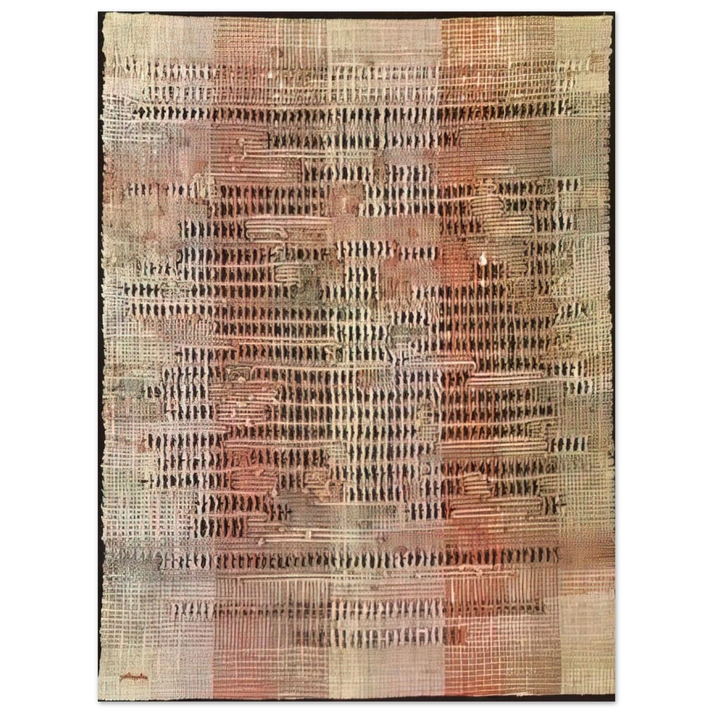
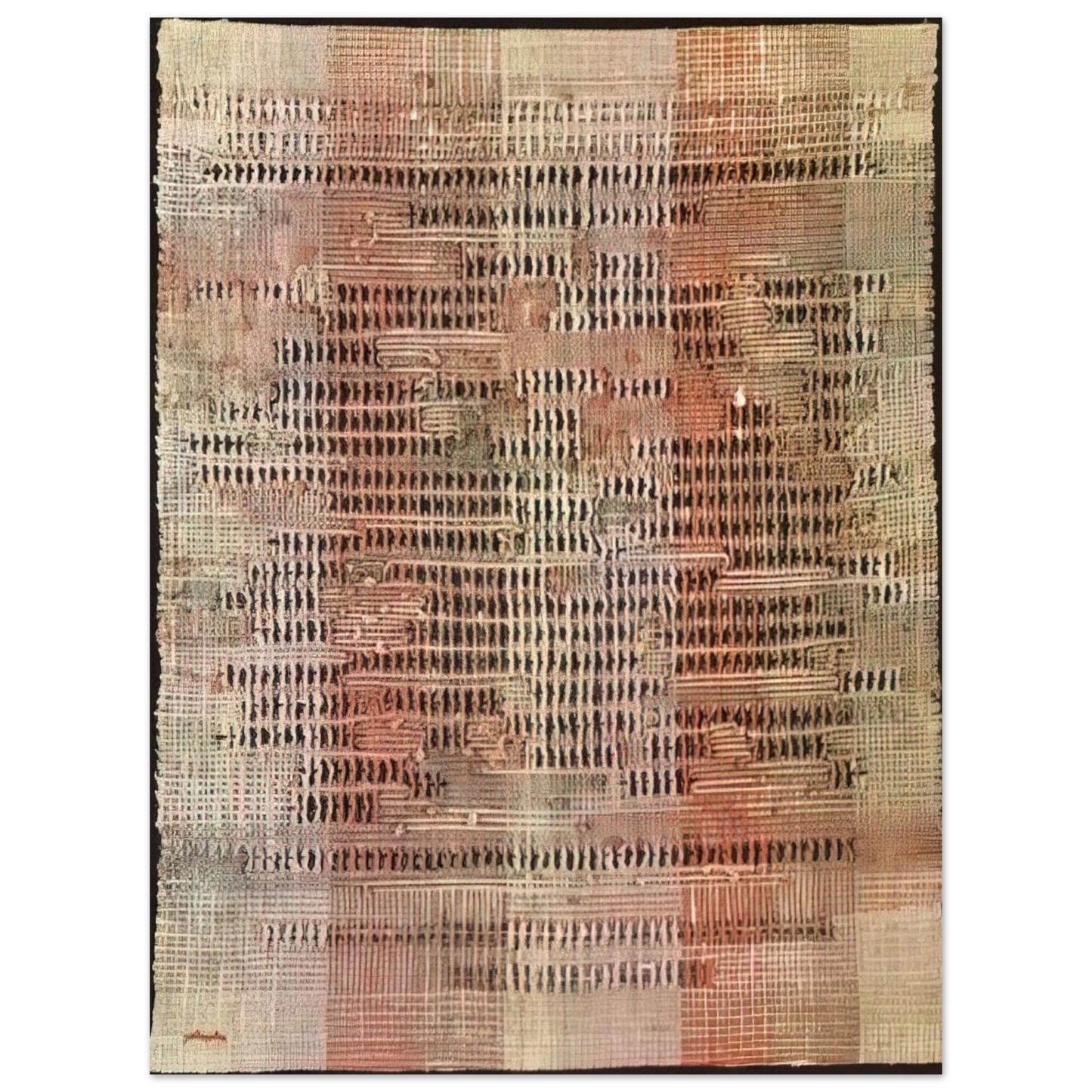
Anni Albers - DEVELOPMENT IN ROSE II 1952 75x100 cm / 30x40inches Fine Art Poster
Anni Albers - DEVELOPMENT IN ROSE II 1952 75x100 cm / 30x40inches Fine Art Poster
Couldn't load pickup availability
A Masterpiece of Modernist Rhythm: Anni Albers' "Development in Rose II" (1952)
Elevate your interior with Development in Rose II, a seminal 1952 composition by the visionary Bauhaus artist Anni Albers. This museum-quality reproduction captures the intricate geometric dialogue and rhythmic sophistication that defined Albers' transition from the loom to the graphic arts. Known for her revolutionary approach to textile design, this piece explores the structural potential of color and line, presenting a harmonious interplay of rose hues and architectural forms that resonate with mid-century modern elegance.
At RedKalion, we honor the legacy of this archival masterpiece by utilizing the Master's Edition archival paper. This premium, museum-quality medium features a luxurious matte, uncoated finish in a natural white (off-white) tone, ensuring that the subtle shifts in Albers' palette are rendered with absolute fidelity. The absence of glare allows the viewer to fully appreciate the complex layering and spatial depth of the work, much like the tactile experience of a fine textile.
Product Specifications & Archival Standards
- Artisan Quality: Printed on heavy-weight 250 gsm (110 lb) paper with a thickness of 0.29 mm (11.4 mils) for a substantial, premium feel.
- Longevity Guaranteed: Our acid-free paper (pH above 7) prevents yellowing and degradation, ensuring your fine art print remains a centerpiece for generations.
- Sustainability: RedKalion is committed to the environment; this print utilizes FSC-certified paper or equivalent regional certifications.
- Precision Fulfillment: Each piece is printed and shipped on demand with no minimum order requirements, ensuring a fresh, bespoke delivery to your door.
By choosing this Anni Albers fine art print from RedKalion, you are not merely purchasing a poster; you are acquiring a curated piece of art history, meticulously reproduced to meet the highest standards of the world's leading galleries.
Discover Unlimited Art Possibilities
At RedKalion, you can find virtually any artwork from any artist, available in a wide range of sizes to perfectly match your space.
If you didn’t find what you’re looking for, contact us at support@redkalion.com . We will source any artwork and produce it in any size and format you need, including art prints, posters, canvas, framed pieces, framed canvas, and more.
For dedicated art enthusiasts, we also offer handcrafted replicas of any artwork, carefully painted by highly skilled artists using traditional techniques.
For custom requests, contact us at support@redkalion.com .
What defines the quality of this Anni Albers fine art print?
RedKalion uses Master's Edition archival paper (250 gsm/110 lb), providing a museum-quality feel. The heavy-weight, 0.29 mm thick paper ensures the print remains flat and durable, capturing the geometric precision of Albers' 1952 masterpiece with exceptional clarity.
Is the paper used for Development in Rose II sustainable?
Yes, we prioritize ecological responsibility. The paper used for this archival reproduction is FSC-certified or carries equivalent sustainable certifications, ensuring that your appreciation for art aligns with a commitment to forest conservation and responsible manufacturing.
How does RedKalion ensure the longevity of the print?
Our prints are produced on acid-free paper with a pH level above 7. This archival standard prevents the paper from yellowing or becoming brittle over time, preserving the delicate rose and cream tones of Albers' work for decades.
What are the dimensions and shipping process for this piece?
This specific edition is 75x100 cm (30x40 inches). Each order is printed on demand to ensure perfect condition and shipped securely. There are no minimum orders, reflecting our commitment to accessible, premium art curation.
Does the print feature a glossy or matte finish?
The print features a matte, uncoated, natural white finish. This luxurious texture avoids distracting glares and reflections, allowing the sophisticated geometric interplay and organic tones of the artwork to be viewed clearly from any angle.
What is the historical significance of 'Development in Rose II' in Albers' career?
Created in 1952, this work marks Albers' mastery of graphic design after moving away from physical weaving. It translates the structural logic of the loom into a two-dimensional space, representing a pivotal moment in mid-century abstract modernism.
How does this piece reflect the Bauhaus philosophy?
Development in Rose II embodies the Bauhaus principle of merging art and technical structure. Albers uses a grid-based logic to create rhythmic movement, proving that industrial-inspired geometric forms can evoke profound aesthetic and emotional resonance.