
RedKalion
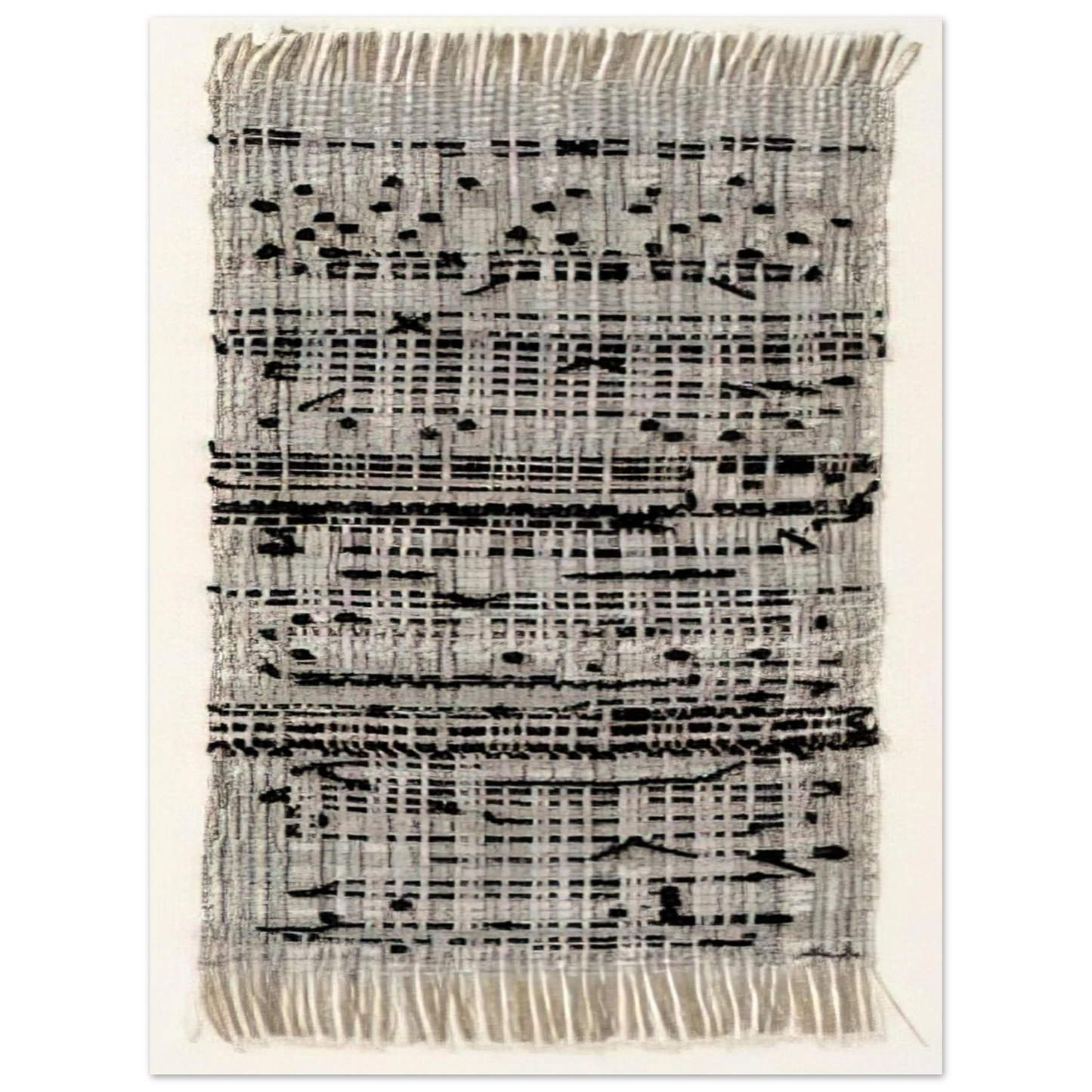
Anni Albers - HAIKU 1961 75x100 cm / 30x40inches Fine Art Poster
Anni Albers - HAIKU 1961 75x100 cm / 30x40inches Fine Art Poster
Couldn't load pickup availability
Anni Albers: HAIKU 1961 – A Masterpiece of Linear Rhythm
In 1961, Anni Albers, the preeminent voice of the Bauhaus weaving workshop, translated the rhythmic complexity of the loom into the graphic medium. HAIKU 1961 is a profound exercise in geometric economy, where thin, purposeful lines echo the structural logic of thread. This museum-quality fine art print captures the quiet authority of Albers' vision, offering a sophisticated focal point for the modern interior.
As part of her transition from textile to printmaking, Albers used the grid as a playground for visual poetry. This specific composition mirrors the structure of a Japanese haiku—minimal, evocative, and mathematically precise. At RedKalion, we preserve this legacy using our Master's Edition archival paper, ensuring that the subtle nuances of her linework are rendered with absolute fidelity.
The RedKalion Standard: Museum-Grade Excellence
- Exceptional Material: Printed on 250 gsm (110 lb) natural white, off-white paper that provides a luxurious, uncoated texture.
- Archival Longevity: Our acid-free (pH above 7) paper prevents yellowing, ensuring your investment remains a vibrant heirloom for decades.
- Matte Finish: The non-reflective surface allows the viewer to appreciate the intricate linework of Albers without the distraction of glare.
- Sustainability: We utilize FSC-certified paper, aligning with a commitment to both artistic excellence and environmental responsibility.
Elevate your space with a work that bridges the gap between industrial design and fine art. This archival-grade reproduction offers a tactile richness and visual depth that honors the spirit of the Bauhaus era.
Discover Unlimited Art Possibilities
At RedKalion, you can find virtually any artwork from any artist, available in a wide range of sizes to perfectly match your space.
If you didn’t find what you’re looking for, contact us at support@redkalion.com . We will source any artwork and produce it in any size and format you need, including art prints, posters, canvas, framed pieces, framed canvas, and more.
For dedicated art enthusiasts, we also offer handcrafted replicas of any artwork, carefully painted by highly skilled artists using traditional techniques.
For custom requests, contact us at support@redkalion.com .
What paper is used for this Anni Albers print?
We use Master's Edition archival paper, a 250 gsm (110 lb) museum-quality stock. Its natural white, off-white finish provides a sophisticated, matte texture that highlights the details of Anni Albers' graphic work.
Is this fine art print archival quality?
Yes. The paper is acid-free with a pH above 7, meaning it is resistant to yellowing and degradation over time. This ensures your HAIKU 1961 print remains in pristine condition for decades.
How is the shipping handled for large-format prints?
Our 75x100 cm prints are carefully rolled in protective materials and shipped in sturdy tubes. We print and ship on demand with no minimum orders, ensuring a carbon-efficient delivery process.
Is the paper sustainably sourced?
Absolutely. RedKalion uses FSC-certified paper (Forest Stewardship Council), ensuring that the materials used for your museum-quality reproduction are sourced from responsibly managed forests.
What is the thickness and feel of the print?
The paper has a thickness of 0.29 mm (11.4 mils). It is heavy and substantial to the touch, providing a premium feel that distinguishes it from standard posters.
What does the 'Haiku' title represent in Albers' work?
The title refers to the Japanese poetic form, mirroring its 5-7-5 syllable structure through visual rhythm. Albers used minimalist lines to create a visual 'strophe' that captures complex emotion through brevity.
How does the 1961 'Haiku' reflect Albers' Bauhaus background?
Despite moving from the loom to paper, Albers retained the Bauhaus focus on 'structure as ornament.' The intersecting lines in HAIKU 1961 are a direct evolution of her earlier weaving patterns and textile logic.