
RedKalion
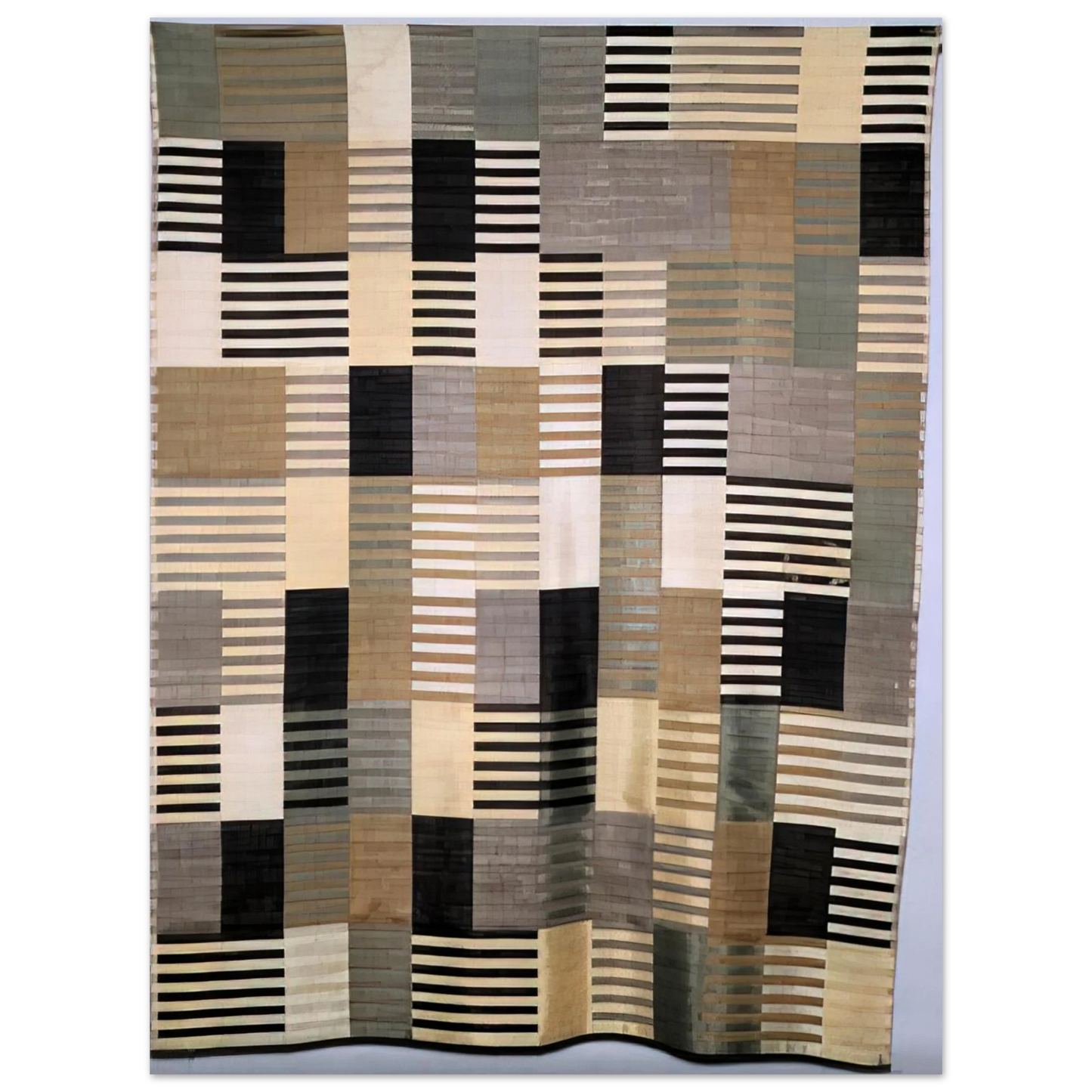
Anni Albers - WALL HANGING 1926 75x100 cm / 30x40inches Fine Art Poster
Anni Albers - WALL HANGING 1926 75x100 cm / 30x40inches Fine Art Poster
Couldn't load pickup availability
The Modernist Rhythm of Anni Albers: Wall Hanging 1926
Elevate your interior with a museum-quality reproduction of Anni Albers' Wall Hanging 1926. As a pioneer of the Bauhaus weaving workshop, Albers transformed textiles into a medium of complex geometric abstraction. This specific composition is a masterclass in Modernist design, utilizing a vertical grid and a sophisticated palette to create a sense of rhythmic movement that remains as contemporary today as it was a century ago.
A Curated Masterpiece for the Contemporary Space
At RedKalion, we believe that world-class art deserves a canvas of equal caliber. This fine art print captures the intricate interplay of shapes and subtle tonal shifts characteristic of Albers' weaving technique. By translating the tactile nature of her original textile work onto our Master's Edition archival paper, we provide a visual experience that honors the artist's legacy while offering the longevity required by discerning collectors.
Exceptional Material Standards
Our commitment to archival excellence ensures that your investment endures. The Wall Hanging 1926 reproduction is printed on 250 gsm (110 lb) natural white paper, featuring a luxurious matte, uncoated finish. This acid-free (pH above 7) paper prevents yellowing or degradation, ensuring the geometric clarity of Albers' vision remains pristine for generations.
- Artist: Anni Albers (Bauhaus School)
- Paper: Master's Edition, 250 gsm, Acid-free
- Finish: Matte, natural white with luxurious texture
- Sustainability: FSC-certified archival stock
- Longevity: Museum-grade permanence (pH > 7)
Discover Unlimited Art Possibilities
At RedKalion, you can find virtually any artwork from any artist, available in a wide range of sizes to perfectly match your space.
If you didn’t find what you’re looking for, contact us at support@redkalion.com . We will source any artwork and produce it in any size and format you need, including art prints, posters, canvas, framed pieces, framed canvas, and more.
For dedicated art enthusiasts, we also offer handcrafted replicas of any artwork, carefully painted by highly skilled artists using traditional techniques.
For custom requests, contact us at support@redkalion.com .
What paper is used for this Anni Albers print?
We use Master's Edition archival paper, a 250 gsm (110 lb) museum-quality stock. It features a natural white, uncoated matte finish that provides a luxurious texture and eliminates glare, perfect for showcasing fine art details.
Will the colors fade or the paper yellow over time?
No. Our prints use acid-free paper with a pH above 7. This archival standard prevents yellowing and preserves the structural integrity and color vibrancy of the artwork for decades, even in home gallery settings.
How is the artwork fulfilled and shipped?
RedKalion prints and ships each order on demand. There are no minimum order requirements, and we utilize secure, protective packaging to ensure your museum-quality reproduction arrives in flawless condition.
Is the paper environmentally sustainable?
Yes, we prioritize ethical sourcing. Our archival paper is FSC-certified, ensuring it comes from responsibly managed forests that provide environmental, social, and economic benefits.
What is the thickness and weight of the print?
The print is produced on heavy-duty 250 gsm paper with a thickness of 0.29 mm (11.4 mils). This substantial weight ensures the poster remains flat and resists creasing during framing and display.
What is the historical significance of Wall Hanging 1926?
Wall Hanging 1926 is a seminal work from Anni Albers' time at the Bauhaus. It represents the shift of textiles from utilitarian craft to high-art abstraction, using mathematical grids to explore modern visual language.
How does Anni Albers' style influence modern design?
Albers' focus on geometric rhythm and the 'logic' of materials laid the foundation for modern minimalism. Her work continues to inspire interior designers and artists who value structure, balance, and textile-inspired aesthetics.