


RedKalion
ANTHROPOMORPHIC BREAD - Salvador Dali Brushed Aluminum Print - 70x100 cm / 28x40 inches | Salvador Dali Aluminum Print | Salvador Dali Prints
ANTHROPOMORPHIC BREAD - Salvador Dali Brushed Aluminum Print - 70x100 cm / 28x40 inches | Salvador Dali Aluminum Print | Salvador Dali Prints
Couldn't load pickup availability
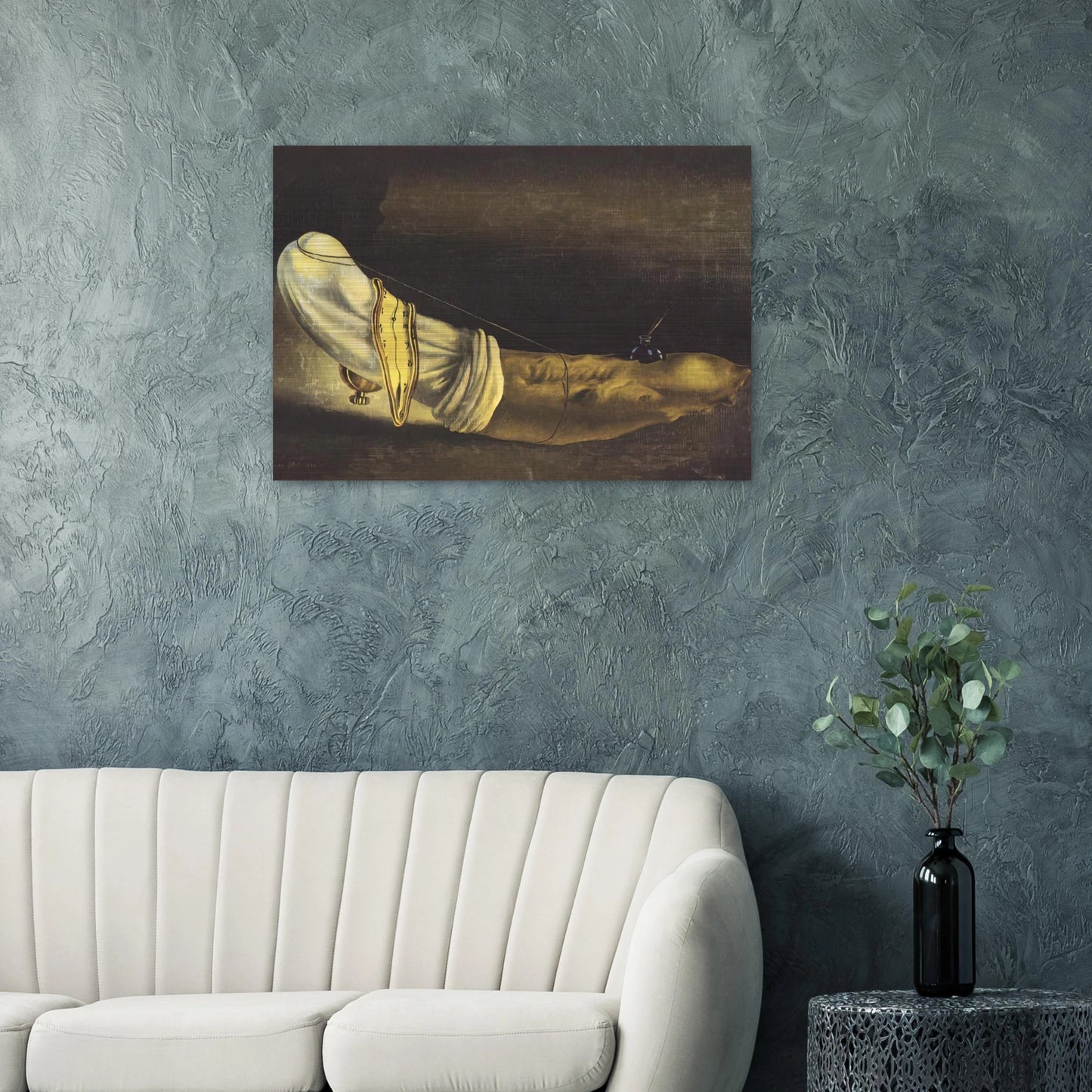
The Surrealist Alchemy: Salvador Dalí's 'Anthropomorphic Bread'
In 1932, Salvador Dalí transformed a staple of daily life into a vessel of profound psychological complexity. Anthropomorphic Bread is a seminal example of Dalí’s 'paranoiac-critical method,' where a simple loaf of bread is imbued with phallic and anatomical connotations, challenging the viewer's perception of the mundane. This museum-quality reproduction captures the hyper-realistic textures and the unsettling stillness of the original masterpiece.
At RedKalion, we elevate this surrealist vision by presenting it on a medium that complements Dalí's technical precision. Our Salvador Dalí aluminum print is rendered on brushed silver Aluminum DIBOND®, a sophisticated substrate that adds a modern, industrial edge to the artist's classical training. The horizontal grain of the metal creates a dynamic interplay with light, echoing the meticulous brushwork Dalí employed to render the bread's crust and the shadow’s depth.
Premium Technical Specifications
- Material: 3mm (0.12") Brushed silver Aluminum DIBOND® for a rigid, enduring base.
- Finish: A glare-free, matte finish that emphasizes the striking contrast and detail of the surrealist composition.
- Metallic Effect: Unprinted white areas reveal the raw, silver metallic grain, adding a unique luminosity to the highlights.
- Ready to Display: A professional hanging kit is included, ensuring your archival masterpiece is ready to elevate your space immediately.
This fine art print is not merely a reproduction; it is an archival piece designed to endure. By choosing an aluminum DIBOND® print, you ensure that Dalí's provocative imagery remains as vibrant and impactful as the day it was conceived, offering a timeless centerpiece for the discerning collector who values both art history and modern craftsmanship.


Discover Unlimited Art Possibilities
At RedKalion, you can find virtually any artwork from any artist, available in a wide range of sizes to perfectly match your space.
If you didn’t find what you’re looking for, contact us at support@redkalion.com . We will source any artwork and produce it in any size and format you need, including art prints, posters, canvas, framed pieces, framed canvas, and more.
For dedicated art enthusiasts, we also offer handcrafted replicas of any artwork, carefully painted by highly skilled artists using traditional techniques.
For custom requests, contact us at support@redkalion.com .
What material is used for the Salvador Dalí 'Anthropomorphic Bread' print?
We use premium 3mm (0.12") brushed silver Aluminum DIBOND®. This material provides a durable, rigid base that is perfect for high-end fine art prints, ensuring the artwork remains flat and impressive over time.
How does the brushed aluminum finish affect the look of the artwork?
The horizontal grain of the brushed silver aluminum creates a dynamic, metallic finish. In areas where the design has no ink, the raw silver grain shines through, adding a unique depth and luminosity to Dalí's work.
Is the print ready to hang upon arrival?
Yes, every RedKalion aluminum print includes a high-quality hanging kit. The specific kit varies depending on the fulfillment country to ensure the most secure and appropriate mounting solution for your location.
How durable is an Aluminum DIBOND® print compared to traditional paper?
Aluminum DIBOND® is significantly more durable than paper. It is highly resistant to bending, fading, and environmental factors, making it an ideal choice for long-term display in both private collections and public spaces.
What is the archival longevity of this print?
Our direct-to-dibond printing process uses UV-resistant inks and archival-grade materials. This ensures that the colors remain vivid and the matte finish stays glare-free for decades, maintaining its museum-quality appearance.
Why did Salvador Dalí frequently use bread in his surrealist works?
For Dalí, bread was a recurring fetishistic object. He viewed it as a symbol of both the sacred and the aesthetic, often using its rigid yet organic form to explore themes of obsession, desire, and the subversion of domesticity.
What is the 'paranoiac-critical method' seen in this piece?
Developed by Dalí, this method involves the creation of a visionary state to perceive multiple meanings within a single object. In 'Anthropomorphic Bread,' he uses it to transform a simple loaf into a provocative, human-like form.