RedKalion
Antoni Tapies - CARTOGRAPHY 1976 75x100 cm / 30x40inches Fine Art Poster
Antoni Tapies - CARTOGRAPHY 1976 75x100 cm / 30x40inches Fine Art Poster
Couldn't load pickup availability
Elevate Your Space with Antoni Tàpies: Cartography (1976)
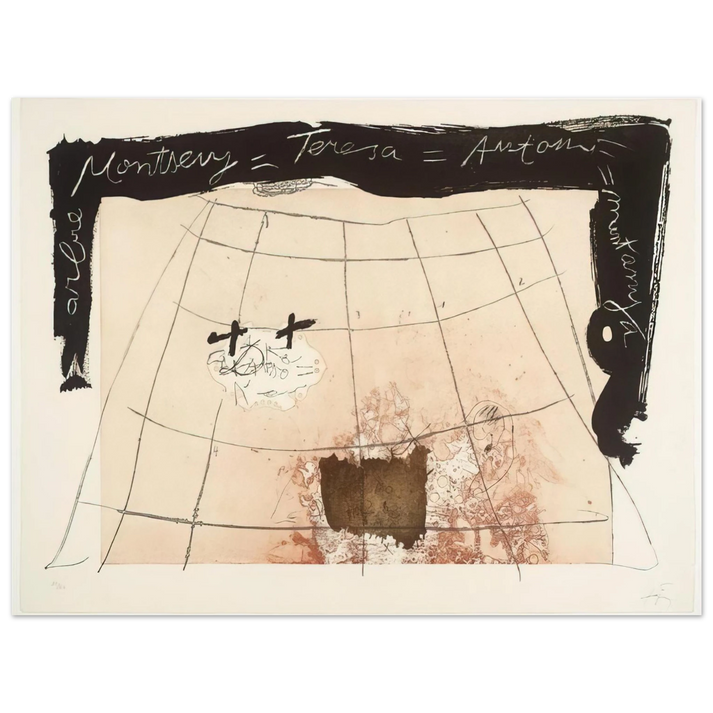
Experience the profound materiality and symbolic depth of Antoni Tàpies’ 'Cartography' (1976). As a cornerstone of European Informalism, Tàpies transformed the canvas into a tactile territory, blending abstract expression with the raw texture of earth, walls, and ancient markings. This museum-quality reproduction captures the enigmatic cartographic lines and primordial symbols that define Tàpies’ mature period, offering a sophisticated focal point for the modern interior.
Museum-Grade Excellence: The RedKalion Master’s Edition
At RedKalion, we curate more than just prints; we provide archival masterpieces. This Antoni Tàpies fine art print is produced on our exclusive Master's Edition paper—a premium 250 gsm (110 lb) natural white, uncoated stock. With a thickness of 0.29 mm (11.4 mils), this archival-grade paper offers a luxurious, matte finish that eliminates glare and honors the intricate textures of the original 1976 work.
The Philosophy of Matter
Antoni Tàpies viewed the artwork as a physical object of meditation. 'Cartography' is not merely a map of geography, but a map of the human spirit and the passage of time. Our printing process respects this legacy:
- Longevity: Acid-free (pH above 7) composition ensures your print will not yellow or degrade over decades.
- Sustainability: Printed on FSC-certified paper, supporting responsible forest management.
- Visual Depth: The off-white base provides a rich, organic background that enhances the earthy tones of the original composition.
By choosing this archival reproduction, you are investing in a piece of art history that brings the authoritative presence of a gallery directly into your home or office. RedKalion ensures that every print is produced on demand with meticulous attention to detail, reflecting our commitment to museum-standard quality.

Discover Unlimited Art Possibilities
At RedKalion, you can find virtually any artwork from any artist, available in a wide range of sizes to perfectly match your space.
If you didn’t find what you’re looking for, contact us at support@redkalion.com . We will source any artwork and produce it in any size and format you need, including art prints, posters, canvas, framed pieces, framed canvas, and more.
For dedicated art enthusiasts, we also offer handcrafted replicas of any artwork, carefully painted by highly skilled artists using traditional techniques.
For custom requests, contact us at support@redkalion.com .
What are the specific qualities of the Master's Edition paper?
Our Master's Edition is a 250 gsm (110 lb) archival-grade paper. It is a natural white, uncoated stock with a luxurious matte finish and a thickness of 0.29 mm, ensuring a high-end, tactile feel for fine art reproductions.
How long will this archival print last without fading?
This print is acid-free with a pH above 7, which prevents yellowing and material degradation. When kept away from direct sunlight, these museum-quality reproductions are designed to endure for generations without losing their original vibrance.
Is the paper used for the Tàpies print sustainably sourced?
Yes, RedKalion is committed to environmental responsibility. We use FSC-certified paper (Forest Stewardship Council), ensuring that the materials for your fine art poster are sourced from responsibly managed forests.
How is the artwork shipped and fulfilled?
We offer on-demand fulfillment with no minimum orders. Each print is meticulously handled and shipped in protective, reinforced packaging to ensure it arrives at your door in pristine, gallery-ready condition.
Does the matte finish affect the texture of the original work?
The matte, uncoated finish is specifically chosen to honor the 'matter painting' style of Antoni Tàpies. It prevents distracting glare while emphasizing the visual texture and depth of his unique cartographic markings.
What does 'Cartography' represent in Antoni Tàpies' artistic career?
Produced in 1976, 'Cartography' reflects Tàpies' obsession with the wall as a surface of history. It uses symbolic lines to map the subconscious, blending the physical world with abstract, philosophical inquiry into human existence.
Why is 1976 considered a significant year for Tàpies' work?
By 1976, Tàpies was an international icon of Informalism. This era marked a sophisticated mastery of his 'material' technique, where he combined political subtext with a deep, meditative focus on the mortality of objects.